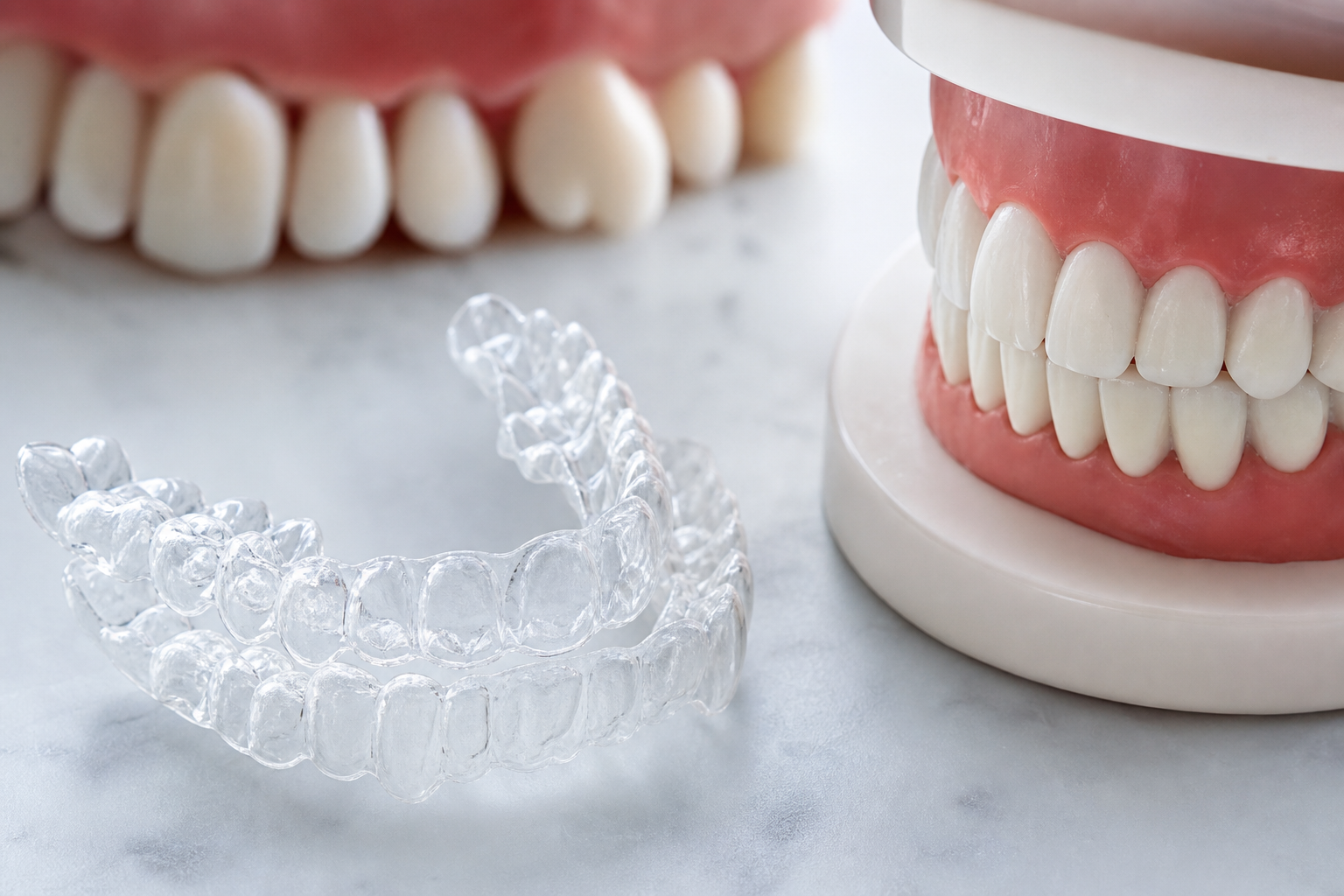
You can wear clear aligners at home, but I would not treat teeth straightening at home as a purely cosmetic, self-directed process. Moving teeth changes how they sit in the supporting bone and how your upper and lower teeth meet. Before I recommend aligners, I need to establish that your teeth and gums are healthy enough to move, that the planned movement is realistic and that your bite is being properly considered.
The concern is not simply that aligners are delivered to your home or that some reviews happen remotely. Home wear is normal with clear aligners. The important question is whether a named, UK-registered dentist has assessed you, planned the treatment, explained the limitations and remains available if something does not go to plan.
Can you straighten your teeth at home without seeing a dentist?
You may be able to order online aligners without attending a conventional dental appointment, but I would advise against starting tooth movement without an appropriate clinical assessment. Photographs, an online questionnaire or a home impression can provide useful information, but they do not show the full health of your mouth or automatically establish that an aligner plan is suitable.
Remote care is not automatically unsafe. A responsibly managed clear-aligner treatment can involve wearing trays at home and sending progress photographs between appointments. What matters is that I, or another named clinician responsible for your care, can diagnose problems, plan treatment from suitable records, monitor progress and arrange a face-to-face review when it is needed.
What is missing without a dental examination?
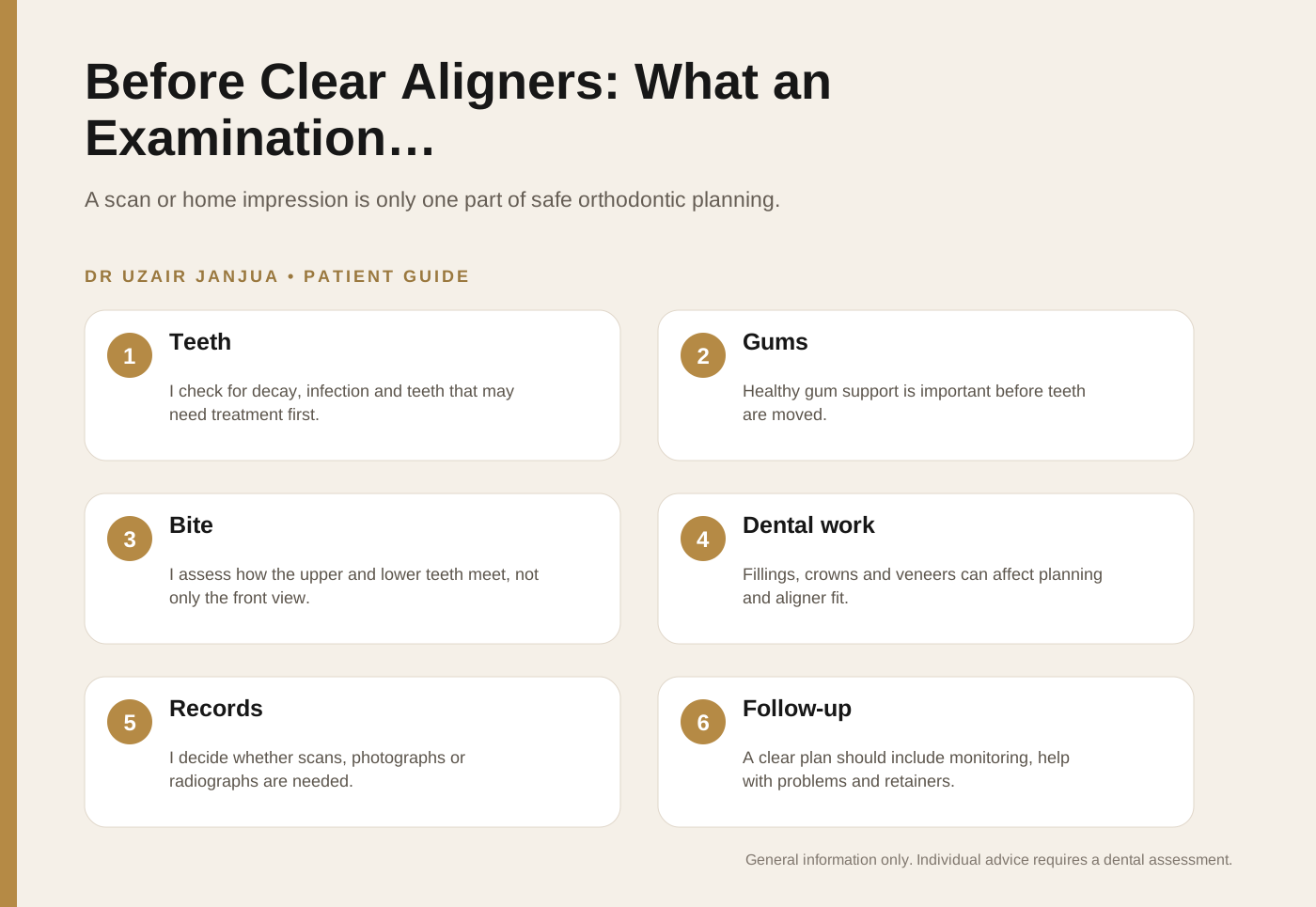
What I would look at first is not only the front teeth that concern you. Crooked teeth can be healthy, but before moving them I need to understand the condition of the teeth, gums, bite and any existing dental work. Some concerns are not visible in a smile photograph.
| What I assess | Why it matters before tooth movement |
|---|---|
| Decay, infection and tooth health | Decay or an infection may need treatment before aligners are started, particularly if a tooth is painful, weakened or likely to need further work. |
| Gum health and tooth support | Inflamed gums, active gum disease, recession or loose teeth can affect whether and how teeth should be moved. |
| Fillings, crowns, veneers and other dental work | Existing restorations may affect aligner fit, attachments and the order in which treatment is carried out. |
| Your bite | I assess how the upper and lower teeth meet, not just whether the front teeth look straighter. An overbite, underbite, crossbite, open bite or uneven contacts can change the right approach. |
| Roots and supporting bone | Where the examination and treatment plan indicate it, I may recommend radiographs. These can show information that cannot be judged from a scan or photograph alone. |
| Your aims and expectations | I need to establish whether you want a small front-tooth improvement or a more complete bite correction, and whether aligners are the sensible way to achieve it. |
An examination does not mean every person needs complex treatment or multiple X-rays. I would decide what records are appropriate from the findings, rather than applying the same checklist to everyone.
Why a home impression or photograph is not the whole picture
A home impression, digital scan or set of photographs is a record of tooth shape and position. It is not a diagnosis in itself. Even an accurate scan cannot tell me everything about gum health, tooth mobility, symptoms, roots, bone levels or how your jaw functions.
Home impressions can be incomplete or distorted if they are not taken accurately or do not capture the teeth properly. That can affect the design and fit of aligners. Digital scanning in a practice can be very useful, but the quality of the record and the clinical interpretation of it both matter.
This is where people sometimes get confused. A simulated image showing straighter front teeth may be helpful for discussing an aim, but it is not a guarantee that the planned movement will be safe, achievable or stable. I would want to know how the proposed changes affect the bite before relying on an appearance-led preview.
What I would assess before recommending clear aligners
When I assess someone for clear aligners, I start with their dental and medical history, their concerns and the result they are hoping for. I then examine the teeth and gums, assess oral hygiene, look for signs of disease or mobility and consider any fillings, crowns, veneers or missing teeth.
I would assess the amount of crowding or spacing, the position of individual teeth and how the upper and lower arches fit together. If appropriate, I would also consider whether attachments, small amounts of enamel reshaping between teeth, elastics or another appliance might be needed. Those details can be important even where the visible concern seems limited to one or two front teeth.
I also discuss the practical side. Clear aligners need consistent wear, careful cleaning and normal dental check-ups. Teeth do not automatically stay in their new position afterwards, so I explain retention from the beginning. Retainers are usually part of maintaining an orthodontic result, rather than an optional afterthought.
What can go wrong with DIY or poorly supervised aligners?
The risk is not simply that teeth may remain slightly crooked. If aligners do not fit well or teeth do not move as planned, the bite can change in an unwanted way. You may notice that some teeth stop touching, one tooth hits first, or the trays no longer sit fully over the teeth. I would want to assess that rather than advising you to force a tray into place.
Plaque can collect around teeth and aligners if cleaning is poor, increasing the risk of gum inflammation, enamel changes and decay. In people with existing gum problems or reduced tooth support, moving teeth without stabilising the underlying condition first can create further difficulties. Uncommon complications can include changes to the roots, known as root resorption, which is one reason appropriate planning and monitoring matter.
Not every discomfort means something is wrong. Teeth can feel tender when they start to move. However, persistent pain, swelling, a loose tooth, bleeding gums, an aligner that suddenly will not fit or a noticeable bite change should not be managed through online reassurance alone. You need a clear route to a prompt clinical review.
Are online aligners always unsafe?
No. I would not judge a treatment model simply because aligners are posted to your home or progress is partly monitored remotely. The safer distinction is between clinician-led care with proper assessment and access to help, and a service where diagnosis, planning and accountability are unclear.
Before paying an online provider, I would encourage you to ask the following questions:
- Who is the dentist responsible for my diagnosis and treatment plan, and what is their full name and GDC registration number?
- What orthodontic experience does the responsible clinician have, and is specialist orthodontic input available if my case is more complex?
- Will I have a face-to-face examination before treatment starts, and how will my gums, bite and existing dental work be assessed?
- Will I need radiographs, and who decides this after examining me?
- Where can I be seen if an aligner does not fit, my bite changes or I develop pain or swelling?
- How often will my progress be reviewed, and can I speak directly with the responsible clinician?
- What happens if my teeth do not track as expected or I need refinements?
- Are retainers, replacement trays and any necessary follow-up included in the total cost?
GDC registration confirms that a clinician is on the register, but it does not by itself tell you whether a particular plan is appropriate for a complex orthodontic case. I would want you to understand who is responsible for your treatment and how they will assess whether you need a different approach or specialist input.
For patients in Birmingham and the wider West Midlands, I would also ask where in-person reviews would take place. This is particularly important if you travel from Solihull, Sutton Coldfield, Coventry, Wolverhampton, Dudley or Walsall. A local route for assessment and urgent review may be more practical than trying to resolve a problem by post.
When home aligners may not be the best choice
I would be especially cautious about an online-only route where there are signs of active decay, gum disease, bleeding gums, tooth mobility, pain, infection or poor oral hygiene. These do not automatically rule out future orthodontic treatment, but they may need treatment or stabilisation first.
Home aligners may also be a poor fit for significant crowding, impacted teeth, complex bite concerns, large spaces, missing teeth, extensive crowns or veneers, previous orthodontic complications or expectations that a simple cosmetic plan will correct a more involved problem. Some cases need attachments, elastics, fixed braces, restorative planning or specialist orthodontic input.
If you are comparing options, I can assess whether clear aligner treatment in Birmingham is appropriate, whether braces would offer better control for your planned movements or whether your concern is actually more about tooth shape or colour than position. The right treatment is not always the one that looks most convenient at the outset.
What does treatment cost beyond the advertised aligner price?
A low headline figure for cheap teeth straightening at home does not always reflect the full cost of reaching and maintaining the intended result. I would compare what is included, rather than comparing only the starting price.
| Cost area | What to clarify |
|---|---|
| Initial assessment and records | Ask whether the fee includes a proper examination, scans, photographs and any radiographs that are clinically indicated. |
| Dental treatment before aligners | Fillings, hygiene care, gum treatment or replacement of a failing restoration may be needed separately before teeth can be moved. |
| Monitoring | Check how many reviews are included, whether they are remote or in person, and what happens if an urgent assessment is needed. |
| Refinements and changes to the plan | Ask whether extra aligners are included if teeth do not track or if the original plan needs revision. |
| Lost or damaged trays | Confirm the replacement process, cost and expected delay if an aligner is lost or no longer fits. |
| Retention | Find out whether retainers are included, which type is recommended and what future replacement retainers cost. |
| Corrective care | Consider what support is available if treatment is unsatisfactory or the original provider cannot continue your care. |
For a fuller comparison of low-cost aligner offers, you may find my guide to what cheap teeth aligners may leave out useful. The lowest initial cost is not necessarily the lowest overall cost if you later need correction, additional dental work or a new treatment plan.
Alternatives if teeth straightening at home is not right for you
Dentist-supervised clear aligners are often a sensible option for selected mild to moderate movements, particularly when you value removable trays but want an examination, planned reviews and a clinician who can assess changes along the way. Fixed braces may provide more control for some movements, but the appropriate appliance depends on the diagnosis, treatment objectives and individual treatment plan.
Where there is a significant bite issue, impacted teeth, marked crowding or a concern about jaw relationships, I may advise a specialist orthodontic assessment. In other situations, limited orthodontics may be enough if the objectives and limitations are clearly defined.
It is also worth being honest about what you want to change. Composite bonding can improve selected concerns such as a small chip, uneven edge or tooth-shape asymmetry, but it does not move teeth or correct a bite. Veneers involve tooth preparation and should not be treated as a substitute for orthodontics where teeth genuinely need repositioning. If colour is the main concern, whitening may make more sense than tooth movement. You can also compare the main teeth straightening options for adults before deciding.
Questions to ask before paying for home aligners
Before committing to any online clear-aligner plan, I would make sure you can get clear answers in writing. The following questions help reveal whether you are paying for a complete course of care or simply a set of trays.
- Has a dentist examined my mouth and assessed my bite, rather than only my front teeth?
- Who is clinically responsible for my treatment from start to retention, and what orthodontic experience do they have?
- How will I access that clinician if I have pain, gum problems, a poor fit or a bite change?
- What records have been used to plan my treatment, and are they sufficient for my individual needs?
- What movements is the plan designed to achieve, and what will it not correct?
- What is included in the fee for reviews, refinements, retainers and replacement aligners?
- What happens if I need dental treatment during the aligner course or I move away from the provider?
The important question is not whether you can wear aligners at home. You can. It is whether the diagnosis, planning and monitoring behind them are appropriate for your teeth, gums and bite. If you are considering home teeth aligners in Birmingham or the West Midlands, I can assess your mouth properly, explain the trade-offs and help you decide whether supervised aligners, braces or no treatment is the most sensible option for you.