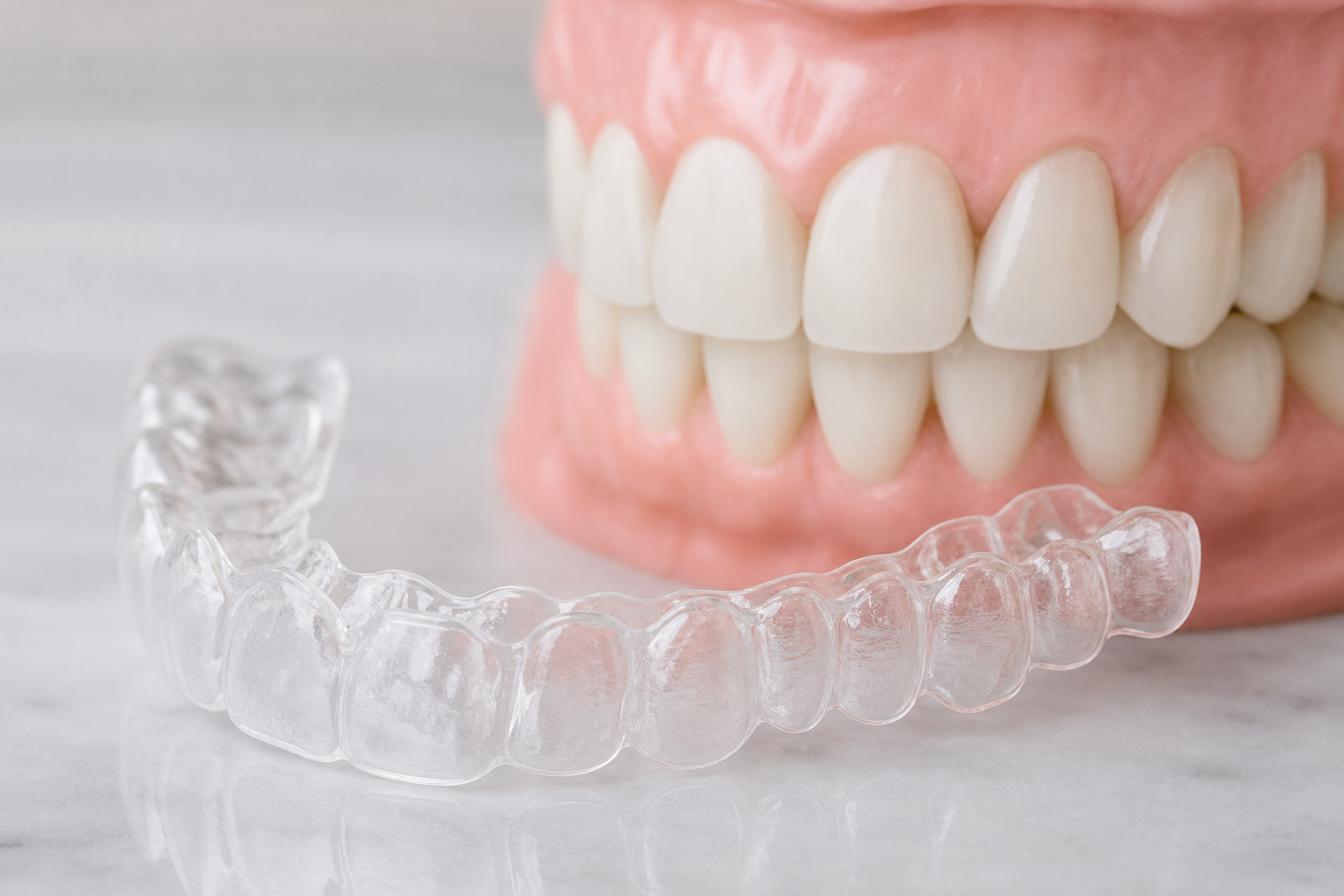
There is no single best way to straighten teeth as an adult. When I assess someone for teeth straightening, I look beyond whether they want a clear or discreet appliance. The right option depends on the tooth positions, how the upper and lower teeth meet, gum health, available space, existing dental work and how reliably you can follow the treatment plan.
Clear aligners can be an excellent option for many adults who want a removable and less noticeable treatment. Fixed braces can offer more consistent control for certain complex movements. The visible straightening is only part of the decision, because bite function, long-term stability and retainers matter just as much.
What I assess before recommending teeth straightening
What I would look at first is not simply the front teeth. A small amount of visible crowding can sometimes be linked to a bite issue, lack of space, tooth wear, missing teeth or changes in gum support that are not obvious from photographs alone.
I would assess the alignment of each tooth, the bite, the health of the gums and bone around the teeth, any decay, and the condition of crowns, bridges, fillings or implants. I would also discuss what you actually want to change. Some people want a minor improvement in the front teeth, while others need a more comprehensive plan to improve the way their teeth meet.
Records may include photographs, a digital scan and an assessment of the bite. X-rays are only taken where they are clinically justified. This helps me judge whether there is enough room to move teeth safely and whether a proposed result is realistic.
Adults can often have orthodontic treatment at any age, provided the teeth and supporting tissues are healthy enough. I would not begin active tooth movement where there is untreated decay, active gum disease or poor plaque control. These issues need to be managed first, as moving teeth while the gums are unhealthy can increase avoidable risks.
Clear aligners vs braces: what actually changes?
I usually explain that the appliance changes how treatment is delivered, but it does not remove the need for careful diagnosis. Both aligners and fixed braces can move teeth effectively in appropriate cases. The important question is which system gives me the control needed for your particular teeth and bite, while also fitting your routine.
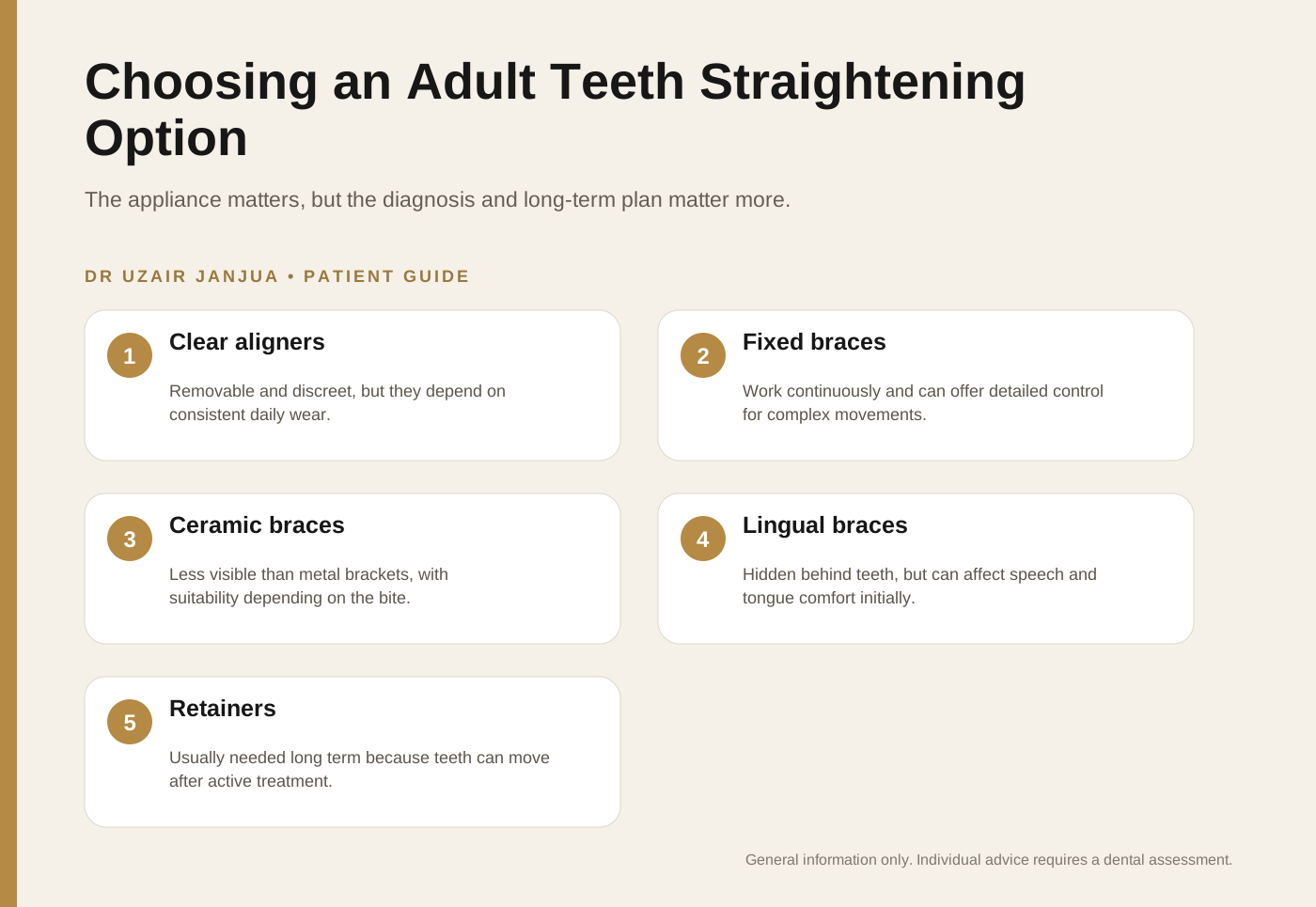
| Feature | Clear aligners | Fixed braces |
|---|---|---|
| Appearance | Usually less noticeable, although attachments may be visible. | Metal is more visible. Ceramic brackets can be more discreet. |
| Removability | Removed for meals and brushing. | Attached to the teeth throughout active treatment. |
| Daily responsibility | Must be worn consistently and stored safely when removed. | Works continuously, but requires careful cleaning around brackets and wires. |
| Eating | Usually removed before eating, then teeth should be cleaned before replacement. | Some hard, sticky or crunchy foods may need to be avoided. |
| Tooth movement control | Can be effective for many movements, particularly with good wear and planning. | May provide more predictable control for complex rotations, extraction spaces and bite correction. |
| Appointments and repairs | Reviews still matter. Lost, cracked or poorly fitting aligners need advice promptly. | Broken brackets or irritating wires can need repairs between routine reviews. |
A digital simulation can be useful for planning and discussing goals, but it is not a guarantee that every tooth will move exactly as shown. Teeth respond biologically, and treatment sometimes needs adjustments or additional aligners.
When clear aligners may be a sensible choice
Clear aligners are often attractive if you want a removable option that is less obvious in day-to-day conversations or work settings. When I assess clear aligner suitability, I consider mild to moderate crowding, gaps, selected bite concerns and whether you are likely to wear the aligners exactly as advised.
They can also be used in selected more involved cases, but that does not make them the automatic choice for every complex problem. The more challenging the movement, the more important it is to assess whether aligners can deliver the required control predictably.
One thing I usually explain to patients is that aligners are not always completely invisible. Small tooth-coloured attachments are often placed on teeth to help the aligner grip and direct movement. Some plans also involve elastics or interproximal reduction, which is the controlled reduction of a very small amount of enamel between selected teeth, where clinically appropriate, to create space. These are case-specific decisions that I would discuss before treatment starts.
The main trade-off is responsibility. Aligners only work while they are being worn. Repeatedly leaving them out for meals, social occasions or travel can affect progress and may extend treatment. You also need to brush before putting them back after eating, rather than trapping food debris against the teeth.
For more detail on what this treatment involves, you can read about clear aligners in Birmingham before arranging an assessment.
When fixed, ceramic or lingual braces may make more sense
I may recommend fixed braces where I need detailed, continuous control over individual teeth. This can include significant rotations, severe crowding, extraction space closure, more complex bite correction or movements that are less predictable with a removable appliance.
That does not mean fixed braces are always faster or better. The answer depends on the diagnosis, the treatment goals and the plan needed to achieve them. However, because brackets remain attached to the teeth, they are not dependent on remembering to wear them for the right number of hours each day.
Metal and ceramic braces
Metal braces are durable and visible. Ceramic braces use tooth-coloured brackets and may be less conspicuous, which can appeal to adults who prefer a fixed appliance but do not want the appearance of metal brackets.
Ceramic braces have their own compromises. They can cost more, may be more vulnerable to damage in some situations and are not suitable for every bite. I would assess how your teeth meet before recommending them, because the bite can place pressure on brackets.
Lingual braces
Lingual braces sit on the inside, tongue-facing surfaces of the teeth, so they are hidden from view. They can be a useful option for selected patients, but they are technically demanding and may initially affect speech or irritate the tongue. They are also commonly a higher-cost option, so I would only suggest them where the practical benefits justify the trade-offs.
What can change the cost of adult teeth straightening?
Teeth straightening cost in Birmingham is not just a question of which appliance looks most discreet. I would encourage you to compare written treatment plans rather than headline figures, because two apparently similar quotes may include very different levels of planning, review appointments, refinements and aftercare.
| Cost factor | Why it matters |
|---|---|
| Complexity and treatment scope | Moving only a few front teeth is different from correcting both arches and the bite. |
| Appliance type | Clear aligners, metal braces, ceramic braces and lingual braces have different laboratory and clinical requirements. |
| Supporting procedures | Attachments, elastics, controlled enamel reduction between teeth, extractions or gum treatment may be needed in some plans. |
| Aligner stages and refinements | Additional aligners may be needed if teeth do not track exactly as planned. |
| Records and monitoring | Scans, photographs, clinically indicated x-rays and review appointments form part of safe planning and supervision. |
| Retainers and aftercare | Ask whether retainers, repairs, follow-up and replacement retainers are included. |
Adult orthodontic treatment through the NHS is generally limited to specific clinical circumstances, and most adult cosmetic orthodontic treatment is provided privately. I would not make assumptions about NHS eligibility without an individual assessment, so it is sensible to ask about the available routes and the full private treatment fee before committing.
If you are primarily comparing aligner fees, my guide to what changes the cost of clear aligners in the UK explains the questions worth asking before you commit.
For patients travelling from Solihull, Sutton Coldfield, Coventry, Wolverhampton, Dudley or elsewhere in the West Midlands, appointment practicality matters too. I would choose a practice you can attend reliably, particularly if a wire breaks, an aligner stops fitting or you need timely advice.
Risks, limitations and the part people underestimate
Orthodontic treatment is generally well established, but it is not risk-free and I would discuss the relevant risks before you decide. Temporary pressure or soreness is common after fitting braces, changing aligners or making adjustments. Brackets and wires can also irritate the cheeks, while aligners may feel tight when a new stage begins.
The more important long-term issue is cleaning. Fixed braces create areas where plaque can collect, and aligners should not be worn over food residue. Poor cleaning can contribute to gum inflammation, enamel demineralisation and decay. If you have a history of gum recession, bone loss, previous dental trauma or root problems, I would take these into account when assessing the level of risk.
Other potential complications include gum recession, changes to the supporting tissues and shortening of tooth roots, known as root resorption. Significant root resorption is uncommon, but it can be important in some individuals. Treatment plans need to be tailored, monitored and adjusted where necessary.
I would also be cautious about remote or direct-to-consumer aligner treatment without proper face-to-face assessment and ongoing clinical monitoring. A scan or photograph does not replace checking the gums, bite, roots, existing restorations and response to tooth movement.
How long does adult teeth straightening take?
I cannot estimate a reliable treatment time without examining you and planning the case. A limited cosmetic alignment concern and a comprehensive plan involving the bite, severe crowding or extractions are fundamentally different treatments, so the visible amount of crowding alone does not show how long treatment is likely to take.
What affects the timescale includes the amount and type of tooth movement, the response of your teeth and supporting bone, aligner wear, attendance at reviews, breakages, oral hygiene and whether additional treatment is needed. A missed appointment or aligners that are not worn consistently can change the schedule.
Review intervals vary according to the appliance, stage of treatment and what I need to monitor. Regular face-to-face reviews remain important, and you should know how to obtain urgent advice if a bracket breaks, a wire irritates your cheek, an aligner is lost or a tray no longer fits properly.
Keep seeing your usual general dentist during orthodontic treatment. My orthodontic reviews focus on tooth movement and appliance progress, but they do not replace routine dental examinations, hygiene care or treatment for new decay and gum concerns.
If you are considering adult teeth straightening in Birmingham, a consultation is the sensible point to compare the realistic options for your bite, routine and priorities. I can explain whether the aim is limited cosmetic alignment or a fuller orthodontic correction, and what that means for the appliance, likely commitment and aftercare.
Retainers, relapse and what happens after active treatment
The part people often underestimate is retention. Teeth have a tendency to move over time after braces or aligners, particularly where they were crowded or rotated before treatment. I normally explain that retainers are an ongoing part of protecting the result, not an optional extra at the end.
Depending on the plan, this may involve removable retainers, fixed retainers bonded behind the front teeth, or a combination. A fixed retainer needs regular cleaning and checks because it can loosen or break. Removable retainers need to be worn as advised, kept clean and replaced if they crack, warp or no longer fit.
I would discuss the long-term retention plan before treatment starts, including what happens if a retainer is lost while you are away for work or travel. Neither braces nor aligners can promise permanent stability without continued retention.
Could bonding, veneers or another treatment make more sense?
Teeth straightening moves natural teeth. Cosmetic dentistry changes the appearance of teeth, which is a different decision. If your main concern is a chipped edge, uneven tooth shape or small proportion difference, orthodontics may not be the only route.
Composite bonding can add material to selected teeth to alter shape or close very small spaces, without physically moving teeth. Veneers can change colour and shape in carefully selected cosmetic cases. Neither option corrects the underlying tooth position or bite, and veneers may involve irreversible tooth preparation.
Sometimes the best plan is combined. Orthodontics may create space before restorative treatment, or minor bonding may be considered after teeth have been aligned. Implants cannot be moved orthodontically, so where there are missing teeth or existing implants, I would plan the sequence carefully before starting.
Questions I suggest asking before starting treatment
A good consultation should leave you clear about the objective, not simply the appliance name. I suggest asking these questions before you make a decision:
- Is this limited front-tooth treatment or comprehensive treatment involving my bite?
- Why is this appliance more suitable than the alternatives in my case?
- Will I need attachments, elastics, controlled enamel reduction, extractions or refinements?
- What are the main risks for my teeth, gums and existing dental work?
- What does the written fee include, including retainers, repairs, refinements and follow-up?
- How often will I need reviews, and what support is available if something breaks or stops fitting?
- What is the long-term retainer plan, and what will replacement retainers involve?
I would not recommend choosing solely on the lowest advertised price or the promise of a particular treatment time. The most sensible teeth-straightening plan is one that addresses the problem you want to solve, protects the health of your teeth and gums, and is realistic for your day-to-day life.
If you would like an individual recommendation, arrange a consultation so I can assess your teeth, bite, gum health and existing dental work properly. From there, I can talk you through whether clear aligners, fixed braces or another approach is likely to make the most sense for you.