If you are comparing the cheapest teeth aligners in the UK, the lowest advertised price may suit a straightforward, mild case, but it may not be the best value once you look at what is excluded. I would want to know whether the plan includes a proper assessment, treatment monitoring, refinements, retainers and a clear route to help if something does not go to plan.
The important comparison is not simply one aligner brand against another. When I assess someone considering affordable clear aligners, I look at whether the treatment plan is suitable for their teeth, gums and bite, and whether the total fee covers the care needed from the first scan through to retention afterwards.
What are the cheapest teeth aligners in the UK likely to include?
The cheapest clear aligners in the UK are often designed for limited tooth movement, such as mild spacing or crowding around the visible front teeth. The treatment objective may be mainly cosmetic front-tooth alignment, rather than a comprehensive plan that also considers the bite and the position of the back teeth.
Some plans are mainly remote, while others involve a dentist-led assessment with fewer included appointments than a more comprehensive orthodontic package. I usually explain that a lower-cost plan is not automatically poor treatment. It can be sensible where the required movement is genuinely simple and the teeth and gums are healthy.
The difficulty comes when a limited package is chosen for a case that needs more detailed planning, in-person support or further stages of treatment. A lower-price package may include an impression kit or scan, a set number of aligners and remote progress checks. A more comprehensive plan may include clinical examinations, digital records, attachments, interproximal reduction where clinically appropriate, regular reviews, refinements and retainers.
Neither approach is automatically right for everyone. What I would look at first is whether the level of care and treatment scope match the complexity of the movement required, rather than whether the package has the lowest starting price.
Why can one aligner package cost much less than another?
Lower prices can reflect a more limited treatment scope, fewer appointments, remote monitoring, a fixed number of trays or tighter policies on refinements and replacements. Some lower-cost plans may also be designed around simpler cases and fewer face-to-face appointments.
This is where people sometimes get confused. The clear plastic trays may look broadly similar, but aligner treatment is not simply about making trays. It involves assessing the mouth, planning tooth movement, checking that teeth are tracking as intended and responding if the plan needs to change.
A more expensive dentist-supervised aligner plan does not guarantee a particular result. However, it may include more detailed records, more opportunities to identify concerns early and greater access to help if an aligner stops fitting or a tooth does not move as predicted.
Brand recognition is also not the same as suitability. I would compare the treatment objective, the clinician responsible for the plan and the support available during treatment before making a decision based on a brand name alone.
What may be missing from the cheapest aligner package?
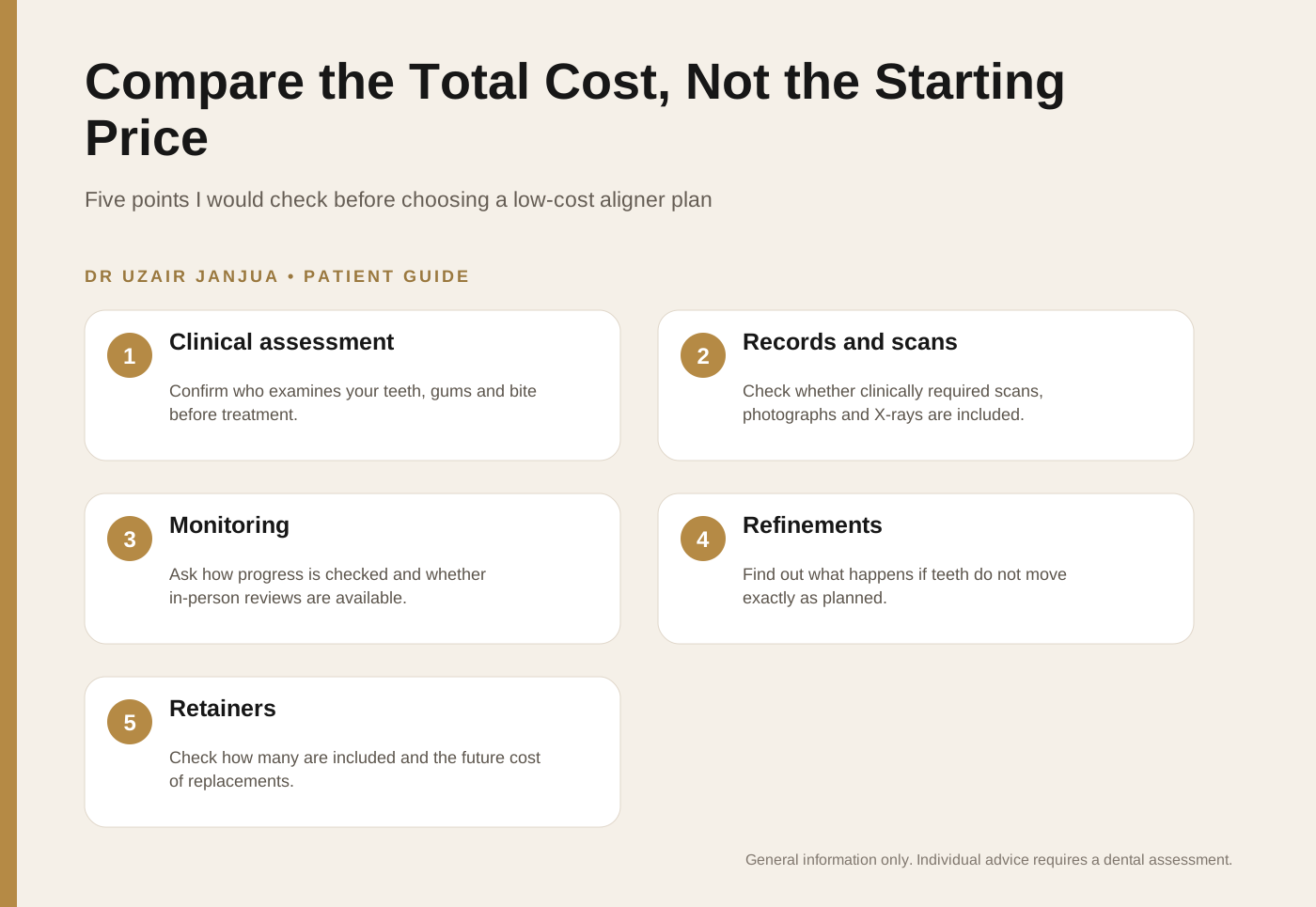
A headline fee can be useful for an initial comparison, but it rarely tells you everything. Before paying a deposit, I would ask for a written breakdown of what is included, what may be charged separately and what happens if treatment takes longer than expected.
| Item to check | Why it matters | Question to ask |
|---|---|---|
| Initial assessment | Aligners should start with an assessment of oral health, tooth position and the bite. | Will I be assessed by the clinician responsible for my treatment? |
| Scans, photographs and X-rays | Records help with planning. The records needed depend on the individual case. | Are all clinically required records included in the quoted fee? |
| Both arches and treatment objective | A low price may apply to upper or lower teeth only, or to visible front teeth rather than full bite correction. | Is this fee for one arch or both, and is the aim front-tooth alignment only or a wider orthodontic plan? |
| Progress reviews | Teeth do not always move exactly as predicted. | How are progress checks carried out, and can I be seen in person if needed? |
| Attachments and interproximal reduction | Some movements require small tooth-coloured attachments or carefully planned space creation. | Are these included if they are clinically needed? |
| Refinement aligners | Additional trays may be needed if teeth do not track precisely to the original plan. | How many refinements are included, if any? |
| Lost or poorly fitting trays | Delays can happen if an aligner is damaged, lost or does not fit correctly. | What is the replacement and support policy? |
| Retainers | Teeth can move after orthodontic treatment, so retention is part of the long-term cost. | Are retainers included, how many sets are supplied and what do replacements cost? |
Also check finance carefully. A monthly figure can make treatment seem more affordable, but I would always compare the total amount payable and read the cancellation, refund and treatment-abandonment terms before committing.
For a wider explanation of the factors that change clear aligner fees, you may find my guide to clear aligner costs in the UK useful.
Are cheap teeth aligners safe?
Cheap teeth aligners are not safe or unsafe simply because of their price or because some appointments take place remotely. In my view, safety depends on appropriate assessment, diagnosis, valid consent, suitable treatment planning and responsible monitoring by an appropriately registered dental professional.
Before you start, I would ask who is planning and supervising your treatment, whether that clinician is registered with the General Dental Council, and how you can contact them directly if you have a concern. The General Dental Council makes clear that direct-to-consumer orthodontic services fall within dentistry, so the professional responsibilities around assessment, consent and care still matter.
Before teeth are moved, I would assess oral hygiene, signs of decay, gum health, existing crowns or fillings, tooth wear, missing teeth and the condition of the tissues supporting the teeth. I would also assess the bite, because front teeth can appear crowded or uneven when the underlying issue is a wider bite discrepancy.
Clear aligner treatment has recognised limitations and risks. Teeth can feel sore as they move, aligners can irritate gums, cleaning may be more difficult if oral hygiene is already poor, and treatment may not achieve every movement predicted at the outset. Tooth movement can also be associated with root shortening in some cases. These are not certainties, but they are reasons for a proper discussion before treatment begins.
If a tray does not fit, feels unusually uncomfortable or you notice a change that concerns you, you need to know exactly who to contact and how you can be assessed. I would not regard a vague support arrangement as a substitute for a clear clinical route when help is needed.
What I would assess before recommending a lower-cost aligner plan
When I assess someone for clear aligners, I do not begin by deciding whether they need the cheapest or most comprehensive package. I begin by asking what they want to change and whether aligners are the right way to achieve it safely and realistically.
I would look at the amount of crowding or spacing, the position of the roots where relevant, the bite, how the front and back teeth meet, any previous orthodontic treatment, and the particular movements required. Gentle tipping of a mildly displaced front tooth may be more straightforward than correcting a significant rotation, closing larger spaces, moving back teeth or changing how the bite fits together.
I would also consider whether teeth need small tooth-coloured attachments to help the aligners grip, or whether interproximal reduction may be appropriate. This means carefully removing a very small amount of enamel between selected teeth to create space. It is not needed in every case and should be planned specifically, not treated as a routine extra.
Consent should be practical, not just a form to sign. I would explain the intended result, the likely limitations, recognised risks, realistic alternatives, the option of delaying or not proceeding, and what may happen if the plan needs to change. I would also make sure you understand any likely additional costs before you commit.
If you are considering dentist-led clear aligners in Birmingham, a consultation gives me the opportunity to examine your teeth, gums and bite, explain what is realistically achievable and confirm whether a lower-cost limited approach is genuinely appropriate for you. Photographs or an online questionnaire alone cannot confirm individual suitability.
When the cheapest aligners may not be the best option
I would be cautious about choosing a limited aligner package where there is significant crowding, a noticeable bite problem, impacted teeth, active gum disease, missing teeth, mobile teeth or extensive existing restorative work. These situations may need more detailed records, closer supervision or a combined plan with other dental treatment.
For example, a person may be focused on one crooked front tooth, but their bite may place excessive pressure on that tooth once it moves. Another person may have old crowns, worn edges or gaps created by missing teeth, where tooth position and restorative treatment need to be planned together.
In some cases, fixed braces can offer different levels of control for certain tooth movements or bite corrections. In others, it may be better to improve gum health or deal with decay before orthodontics begins. Delaying treatment is sometimes the sensible choice if the foundations are not ready.
Composite bonding can improve small chips, uneven edges or tooth shape, but it does not straighten teeth or correct a bite. Veneers may be appropriate in selected situations involving shape, colour or worn enamel, but they involve irreversible tooth preparation and are not a shortcut around a proper orthodontic assessment.
Cheap aligners versus other teeth-straightening options
The best option depends on the problem being treated, not simply how visible the appliance is or how low the starting price appears. I would compare treatments according to the movement required, the effect on the bite, oral health and how much supervision is appropriate.
| Option | May suit | Key trade-off |
|---|---|---|
| Limited clear aligners | Selected mild crowding or spacing cases, often where the goal is limited front-tooth alignment. | May have a narrower scope, fewer reviews or limited refinements. |
| Comprehensive clear aligners | Cases needing more detailed planning, bite assessment and ongoing monitoring. | Usually a higher initial fee, but potentially more elements included. |
| Fixed metal or ceramic braces | Some more complex movements or bite corrections. | More visible and fixed to the teeth, but may offer useful control in appropriate cases. |
| Composite bonding | Minor shape discrepancies, chips or visual asymmetry. | Does not move teeth or correct the bite. |
If you are weighing up aligners against braces or other adult options, my guide to teeth straightening options for adults explains the differences in more detail.
What this means for Birmingham and West Midlands patients
If you live in Birmingham or travel from Solihull, Sutton Coldfield, Coventry, Wolverhampton, Dudley, Walsall or elsewhere in the West Midlands, I would factor practical access into the decision. A national online service may appear convenient, but you should check where scans, examinations and urgent reviews would take place if you need them.
I would ask who is responsible for your treatment, whether you can contact that clinician directly, whether they are GDC registered and whether an in-person appointment is available if an aligner does not fit or your teeth are not tracking as expected. This is particularly important if you have crowns, fillings, previous braces, gum concerns, missing teeth or a more complicated bite.
Local care is not automatically better simply because it is local, and an online provider is not automatically poor value. The useful question is whether you can access the level of assessment and support your individual case needs without an impractical amount of travel or uncertainty.
My practical conclusion on the cheapest teeth aligners in the UK
The cheapest teeth aligners in the UK can be reasonable value for the right mild case, but the best-value option is the one that safely addresses your actual dental problem, has transparent total costs and provides appropriate support throughout treatment.
Before you commit, ask for the full fee in writing, including records, reviews, refinements, replacement trays and retainers. I would also make sure you understand whether the plan is intended to align visible front teeth only or address the wider bite, as well as the likely limitations and what happens if treatment needs to change.
If you are comparing affordable clear aligners in Birmingham or the West Midlands, I can examine your teeth, gums and bite and explain whether a limited aligner plan is likely to be sensible, or whether another approach would give you a more reliable long-term option. An examination is needed before I can confirm suitability or recommend a treatment route.