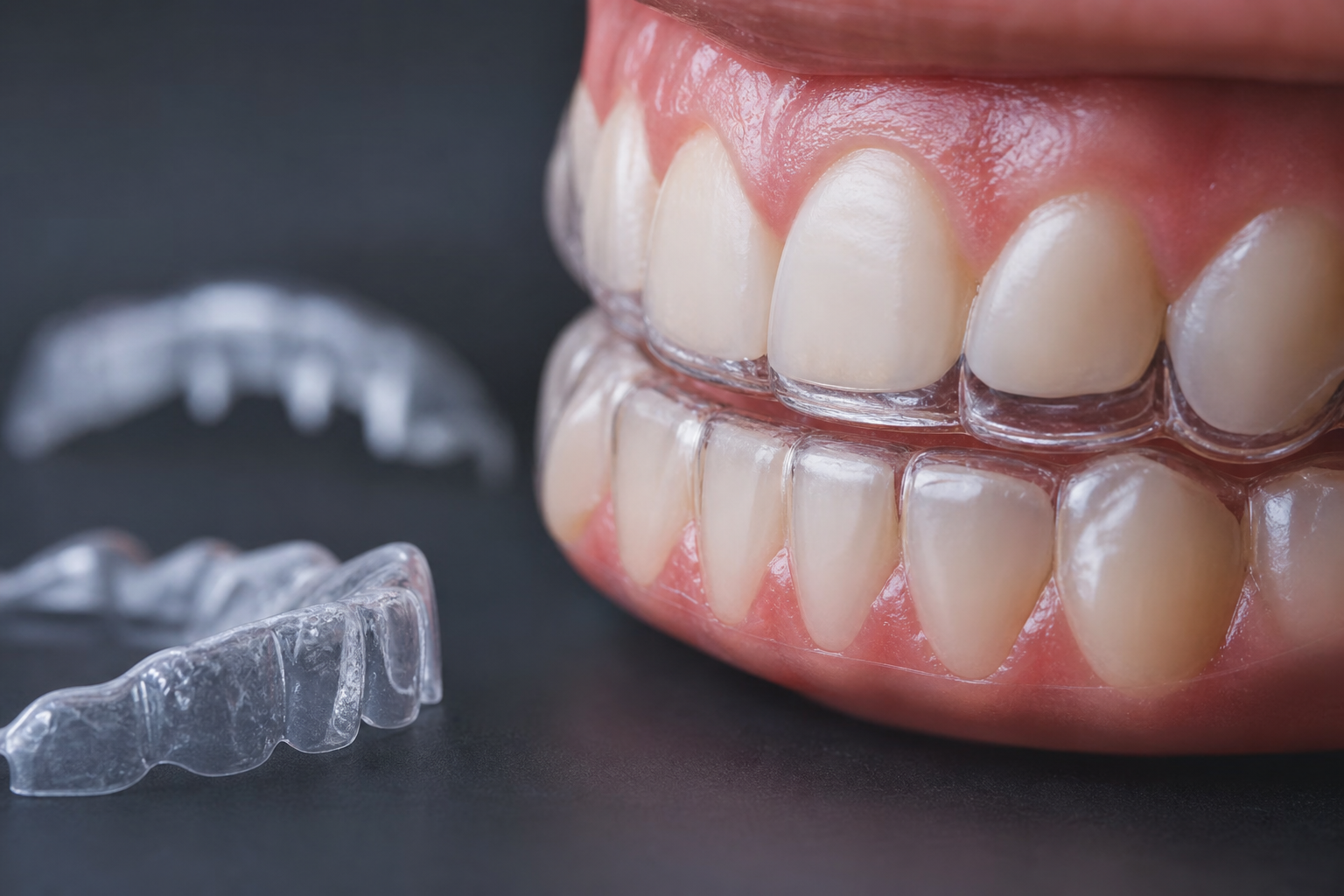
Quick teeth straightening can be a sensible option if you have a mild alignment concern, such as a small gap, slight crowding or teeth that have moved after previous braces. However, I would not judge a treatment plan by the advertised number of months alone. The key question is whether the visible improvement can be achieved while properly managing your bite, gum health, roots and the position of the whole tooth, not simply its front surface.
For some people, limited front-tooth alignment may be possible within several months. More complete orthodontic treatment, particularly where the bite needs changing or teeth need substantial movement, often takes longer. If you are considering quick teeth straightening in Birmingham or the West Midlands, I would first establish what actually needs correcting before discussing how quickly it may be possible.
How fast can teeth be straightened safely?
There is no single number of weeks or months that is safe for everyone. I usually explain that a short treatment can be appropriate where the movement is limited, the gums are healthy and the bite is already reasonably stable. A more comprehensive result generally needs more time because it may involve creating space, moving roots as well as crowns, and improving how the upper and lower teeth meet.
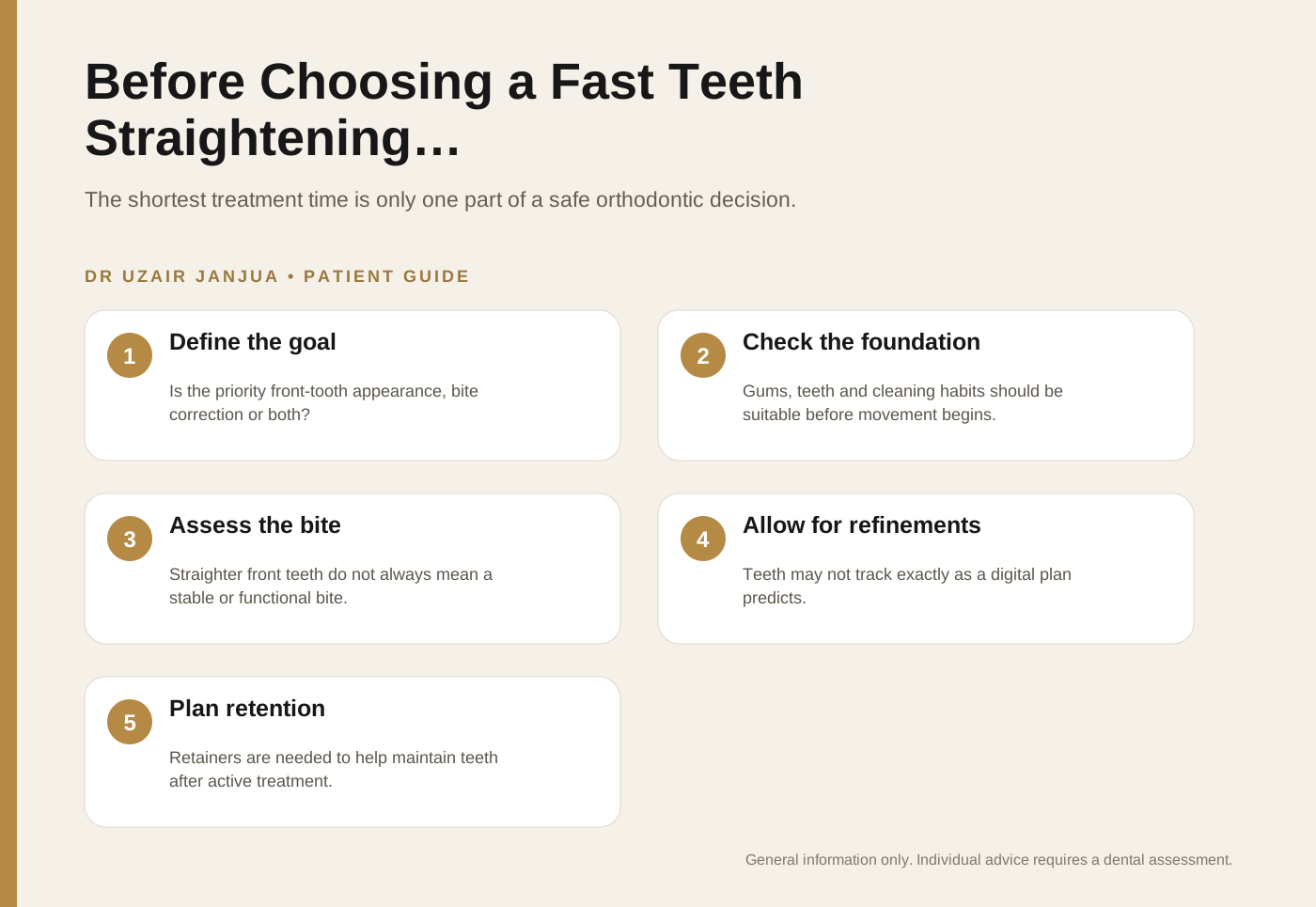
The visible front teeth are often the quickest part of a smile to improve. That does not always mean they are the only teeth that need attention. A plan that focuses only on the front six teeth may be entirely reasonable in a carefully selected case, but it may not be the right choice if crowding, bite pressure or tooth position further back is contributing to the problem.
Teeth move through a biological process involving the bone and supporting tissues around them. Applying stronger forces or trying to rush the sequence is not a reliable shortcut. I would plan movement around what is appropriate for the individual teeth, rather than working backwards from a wedding, holiday or work event.
When is quick teeth straightening realistic?
Quick teeth straightening is most realistic when the aim is limited cosmetic alignment rather than full bite correction. When I assess someone for a short orthodontic plan, I look for a concern that is genuinely contained and predictable, rather than one that only appears simple in a smile photograph.
A shorter plan may be worth discussing where there is:
- minor crowding or spacing at the front of the mouth
- a small relapse after previous orthodontic treatment
- slight rotation of one or two teeth
- an acceptable bite that does not need wider correction
- healthy gums, good cleaning habits and no untreated decay
- enough space to align the teeth without unsuitable compromises.
What I would look at first is whether the front teeth can be aligned without pushing them too far forward, creating an unstable bite or leaving their roots less ideally positioned. Sometimes the answer is yes. Sometimes a longer plan, fixed braces or a different cosmetic approach makes more sense.
Why can very fast treatment be a problem?
The concern with unusually fast treatment is not that every short plan is unsafe. It is that a limited cosmetic result can be presented as though it is a complete orthodontic correction. I would want you to understand what the proposed treatment is designed to change, and what it is not designed to change.
For example, front teeth can sometimes be tipped into a straighter-looking position without fully moving the roots into the most ideal position. In selected cases this may be an acceptable trade-off. In others, it can affect stability, gum support or the way the teeth meet.
Orthodontic treatment also carries recognised risks. These can include temporary soreness, gum irritation, difficulty cleaning around appliances, decay if hygiene is poor, teeth not moving exactly as predicted, relapse after treatment and changes affecting the roots. Root shortening, known clinically as root resorption, is a potential adverse effect of tooth movement. It is not inevitable, and it is not caused simply because treatment is short, but it is one reason I would not treat orthodontics as a cosmetic shortcut without proper assessment and monitoring.
Speed can also create pressure around deadlines. If you are planning treatment before a Birmingham wedding, graduation or major event, allow time for consultation, records, planning, active treatment, possible refinements and retainers. The headline duration does not necessarily include every stage needed to finish safely.
What I would assess before recommending a short treatment
A smile simulation or photograph can be useful for discussing your concerns, but it cannot replace a diagnosis. Before I recommend quick teeth straightening, I would assess your teeth, gums, bite and the available space for movement. I would also decide which records and examinations are clinically appropriate for your case.
The assessment normally needs to consider:
- the health of your gums and whether there is bleeding, recession or reduced bone support
- untreated decay, failing fillings, tooth wear or active dental disease
- how your upper and lower teeth meet when you bite and chew
- crowding, spacing, rotations and whether teeth have erupted in a suitable position
- the likely position of roots and whether the planned movement is sensible
- previous braces or aligners, and why teeth may have moved again
- existing crowns, veneers, bonding, implants or bridges that may affect planning
- your expectations, including whether your priority is appearance, bite function or preparation for further cosmetic dentistry.
I would not recommend starting cosmetic tooth movement while active gum disease, decay or poor plaque control needs attention. Treating the foundation first is not a delay for its own sake. It helps protect the teeth and supporting tissues that orthodontic treatment depends on.
If you want to know whether a fast option is realistic for your smile, a face-to-face assessment gives us the chance to compare the visible concern with the bite and underlying tooth positions. For patients in Birmingham and the wider West Midlands, it also makes monitoring and any necessary refinement appointments easier to manage.
Are clear aligners the fastest option?
Clear aligners can be an effective and discreet option for selected mild to moderate alignment concerns, but I would not say they are automatically faster than fixed braces. The best appliance depends on the movements required, your bite, the level of control needed and how consistently you can wear a removable appliance.
Aligners are usually changed in a planned sequence, often at intervals of one or two weeks. This does not mean every tooth is moving by the same amount each week, or that changing trays more frequently will shorten treatment safely. Each stage needs to be based on your treatment plan, and aligners need to be worn as instructed for the plan to work as intended.
Clear aligners can be particularly useful where discretion and removability matter, provided you are likely to wear them consistently. Fixed braces may be preferable for certain planned movements or bite changes, depending on the diagnosis and treatment objectives. I discuss the advantages and limitations of dentist-supervised clear aligners in the context of the individual case, rather than treating them as a one-size-fits-all answer.
One thing I usually explain to patients is that refinements are normal in orthodontics. Teeth do not always track exactly as a digital plan predicts, so a realistic timeline should allow for review and adjustment rather than assuming the first set of aligners is always the final set.
Is six-month teeth straightening enough?
Six months can be enough for selected limited cases, particularly where the aim is modest alignment of the visible front teeth. It is not automatically enough for comprehensive orthodontic treatment, bite correction or more complex crowding. I would only describe a six-month plan as suitable after confirming that the limited objective matches what your teeth and bite actually need.
This is where people sometimes get confused. A shorter treatment can create a meaningful cosmetic improvement, but it may not fully correct the roots, back teeth or bite relationship. That is not necessarily a problem if the limitations are understood and acceptable. It becomes a problem when a limited treatment is sold as though it provides the same outcome as a more complete plan.
If a provider has suggested a very short timescale, I would ask what teeth are being moved, whether the bite is being changed, what happens if the teeth do not track as planned and how retention will be managed afterwards. Comparing treatment times without comparing treatment objectives can be misleading.
Quick teeth straightening or composite bonding?
If your main concern is a small visual irregularity, composite bonding may sometimes create a quicker cosmetic change than orthodontics. Bonding adds tooth-coloured material to alter shape, edges or small gaps. It does not move teeth, correct an underlying bite problem or change the position of roots.
I would consider bonding only after looking at the tooth positions, enamel, bite and the amount of material needed. Adding material to overlapping or prominently positioned teeth can make them appear bulkier, so it is not always the conservative option people expect. In some cases, orthodontic alignment followed by carefully planned bonding may be more appropriate, depending on tooth position, enamel, bite and future maintenance requirements.
Bonding also needs future care. The material can stain, chip or require repair or replacement over time. If you are weighing up a rapid cosmetic change against tooth movement, my guide to what I assess before composite bonding may help you understand the restorative side of that decision.
Warning signs that a fast treatment plan needs more questions
I would be cautious if quick teeth straightening is offered without a proper clinical assessment, clear responsibility for your care or discussion of the bite and gums. Convenience matters, but it should not replace the information needed to establish whether treatment is suitable.
Ask more questions if you are offered:
- a guaranteed finish date or guaranteed result before your teeth have been properly assessed
- treatment based only on photographs, impressions or a cosmetic simulation, without an appropriate clinical examination
- no explanation of who is clinically responsible for the treatment and monitoring
- no discussion of gum health, decay, roots, bite changes or possible limitations
- a price that does not make clear whether records, reviews, refinements and retainers are included
- pressure to start immediately because of a temporary offer or an event deadline
- no plan for what happens if aligners stop fitting, are lost or the teeth do not move as expected.
The issue is not simply whether some contact happens remotely. Remote monitoring can form part of properly managed care where suitability has been assessed appropriately and there is clear clinical responsibility. I would be concerned where mail-order or DIY treatment lacks an adequate clinical assessment, direct oversight or a clear route to help if something changes. If you are considering this route, read about what can be missed without a dental examination before committing.
What affects the cost of quick teeth straightening?
I would be wary of comparing orthodontic quotes only by the starting price or advertised treatment length. A limited cosmetic alignment plan and a comprehensive bite correction may look similar online, but they are not equivalent treatments. The final fee should reflect the planning, supervision and aftercare your individual case needs.
| Cost factor | Why it matters |
|---|---|
| Complexity and number of teeth | Minor front-tooth alignment generally involves different planning from wider crowding or bite correction. |
| Type of appliance | Clear aligners and fixed braces involve different materials, planning and appointment needs. |
| Preparation before treatment | Hygiene care, fillings, gum treatment or replacement of unsuitable dental work may be needed first. |
| Space creation and supporting procedures | Attachments, enamel reshaping between teeth, elastics or other planned measures can affect complexity. |
| Monitoring and refinements | Review appointments and additional aligners may be needed if teeth do not move exactly as planned. |
| Retainers and future maintenance | Retention is part of protecting the result, and retainers may eventually need replacement. |
For Birmingham and West Midlands patients, I would also consider the practical value of local reviews. If an aligner is not fitting, an attachment comes off or a refinement is needed, being able to access the clinician responsible for your care conveniently can be an important factor alongside the quoted fee.
What happens after quick teeth straightening?
Removing aligners or braces is not the end of treatment. Teeth can move throughout life, including after orthodontics, which is why retainers are an essential part of the plan. I would discuss the type of retention that suits your situation and how to care for it, rather than promising that teeth will remain perfectly unchanged forever.
Your long-term result also depends on good cleaning, routine dental care and responding promptly if a retainer no longer fits or is damaged. If you have invested time in alignment, it makes sense to protect that result rather than waiting until visible relapse has developed.
The right question is not simply, “How fast can I finish?” It is, “What needs to be corrected, and can it be done safely, predictably and with a plan to maintain it?” If you are considering quick teeth straightening in Birmingham or travelling from elsewhere in the West Midlands, I can assess whether a short treatment is genuinely appropriate or whether another route would better suit your teeth, bite and goals.