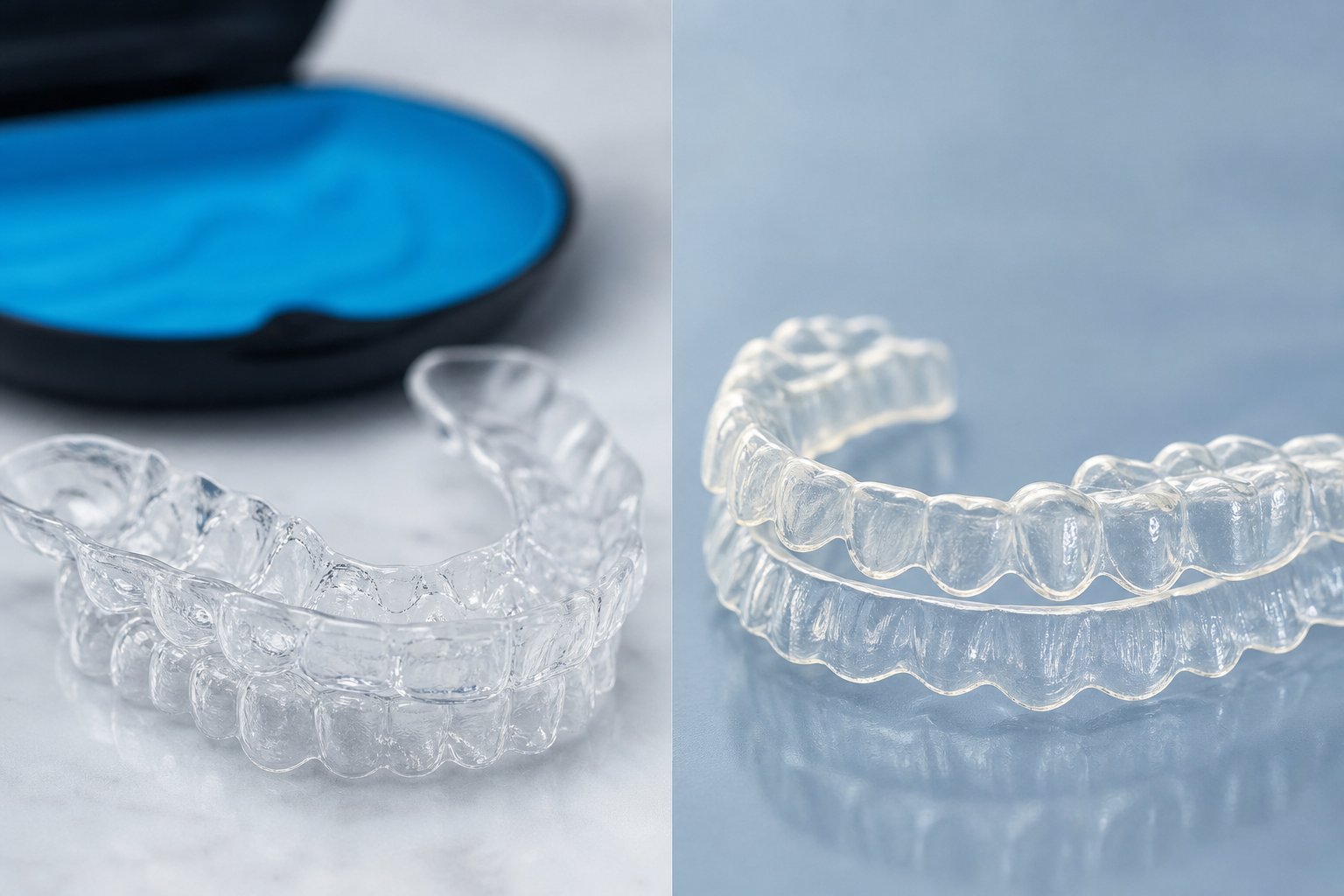
If you are looking for an Invisalign alternative in the UK, there is no single option that is automatically best. Invisalign is one brand of clear aligner, and systems such as Spark, SureSmile and ClearCorrect may be reasonable alternatives in the right case. Ceramic, lingual and conventional fixed braces may also be more suitable where I need greater control over particular tooth movements or the bite.
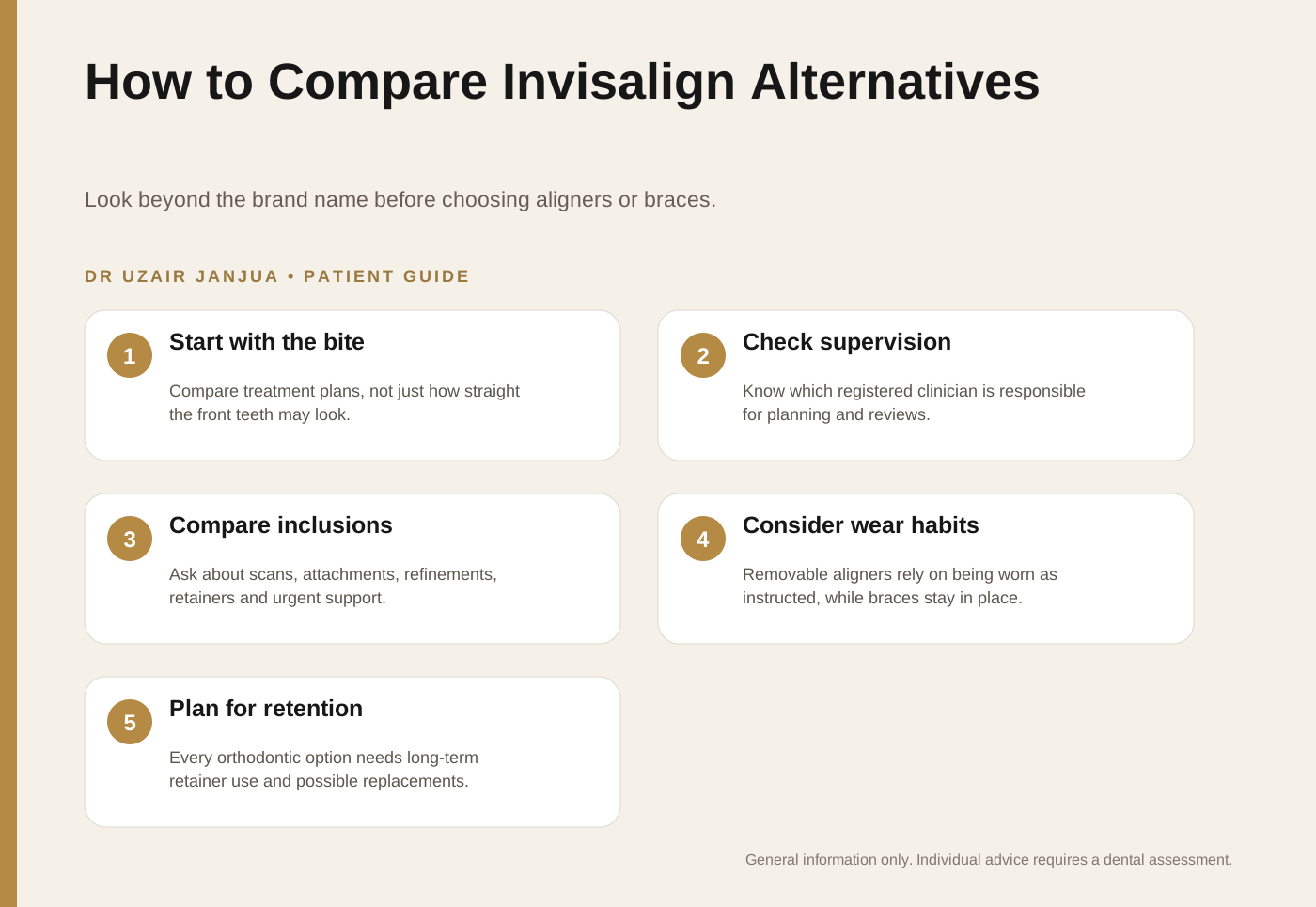
When I assess someone, the brand name is usually less important than the diagnosis, the treatment plan and who is responsible for monitoring it. I would look at the movements needed, how your teeth meet, your gum health, how discreet you need treatment to be, whether removable aligners fit your routine and what happens if treatment needs adjusting.
A lower-cost option can be perfectly reasonable, but only if it is being compared on the same clinical basis. The right Invisalign alternative is the appliance and plan that can safely work towards the agreed aim with appropriate supervision, not simply the cheapest tray or the most recognisable name.
What is the best alternative to Invisalign in the UK?
There is no universal best alternative to Invisalign. For straightforward crowding, gaps or teeth that have moved after previous orthodontic treatment, several professionally supervised clear-aligner systems may be suitable. For more complex tooth movements or bite correction, I may recommend fixed braces, or sometimes a combination of approaches, instead.
I usually separate the options into three groups. First, there are clear aligners planned and monitored through a dental professional. Second, there are fixed appliances, including metal, ceramic and lingual braces. Third, there are remote or direct-to-consumer services, which should not be treated as clinically equivalent simply because they also use clear trays.
The main Invisalign alternatives I would compare
This table is a useful starting point, rather than a substitute for an examination. The same appliance can be an excellent choice for one person and a poor choice for another, depending on the teeth, bite and treatment objective.
| Option | Appearance and removability | May be considered for | Main trade-off |
|---|---|---|---|
| Spark, SureSmile or ClearCorrect aligners | Clear and removable | Mild to moderate alignment, spacing, relapse and some cases needing more planned tooth movement | Suitability depends on diagnosis, wear, treatment planning and monitoring, not the brand alone |
| Clinician-designed in-house aligners | Usually clear and removable | Selected cases with proper examination, planning and review | Ask who is responsible for treatment and what support is included |
| Ceramic braces | Fixed, tooth-coloured or translucent brackets | People wanting a less visible fixed option | Can be more delicate, more difficult to clean and may cost more than metal braces |
| Metal fixed braces | Visible and fixed | A wide range of tooth movements, including many more complex cases | Less discreet and requires careful brushing around brackets and wires |
| Lingual braces | Fixed behind the teeth | Patients prioritising discretion who accept a more technique-sensitive option | May affect speech or tongue comfort, can be harder to clean and may cost more |
| At-home or direct-to-consumer aligners | Usually clear and removable | Should be considered separately from fully supervised care | May involve less direct clinical assessment and fewer face-to-face checks |
Availability, prescribing arrangements and clinician familiarity can vary between providers and systems. I would therefore avoid choosing a brand before understanding whether the proposed clinician can plan, review and support the type of treatment you need.
If you are mainly deciding between removable aligners and tooth-coloured fixed braces, my guide to clear braces versus clear aligners explains the practical differences in more detail.
Invisalign versus other clear-aligner brands
Invisalign, Spark, SureSmile and ClearCorrect can all be used within a properly supervised orthodontic plan. I would be cautious about claims that one is always better, faster or more comfortable. Each system has its own materials, digital workflow and planning features, but no brand replaces a careful assessment of your teeth, gums and bite.
What I would compare first is the actual treatment plan. Are we only aligning the visible front teeth, or are we correcting the bite as well? Are attachments likely to be needed? Attachments are small tooth-coloured shapes bonded temporarily to teeth so aligners can grip and move them more precisely. Is enamel reshaping between teeth, known as interproximal reduction, being proposed, and why?
I would also clarify how often progress needs reviewing, whether remote check-ins supplement rather than replace appointments, and what happens if teeth do not track as expected. A digital simulation can be helpful for showing the intended direction of treatment, but it is a planning tool rather than a guarantee of the final result.
One thing I usually explain to patients is that removable treatment only works when it is worn as instructed. Aligners are discreet and can be removed for eating and cleaning, which many adults value. That convenience also means they can be left out too often, lost or damaged. Where that is likely to be difficult, a fixed option may be more dependable.
When fixed braces may make more sense than an Invisalign alternative
Fixed braces may be the more sensible option when I need particularly close control over tooth position, space closure or bite changes. They can be useful where teeth are significantly rotated, where vertical tooth movement is needed, where upper front teeth are prominent, or where extractions and more complex bite correction form part of the plan.
This does not mean clear aligners cannot manage any complex case. Some more involved cases can be planned with aligners, attachments, elastics and refinements. However, fixed braces remain important because brackets and wires can provide continuous control without relying on a removable tray being worn consistently.
Ceramic braces can reduce the visibility of fixed treatment, but they are not simply invisible metal braces. They may be more prone to breakage or staining, and may involve different comfort and cleaning considerations. Lingual braces are hidden behind the teeth, but I would discuss the likely effect on speech, tongue comfort, cleaning, cost and availability before recommending them.
If you are still comparing the broader range of adult options, my article on teeth-straightening options for adults may help you prepare for a more informed consultation.
Are at-home aligners a safe alternative in the UK?
I would not compare at-home aligners with dentist-supervised treatment on price alone. Moving teeth is dental treatment, and a safe decision should start with an appropriate assessment of your teeth, gums, bite and existing dental work. Active decay, gum disease, unstable restorations or bite problems may need attention before orthodontic treatment begins.
The General Dental Council states that suitability for orthodontic treatment should be based on a full oral-health assessment, and that a physical clinical examination cannot currently be effectively replaced as the foundation of that assessment. This matters because photographs, scans and impressions may not reveal the full condition of the mouth or how the teeth function together.
Before using a remote service, I would want you to know the name of the registered clinician responsible for your care, how you can contact them directly, what records are taken, and how you would access face-to-face help if trays stop fitting or your bite feels different. Remote monitoring can be useful within a properly managed pathway, but it should not become a reason to avoid essential examinations.
What I would assess before recommending any clear-aligner system
Before I recommend Invisalign or another clear-aligner system, I would first assess whether your mouth is healthy enough to start. That includes checking for decay, gum inflammation, signs of gum disease, tooth wear, loose teeth and restorations that could affect planning.
I would then look carefully at the bite, not just whether the front teeth look crooked. I assess crowding or spacing, tooth positions, jaw relationships, tooth shape and size, how the teeth function together and whether the aim is limited cosmetic alignment or more comprehensive orthodontic correction.
Your expectations are equally important. A short alignment plan may improve the appearance of visible teeth, but it may not address every bite issue. In some situations, treating an oral-health problem first, delaying treatment or deciding not to proceed can be more appropriate than starting a cosmetic alignment plan quickly.
For patients in Birmingham and the West Midlands, a clear aligner consultation in Birmingham gives me the opportunity to assess these details before you commit to a particular brand. I can explain whether removable aligners are sensible, or whether another approach may offer more reliable control for your goals.
What changes the cost of an Invisalign alternative?
A cheaper alternative to Invisalign may not be cheaper overall if important stages are excluded. I would compare written treatment plans rather than monthly payments or introductory package prices, particularly if you are comparing providers across Birmingham, Solihull, Coventry, Wolverhampton or the wider West Midlands.
| Cost factor | Why it matters |
|---|---|
| Complexity and treatment aim | Limited front-tooth alignment is different from full bite correction across both arches. |
| One arch or both arches | Treating upper teeth only may not be appropriate if it changes how the bite meets. |
| Planning and review appointments | Examination, scans, clinical monitoring and bite checks should be clear from the outset. |
| Attachments, elastics or enamel reduction | These may be necessary parts of a plan, rather than optional extras, depending on the movements required. |
| Refinements and replacement aligners | Ask whether additional trays are included if teeth do not move exactly as planned. |
| Dental treatment before alignment | Decay, gum disease or failing restorations may need stabilising before orthodontics. |
| Retainers and future replacements | Retention is ongoing, and replacement retainers should form part of the long-term budget. |
| Travel and urgent support | A lower initial fee may be less practical if regular visits or repairs involve long journeys. |
Local comparisons are only meaningful if examination, records, active treatment, refinements, retainers and aftercare are included on the same basis. I would also ask whether remote monitoring changes the total fee or simply changes how appointments are delivered.
Questions I would encourage you to ask before choosing
You do not need to become an orthodontic expert before a consultation, but clear answers to a few questions can show whether two quotations are genuinely comparable.
- Who is the registered clinician responsible for my treatment, and can I contact them directly?
- What examination, scans, photographs and bite assessment are included before treatment starts?
- Is the plan limited alignment, or does it include correcting the bite where needed?
- What are the realistic limits of the proposed option in my case?
- Are attachments, elastics, enamel reduction and refinement aligners included if required?
- What happens if an aligner does not fit, an attachment comes off or a brace component breaks?
- Which retainers are included, how should I expect to wear them, and what will replacements involve?
I would also ask how often you need to attend in person. This is particularly relevant if you are travelling into Birmingham from elsewhere in the West Midlands. A nearby practice can be valuable when a bite check, repair or refinement decision cannot wait.
Which option may suit different priorities?
The answer depends on the teeth and bite, but these examples can help you prepare for a useful consultation. They are not diagnoses or promises of suitability.
- You want removable, discreet treatment: a dentist-supervised clear-aligner system may be worth exploring if you can wear trays consistently and the planned movements are suitable.
- You have mild relapse after braces: several aligner brands or a short fixed-brace plan may be possible, depending on the bite and tooth positions.
- You need more involved bite correction: I would discuss fixed braces as well as aligners, rather than assuming a clear tray is automatically the best route.
- You want the least visible fixed option: ceramic or lingual braces may be options, provided you accept their cleaning, comfort, availability and cost trade-offs.
- You are mainly focused on the lowest total cost: metal braces may be worth comparing, but I would still include retainers, reviews and future maintenance in the calculation.
- You are unsure you can keep trays in as instructed: a fixed appliance can remove the day-to-day responsibility of wearing and storing aligners.
Retainers are part of the decision, not an afterthought
Whichever Invisalign alternative you choose, retainers are usually essential after active orthodontic treatment. The British Orthodontic Society explains that retainers are needed in almost all cases to help reduce the risk of teeth moving after treatment. Some areas, including the lower front teeth, are commonly discussed as areas where relapse can occur over time.
I would explain the type of retainer recommended, how it is worn, how it is cleaned and when it may need replacing before treatment begins. Completing aligners or having braces removed is not the end of ownership. Retention is a long-term commitment and should be included when comparing the practical and financial value of different treatments.
The best Invisalign alternative is not necessarily the most recognisable brand, the shortest advertised plan or the lowest initial quote. It is the option that suits your dental health, bite, lifestyle and treatment goal, with a clinician responsible for planning and monitoring each stage.
If you are comparing aligners or braces in Birmingham or the West Midlands, an examination is the sensible next step. I can assess your teeth and bite, explain whether a clear-aligner system or fixed brace option is more appropriate, and help you compare treatment plans on a like-for-like basis before you decide.