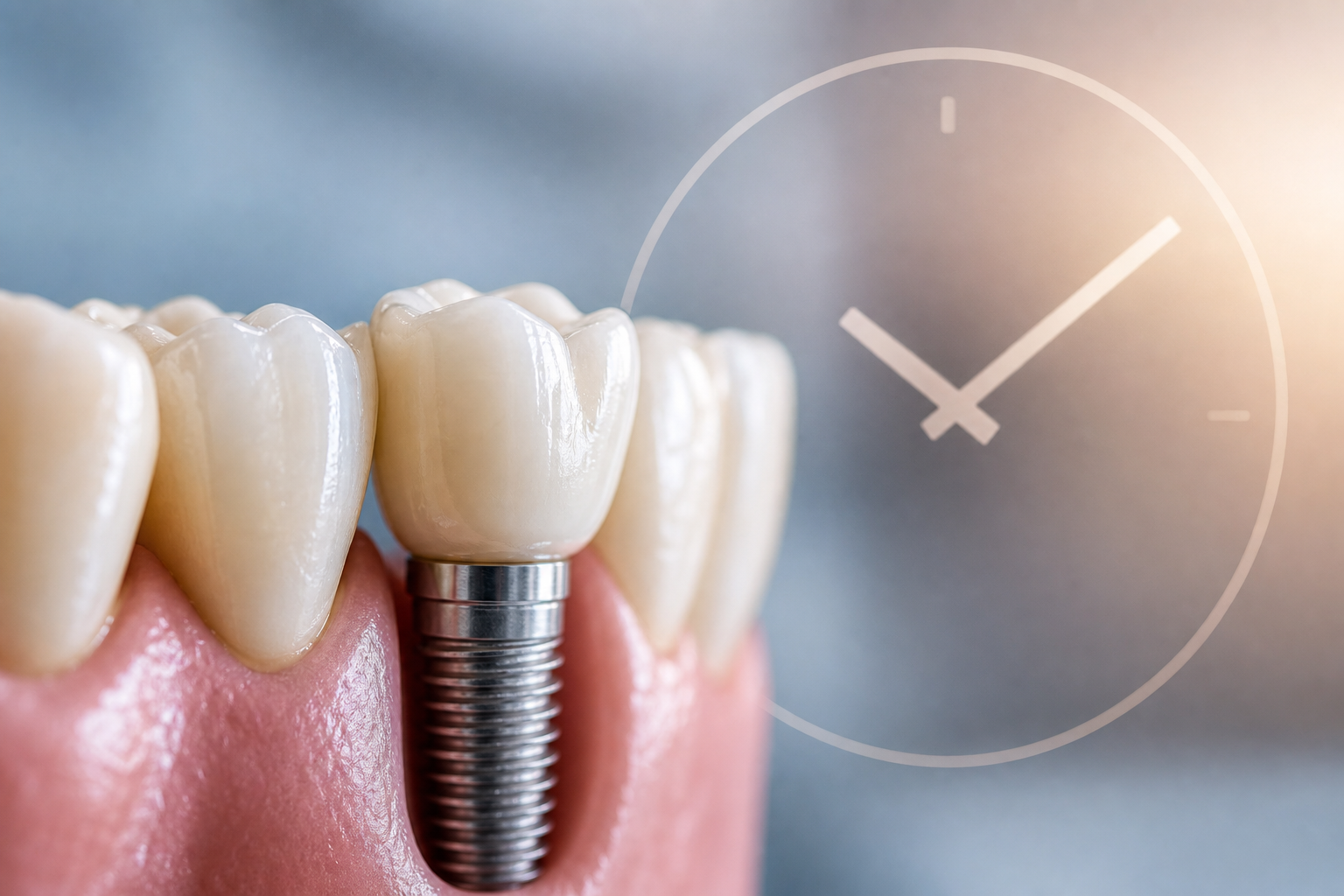
When patients ask me how long dental implants last, I explain that there is no single expiry date. A well-planned implant that integrates successfully with the jawbone can remain functional for many years and may last for decades. However, the implant placed in the bone is not the same thing as the visible tooth on top. The crown, bridge or denture attached to it can wear, chip, loosen or need replacement while the implant itself remains healthy.
The more useful question is usually not simply whether an implant will last, but whether the implant, surrounding gum and bone, and replacement tooth can remain healthy and maintainable in your particular circumstances. That depends on planning, cleaning, gum health, smoking, general health, bite forces and regular aftercare.
How long do dental implants last?
A successful dental implant can last for decades, but I would never describe any implant as guaranteed to last forever. Research usually measures implant survival at set points, such as five, ten or twenty years, rather than giving one reliable average lifespan for every person.
Long-term research shows that many implants remain in function at ten years and beyond. However, longer follow-up evidence is naturally more limited, and the results vary according to the patient group, implant system, restoration design and how each study defines success.
These findings are useful context, not a personal prediction. When I assess someone, an implant being present at review is not the whole story. I also want to see healthy surrounding tissues, stable supporting bone where possible, comfortable function and a restoration that can be cleaned and maintained.
This is where people sometimes get confused. Implant survival means the implant fixture remains in place and functional. It does not necessarily mean there have been no repairs, no inflammation, no bone changes or no maintenance over the years.
The implant and the tooth are not the same thing
I usually explain an implant restoration as three separate parts. Each has a different role, and each can have a different maintenance pattern over time.
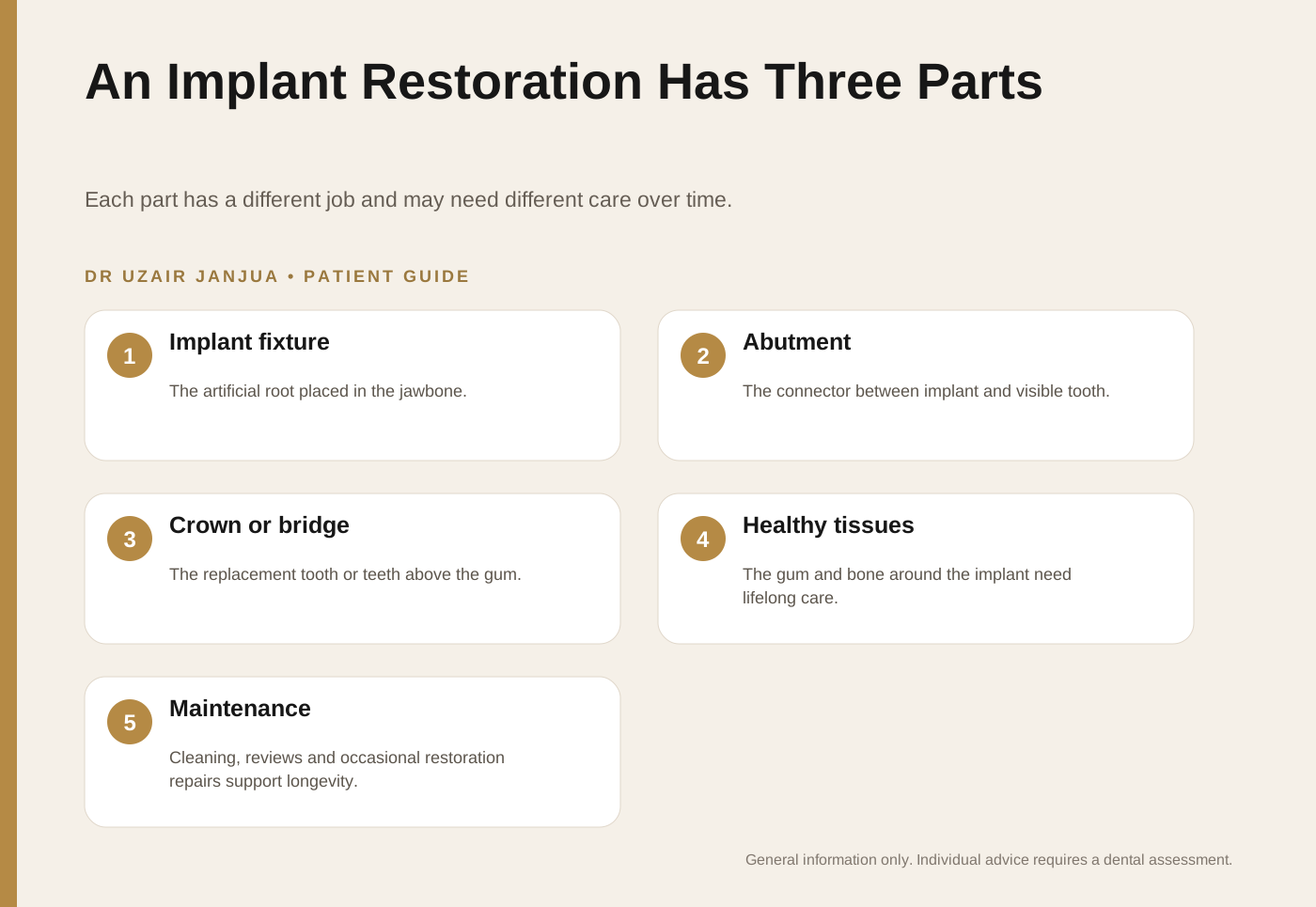
| Component | What it does | Possible long-term issue | What it may mean |
|---|---|---|---|
| Implant fixture | The artificial tooth root placed in the jawbone. | Inflammation around the implant, supporting bone loss or loss of integration. | Needs assessment and may require treatment. In some cases, the implant can be lost. |
| Abutment | The connector between the implant and visible tooth. | A screw may loosen or a component may need adjustment or replacement. | This does not automatically mean the implant has failed. |
| Crown, bridge or denture | The visible replacement tooth or teeth above the gum. | Wear, chipping, fracture, staining, loosening or loss of retention. | The restoration may be repaired or replaced while the implant remains healthy. |
For a single missing tooth, the visible part is normally an implant crown. For several missing teeth, it may be a bridge supported by implants. For full-arch treatment, it may be a fixed bridge or removable implant-retained denture. The more complex the restoration, the more important its design and cleaning access become.
How long does an implant crown last?
An implant crown does not necessarily last as long as the implant beneath it. It is exposed to daily chewing forces and wear, just like any other restoration. It may eventually need polishing, repair, screw tightening or replacement.
There is no standard timetable for replacing an implant crown. A crown may remain serviceable for many years, but I would assess it according to wear, damage, fit, function, appearance and whether the area remains practical to clean.
What I would look at first is the material used, the position of the tooth, the amount of force it receives, whether you clench or grind, and how easily the area can be cleaned. A crown on a front tooth may face different demands from a crown on a back molar. A bridge or full-arch restoration also has different maintenance considerations from a single crown.
A chipped crown, worn biting surface or loose screw can be inconvenient, but it is not the same as losing the implant. One thing I usually explain to patients is that restorative maintenance is a normal part of owning an implant-supported tooth. It should be planned for rather than viewed automatically as treatment failure.
With full-arch implant restorations, the supporting implants may remain healthy while the prosthesis itself needs attention. Depending on the design, this can include maintenance of acrylic teeth, screws, clips, attachments or other restorative components, as well as cleaning underneath the bridge or denture.
What affects how long an implant lasts?
Long-term outcomes are influenced by both the original treatment plan and what happens after treatment. I would assess risk factors carefully before recommending implants, because some can be improved or managed before surgery.
Gum health and peri-implant disease
Implants do not develop decay in the way natural teeth do, but plaque can still cause inflammation in the gum and bone around them. Inflammation limited to the soft tissues around an implant may be manageable when identified early. Peri-implantitis is more serious because it involves inflammation with progressive supporting bone loss.
A history of gum disease matters. Active periodontal disease may need to be stabilised before implant treatment, and ongoing gum care remains important after the implant has been placed.
Smoking, health and medicines
Smoking can affect healing and is associated with a less favourable implant risk profile. Poorly controlled diabetes, certain medicines, previous radiotherapy involving the jaws and other medical factors may also affect planning or aftercare. These do not automatically rule out treatment, but I may need to modify the plan, discuss the risks more carefully or liaise with another healthcare professional where appropriate.
Cleaning access and bite forces
An implant restoration must be possible to clean properly. If the crown or bridge shape leaves areas that are difficult to reach, plaque can build up around it. Clenching, grinding and uneven bite forces can also place extra stress on the crown, screw, abutment and supporting implant.
I may recommend protective measures where appropriate, such as managing the bite or using a night guard for someone who grinds their teeth. The aim is not to promise that problems will never occur, but to reduce avoidable strain.
What I would assess before recommending implants
Before I recommend dental implants, I would assess more than the gap left by a missing tooth. The condition of the surrounding mouth often tells me more about likely long-term maintenance than the gap itself.
- The health of the gums and whether there is active gum disease.
- The condition and prognosis of neighbouring teeth, including whether a natural tooth could reasonably be retained.
- The available bone and whether grafting or staged treatment may be needed.
- Your bite, tooth position, space and any signs of clenching or grinding.
- Smoking, medical history, medicines and healing considerations.
- Whether you can clean around the proposed crown, bridge or denture effectively.
- The appearance, speech and functional expectations for the finished restoration.
Imaging, including 3D imaging, may be helpful when clinically justified, but it is not simply a routine extra. I would use the information needed to plan the treatment safely and assess the anatomy properly.
If you are considering dental implants in Birmingham, an individual consultation is the sensible next step when you want a prognosis that is more meaningful than a general population average.
What does long-term implant maintenance involve?
Good implant maintenance is active rather than occasional. I would show you how to clean around your particular restoration, because the technique for a single implant crown can differ from the approach needed under a bridge or full-arch prosthesis.
Daily brushing remains essential. Depending on the restoration design and spaces around it, you may also need interdental brushes, floss designed for bridges, a water flosser or other aids. The right tools depend on what you can use effectively and consistently, not on buying every product available.
Professional reviews should be based on your individual risk. At these appointments, I would assess the gum tissues, plaque control, bite, restoration condition and any signs of loosening or inflammation. Higher-risk patients may need closer supportive care than someone with stable gums and excellent cleaning access.
Please do not ignore persistent bleeding, swelling, pus, a bad taste, pain, a change in bite or a loose-feeling crown. These symptoms do not always mean the implant is lost, but they deserve prompt assessment. I explain more about implant symptoms that should not be ignored if you are worried about an existing restoration.
Are dental implants worth it for everyone?
Dental implants can be an excellent long-term option for the right person, particularly where replacing a missing tooth without preparing neighbouring teeth is important. They do involve surgery, healing time, ongoing cleaning and a higher initial financial commitment than some alternatives.
I would not advise removing a natural tooth simply because an implant may last a long time. If a tooth has a realistic restorative prognosis, retaining it can sometimes make more sense. In other situations, a conventional bridge, resin-bonded bridge, removable denture or even leaving a space may be reasonable, depending on appearance, function and the position of the teeth.
When comparing fees, I encourage patients to compare the full ownership plan rather than one headline number. The final cost can be affected by extractions, gum treatment, bone grafting, temporary teeth, restoration material, complexity, imaging, sedation and the number of appointments required. It should also be clear whether the fee includes the implant, abutment, final crown or bridge, reviews and expected follow-up. My guide to what changes dental implant costs in the UK may help you compare plans more fairly.
For patients travelling from elsewhere in the West Midlands into Birmingham, I would also consider practical ownership factors. Treatment can involve several appointments over months, so travel, parking, work commitments and access to urgent reviews are all worth discussing before you begin.
What happens if an implant fails or the crown needs replacing?
A repair to the crown or connector is often very different from implant failure. If a crown chips, wears or loosens, I would first assess the implant, gum and bone around it before deciding whether the restoration can be repaired, tightened or replaced.
If there is inflammation and bone loss around the implant, treatment depends on the cause, the amount and pattern of bone loss, the restoration design and how cleanable the area is. Management may involve improving cleaning, professional treatment, reassessment and further care where necessary. Not every affected implant can be saved, but early assessment may give us more options.
If an implant is lost, replacement may sometimes be possible after healing and assessment. Some cases need further grafting, altered positioning or a different replacement option. I would not assume in advance that replacement will be simple, because the right approach depends on the remaining bone, gum health and reason for the loss.
Questions I would encourage you to ask before treatment
A clear conversation before treatment helps avoid misunderstandings about longevity and future costs. I would encourage you to ask:
- What is included in my treatment plan, from consultation and imaging to the final crown and follow-up?
- Who will coordinate the surgery, restoration and long-term aftercare?
- How will my gum health, smoking status, medical history and bite affect my risk profile?
- Will the final crown, bridge or denture be designed so that I can clean around it properly?
- What maintenance or repairs are reasonably foreseeable for the visible restoration?
- What happens if a screw loosens, the crown chips or I develop symptoms years later?
- Is retaining my natural tooth, using a bridge or choosing a denture a better option in my case?
Dental implants can offer a durable replacement for missing teeth, but they are not maintenance-free or identical to a permanent natural tooth. The implant fixture may remain healthy for decades, while the crown or bridge above it may need attention along the way. If you are weighing up dental implants in Birmingham or the West Midlands, I can assess your gums, bone, bite and practical maintenance needs, then talk through the likely long-term options in your own situation.