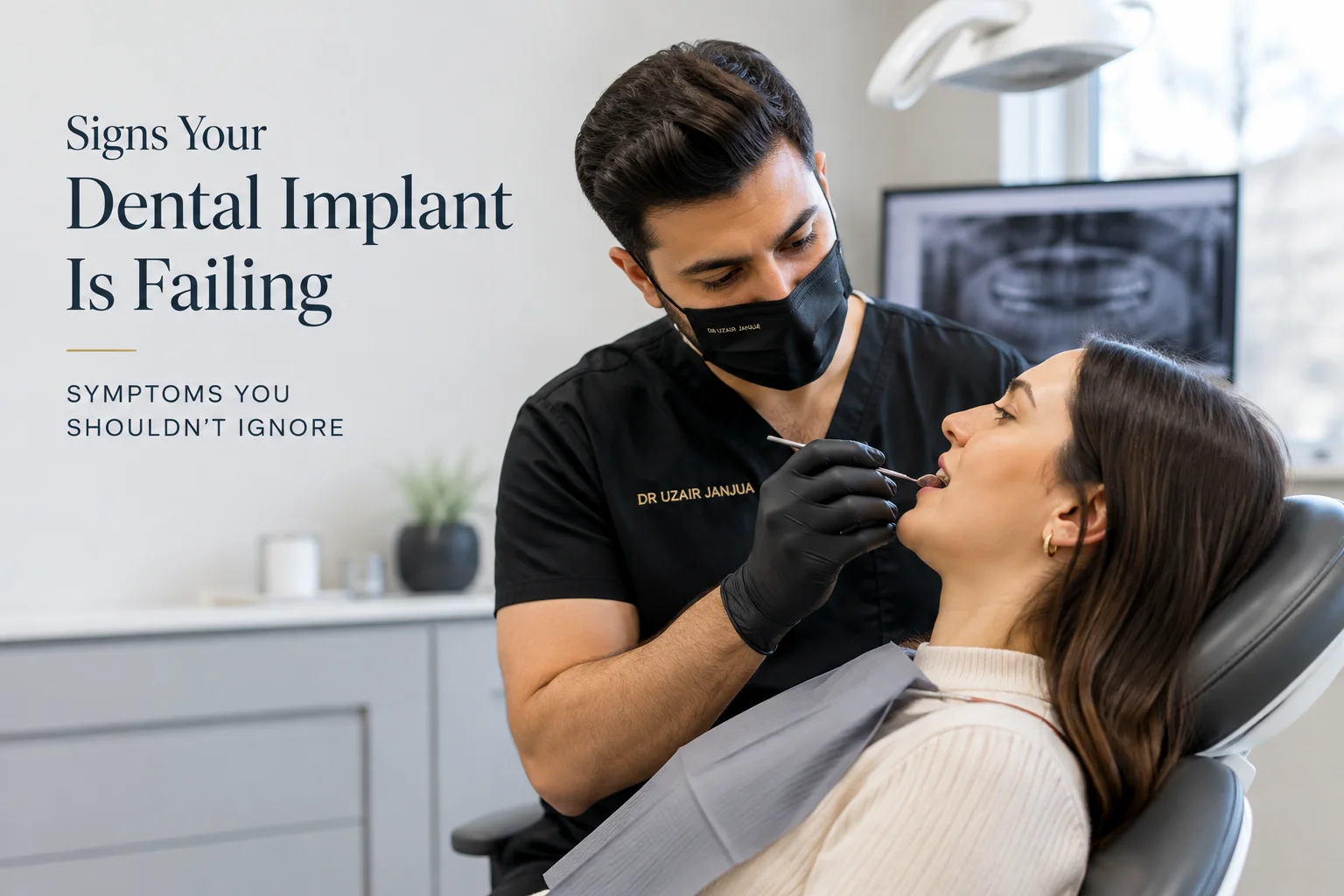
Dental implants are designed to provide a strong and long-lasting replacement for missing teeth, and most patients enjoy them without significant problems. However, like natural teeth, implants and the tissues supporting them still need regular care and monitoring.
If something does go wrong, recognising the warning signs early can make a considerable difference. Persistent pain, movement, swelling, bleeding around the implant or changes to your bite should not simply be ignored.
In this guide, I explain the common signs that a dental implant may be developing a problem, why implant complications happen and what you should do if you are concerned about an implant.
What Does Dental Implant Failure Mean?
When people hear the term "dental implant failure", they often assume it means that the entire implant has suddenly stopped working. In reality, implant problems can develop in several different ways.
A dental implant is placed into the jawbone, where the bone is expected to heal around and integrate with the implant. This process is known as osseointegration. Once the implant is stable, it can support the restoration above it, such as a dental crown or bridge.
Problems can occur if the implant does not integrate properly, if the tissues around it become inflamed or infected, if supporting bone is lost, or if there is a mechanical problem with the crown, screw or other component.
This is also why a problem with an implant does not automatically mean that the implant itself needs to be removed. A proper dental assessment is needed to identify exactly what is happening.
7 Signs Your Dental Implant May Be Failing
Some implant complications produce obvious symptoms, while others may initially cause only subtle changes. These are some of the signs I would recommend having professionally assessed.
1. Your Dental Implant Feels Loose
A dental implant itself should not move once it has successfully integrated with the jawbone. If you can feel definite movement from the implant area, arrange a dental assessment rather than continuing to chew on it normally.
There is an important distinction, however. Sometimes the implant itself remains firmly integrated while the crown, bridge or a connecting screw above it has become loose.
These are different problems and can require very different treatment. It is therefore important not to assume that movement automatically means the implant has failed.
2. Persistent Pain Around the Implant
Some discomfort following dental implant placement is expected while the area heals. This should generally improve rather than become progressively worse.
Pain that persists, develops after a period when the implant felt comfortable, or becomes increasingly noticeable deserves investigation.
There are several possible causes, including inflammation, infection, excessive forces on the restoration or problems involving the surrounding tissues. Pain alone cannot tell us the exact cause, so an examination is important.
3. Swelling or Redness Around the Implant
Healthy gum tissue around an established implant should generally appear comfortable and stable.
New or persistent swelling, redness or tenderness may indicate inflammation around the implant. One condition that can affect dental implants is peri-implant disease.
Early inflammation affecting the soft tissues around an implant is often referred to as peri-implant mucositis. If the condition progresses and supporting bone becomes involved, it may develop into peri-implantitis.
Not every area of redness means that an implant is failing, but persistent inflammation should not be ignored.
4. Bleeding When Brushing Around the Implant
If the gum around an implant repeatedly bleeds during gentle brushing or cleaning, particularly when accompanied by swelling or tenderness, it is worth having the area checked.
Bleeding can be associated with inflammation around both natural teeth and dental implants.
Good cleaning around an implant is extremely important because plaque can accumulate around the restoration and gum margin. Regular professional reviews also allow changes in the surrounding tissues to be identified before they become more advanced.
5. Pus, Discharge or an Unpleasant Taste
Pus or discharge from around a dental implant, especially when associated with swelling, pain, an unpleasant taste or persistent bad breath, requires professional assessment.
These symptoms can indicate infection or significant inflammation around the implant.
Do not attempt to treat the problem simply by repeatedly using mouthwash or avoiding the area when brushing. The underlying cause needs to be identified.
6. Difficulty Chewing or a Change in Your Bite
A restored dental implant should normally feel stable when you eat.
If biting suddenly becomes uncomfortable, the implant restoration feels different when your teeth meet, or you begin avoiding one side of your mouth, something may have changed.
Sometimes the issue is mechanical rather than biological. For example, a crown or screw may require attention. In other cases, discomfort during chewing can be associated with the tissues supporting the implant.
Either way, continuing to place heavy forces on an uncomfortable implant is not something I would recommend.
7. The Gum Is Receding Around the Implant
Changes to the gum line can make more of the implant restoration or its components visible than before.
Gum recession around an implant does not necessarily mean the implant has failed, but it can affect appearance, cleaning and the long-term health of the area.
If you notice that the gum level around an implant has changed, particularly alongside bleeding, inflammation or discomfort, arrange an assessment.
Early and Late Dental Implant Problems
Dental implant complications can occur at different stages, and understanding the timing can help explain why the possible causes vary.
Early Implant Problems
Early problems generally develop during the healing period after implant placement.
One concern during this stage is whether the implant successfully integrates with the surrounding bone. Healing can be influenced by several factors, including the condition of the bone and gums, general health, smoking, oral hygiene and the forces placed on the implant during healing.
This is why following your dentist's post-treatment instructions and attending planned reviews is important.
Late Implant Problems
An implant can also develop a problem months or even years after it was successfully restored.
Later complications may involve inflammation around the implant, changes in supporting bone, excessive biting forces or mechanical issues involving the restoration.
Long-term implant care therefore matters even when the implant has been comfortable for many years.
What Causes a Dental Implant to Fail?
There is rarely one universal reason for implant failure. The cause needs to be assessed individually.
Potential contributing factors can include:
- Poor integration between the implant and jawbone
- Inflammation or infection around the implant
- Loss of supporting bone
- Poor oral hygiene around the implant restoration
- Smoking
- Excessive forces from biting or grinding
- Mechanical problems involving the crown or implant components
- Certain health conditions or medications that can affect healing
- Insufficient long-term maintenance and professional review
The presence of one risk factor does not automatically mean an implant will fail. Implant treatment and maintenance should always be considered in the context of the individual patient.
Can an Infected Dental Implant Be Saved?
Sometimes, but it depends on what is actually wrong and how advanced the problem has become.
If inflammation is identified early, treatment may focus on controlling the cause, improving cleaning and monitoring the tissues around the implant. More advanced problems can require additional treatment.
If the issue is a loose crown or another restorative component rather than the implant itself, the solution may be quite different.
Where there has been substantial loss of supporting bone or the implant has become mobile, retaining the implant may not always be possible.
The key point is that you cannot reliably determine the prognosis simply by looking at the implant yourself. A clinical examination, and sometimes dental imaging, may be required.
How Does a Dentist Check a Dental Implant?
If you attend with concerns about an implant, I would first want to understand what you have noticed and when the symptoms started.
The assessment may include examining the gum around the implant, checking whether there is inflammation or bleeding, assessing the stability of the restoration and evaluating your bite.
Where appropriate, dental X-rays may also be used to assess the bone surrounding the implant.
It is particularly important to establish whether any movement is coming from the implant itself or from one of the restorative components attached to it.
Once the cause is understood, the available treatment options can be discussed properly.
What Should You Do If Your Implant Feels Loose?
If an implant or its crown feels loose, avoid repeatedly moving it with your tongue or fingers to check whether it is still mobile.
Try not to chew hard foods directly on the affected area and arrange a dental assessment.
A loose implant crown and a loose dental implant are not the same thing. A dentist needs to establish which component is moving before deciding what treatment is required.
If you also have significant swelling, discharge, worsening pain or other rapidly developing symptoms, seek dental advice promptly.
How to Reduce the Risk of Dental Implant Problems
Dental implants cannot develop tooth decay in the way natural teeth can, but that does not make them maintenance-free.
The gums and bone supporting an implant still need to remain healthy.
I generally recommend:
- Brushing thoroughly twice a day
- Cleaning carefully around the implant and between the teeth
- Using interdental cleaning aids recommended for your particular restoration
- Attending regular dental examinations
- Keeping up with professional hygiene appointments when advised
- Avoiding smoking
- Having persistent bleeding or inflammation investigated
- Seeking advice if your bite or implant restoration suddenly feels different
If you grind or clench your teeth, your dentist may also discuss whether additional protection is appropriate.
When Should You See a Dentist?
You do not need to wait until an implant becomes extremely painful or visibly loose before asking for advice.
I would recommend arranging an assessment if you notice persistent pain, swelling, bleeding, discharge, movement, gum recession or a significant change in how the implant feels when you bite.
It is often easier to understand and manage a developing problem when it is investigated early.
If you are considering replacing a missing tooth rather than dealing with an existing implant problem, you can also read my guide to dental implants to understand how implant treatment works and what may be involved.
Concerned About a Dental Implant?
If an implant feels different, has become uncomfortable or you have noticed changes in the gum around it, it is worth having the area properly assessed rather than trying to diagnose the problem yourself.
The earlier we understand what is happening, the better placed we are to discuss the appropriate next steps.
Dr Uzair Janjua
GDC No. 283626