
There isn't one single dental implant cost, because a private implant isn't a fixed product. It's a plan built around your tooth, your bone and gum condition, and the restoration you actually need on top. This is why you'll see quite different figures advertised by different practices, sometimes for what looks like the same treatment.
The number on its own tells you very little. Some practices quote for the implant and crown together, others quote only for the surgical placement of the implant fixture, and a few quote a complete plan covering imaging, healing and follow-up. Two adverts that use the same word, "implant", can describe genuinely different amounts of treatment. What matters is not the headline figure but what sits behind it, and that's what I want to walk through here.
What does the cost of a dental implant usually include?
A dental implant is only one part of the finished tooth. The implant itself is a small titanium fixture placed into the jawbone. An abutment then connects that fixture to the visible tooth, which is usually a crown for a single gap, or a bridge or denture where several teeth are missing.
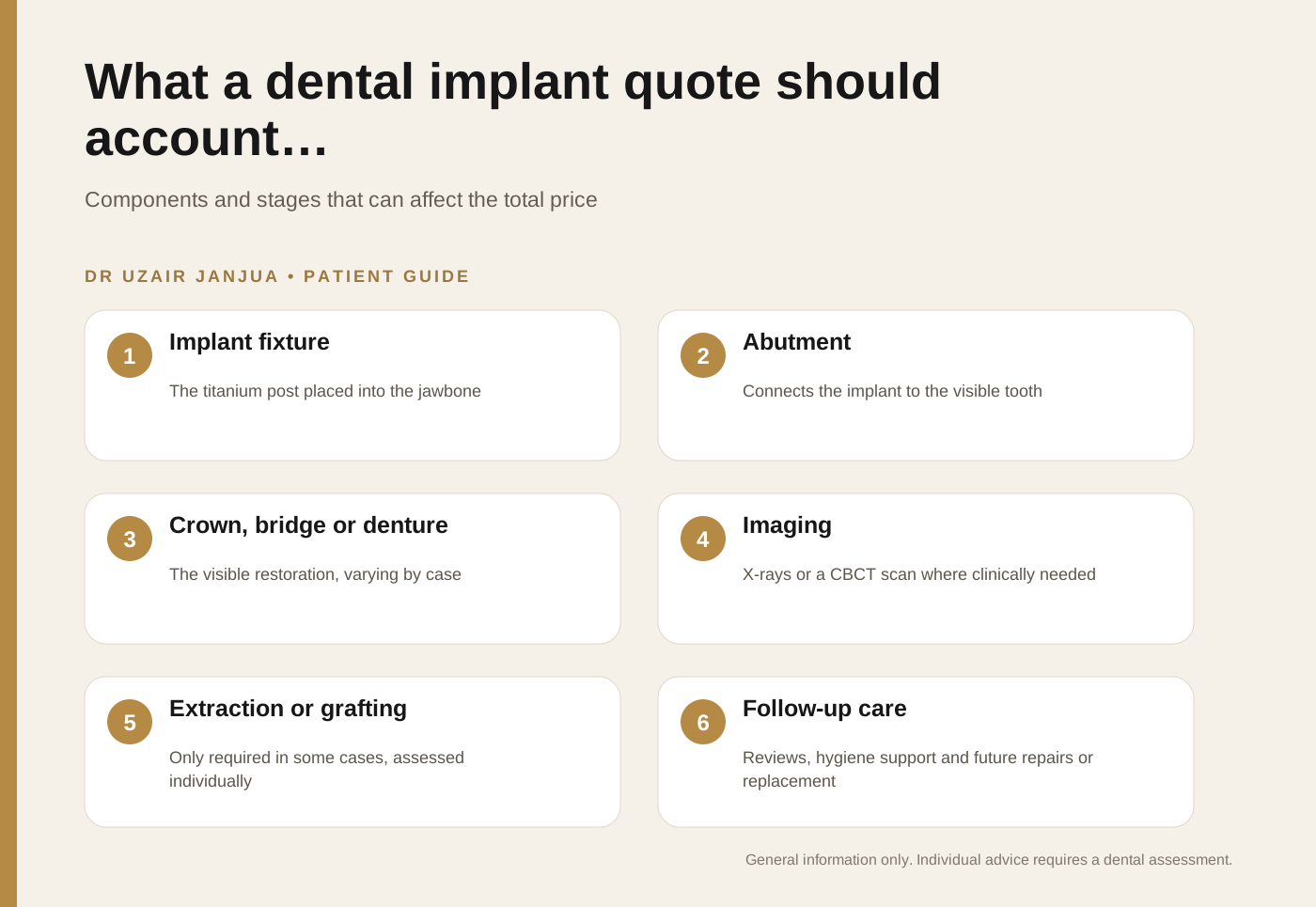
A complete single-tooth implant price should normally make clear whether it covers the initial consultation, any X-rays or a CBCT scan (a three-dimensional scan sometimes used to check bone volume and nearby anatomy before surgery), the implant placement itself, healing components, the abutment, a temporary tooth if one is needed, the final crown, laboratory fees, and the follow-up appointments afterwards.
Not every quote will include every one of these, and that isn't automatically a problem. It just means you need to know exactly what you're being offered before comparing it with anything else.
Why can two dental implant quotes look so different?
This is where people sometimes get confused, because the word "implant" can describe very different stages of treatment depending on how a practice has written the price.
| What's quoted | What it usually covers | What it may not cover |
|---|---|---|
| Fixture only | Just the titanium implant placed in the bone | Abutment, crown, scans, follow-up |
| Implant placement | Surgical fee for placing the implant | Restoration, imaging, extraction if needed |
| Implant plus crown | Fixture, abutment and final crown | May still exclude grafting, scans, temporary tooth |
| Complete treatment plan | Consultation, imaging, placement, healing, restoration, reviews | Should state clearly whether extraction or grafting is included, anticipated as a likely add-on, or excluded entirely |
A lower headline price often reflects a narrower stage of treatment rather than a genuinely lower total cost. Comparing a fixture-only figure against a complete treatment plan isn't a fair comparison, even though both adverts might use the same phrase.
It's also worth understanding that one implant doesn't always mean one replaced tooth. Where several teeth are missing, an implant bridge or an implant-retained denture may be planned using fewer implants than the number of teeth being replaced. This can change the total cost considerably compared with assuming each gap needs its own implant.
What changes the final dental implant cost?
The number of teeth being replaced is the starting point. A single implant and crown is a different scale of treatment to an implant-retained denture, and the design of the restoration affects both the fee and the number of implants required.
Beyond that, several things commonly move the price:
- Extraction of the tooth being replaced, particularly if it's a difficult or surgical extraction
- Bone grafting where there isn't enough bone volume or height to support the implant securely
- Gum or soft-tissue grafting where the surrounding tissue needs additional support or a better contour
- Treating active gum disease, decay or infection before implant surgery can proceed. The timing and extent of this is assessed individually, and stable gum disease with good long-term plaque control doesn't automatically rule out treatment
- A CBCT scan where the anatomy needs closer assessment, particularly near the sinus or a nerve
- A temporary tooth during the healing period
- The design of the final restoration, whether that's a single crown, an implant bridge or a denture
- Sedation, if that's something you'd prefer for the procedure
None of these automatically apply to every patient. They're the reasons a straightforward single-tooth case and a more complex case end up priced differently, and why a remote quote based on a photo or a brief phone call is rarely reliable.
What are the risks and long-term costs to consider?
A cost comparison isn't complete without thinking about what happens after the final tooth is fitted. Implants are intended as a long-term way to replace a missing tooth, but I wouldn't describe any dental treatment as fit-and-forget, and it isn't risk-free.
Possible complications include inflammation around the implant, a condition sometimes called peri-implantitis, loosening of the restoration, wear or fracture of the crown or bridge over time, and, less commonly, the implant failing to integrate with the bone. How likely any of this is depends on factors such as your general health, smoking, oral hygiene, gum health and how complex the original treatment was. Smoking in particular can increase the risk of complications, which is why I'll always ask about it as part of planning and aftercare advice.
On the cost side, this means budgeting for more than the initial fee. Ongoing hygiene visits, professional reviews, occasional repairs, and eventual replacement of the crown, bridge or denture (even if the implant itself remains stable) are a realistic part of long-term ownership. I wouldn't put a fixed lifespan on any implant, because individual outcomes vary considerably, but the restoration on top is the part most likely to need attention over the years.
How I assess the cost before recommending treatment
When I assess someone for implant treatment, I'm not starting from a price, I'm starting from the mouth. That means looking at the gap itself, the health of the adjacent teeth, the bite, and your general dental and medical history.
I'll check the gum tissue for signs of active disease, since this normally needs stabilising before implant surgery rather than during it. I'll assess the bone at the site, sometimes with a CBCT scan if the anatomy needs a closer look, particularly for upper back teeth close to the sinus.
I also want to know what you're hoping for at the end of treatment. A front tooth often needs more careful planning around appearance and a temporary tooth during healing, while a back tooth is usually more about function and bite. Only once I've got a clear clinical picture, built from an examination and appropriate imaging rather than a conversation alone, can I put together a plan that reflects your case specifically rather than a generic figure that may not apply to you at all.
What should be included in a written implant quote?
The safest way to compare prices, whether that's between Birmingham practices or between a UK and an overseas provider, is to ask for a written, itemised plan after an examination and appropriate imaging.
| Item to check | Why it matters |
|---|---|
| Consultation and examination | Confirms whether this is included or a separate fee |
| X-rays or CBCT scan | Shows whether imaging is built into the price or charged if needed |
| Extraction (if relevant) | Some quotes assume the tooth is already out |
| Bone or gum grafting | The plan should state whether this is included, anticipated as an optional add-on, or excluded, and who decides if it's needed |
| Implant system and restoration materials | Ask which implant system and crown material are planned, and whether you'll receive component records for future maintenance |
| Implant, abutment and crown | Confirms all three components are covered, not just the fixture |
| Temporary tooth | Relevant if you don't want a visible gap during healing |
| Laboratory fees | Often listed separately, sometimes bundled in |
| Follow-up and review appointments | Ongoing monitoring is part of responsible aftercare, not an optional extra |
| Process for approving extra treatment | Ask exactly how and when you'd be told about, and asked to approve, any additional cost before it's carried out |
If a plan is unclear on any of these points, it's reasonable to ask directly before agreeing to anything.
Is a dental implant worth the cost compared with alternatives?
The answer depends on the tooth involved, the condition of your bite and remaining teeth, your gum and bone health, and what matters most to you, so I wouldn't say one option is always right.
A dental implant can avoid preparing the neighbouring teeth in many single-tooth cases and is generally considered a long-term way to replace a missing tooth, but it involves surgery, a healing period, and ongoing maintenance. A conventional bridge relies on the teeth either side and usually means preparing them to hold the restoration, and whether it costs less depends on the specific case and practice. A removable denture can be a less invasive starting point for some patients, though it needs to come out for cleaning and some people find it less stable than a fixed option. Where a natural tooth is damaged but restorable, root canal treatment and a crown may be worth considering before extraction and implant planning are assumed to be the only route. An implant-retained denture is another option where several teeth are missing, and it can improve stability using fewer implants than the number of missing teeth. Leaving the gap avoids treatment cost altogether, but the effect on your bite, neighbouring teeth and future treatment needs depends entirely on which tooth is missing and how you chew.
None of these decisions should be made on cost alone, and none can be properly worked through without an examination. That's usually the point where an appropriate option, or a shortlist of two, becomes clear.
Are dental implants available on the NHS?
Implants are not routine NHS treatment. NHS funding for dental implants is limited and generally only available in specific circumstances, rather than as a standard option for straightforward tooth loss.
For most people considering implant treatment for a missing tooth, this will be arranged privately. If you're unsure whether your particular situation might fall within any NHS criteria, that's worth raising directly at an assessment rather than assuming either way.
Should you choose a cheaper implant abroad or a cheaper UK quote?
Treatment abroad can look considerably cheaper on paper, but the comparison needs to include more than the headline figure.
Think about who would manage any complications once you're home, whether the same implant system and components are readily available in the UK if something needs adjusting later, and what travel, accommodation and time off work add to the cost of multiple visits. Ask specifically which implant system is being used and whether you'll be given records of the components, since this affects how easily a UK dentist could help with maintenance or a repair in future.
The same questions apply closer to home too. A noticeably lower price for what's described as the same treatment is worth asking careful questions about, rather than automatically avoiding or automatically trusting. Checking that your treating dentist is registered with the General Dental Council, and getting clear answers about risks, alternatives and costs, is a reasonable starting point wherever you're considering treatment.
What happens next if you're considering implants in Birmingham?
If you're weighing up quotes from around Birmingham and the wider West Midlands, whether that's Solihull, Coventry, Wolverhampton, Dudley or Walsall, the meaningful comparison is the scope of treatment each one includes, not the number on its own. It's also worth thinking practically about how many visits the treatment involves and whether every stage, from planning through to reviews, is provided at the same practice, since implants need ongoing maintenance rather than a single appointment.
The next reasonable step is an examination, imaging where it's clinically indicated, and an honest conversation about whether an implant is the right fit for your situation compared with the alternatives. From there, you should receive a written, itemised plan rather than a verbal estimate, so you know exactly what you're agreeing to before treatment begins.
If you'd like to talk through your options, booking a consultation is the sensible next step so we can look at your case properly rather than working from assumptions. You can also read more about my approach to dental treatment planning and consultations before you decide.
It's also worth thinking ahead to maintenance once treatment is complete. An implant crown or bridge isn't fit-and-forget, and knowing the early warning signs of a problem is part of protecting the investment you've made. I've written separately about the signs a dental implant may be failing, which is worth reading once treatment is underway.