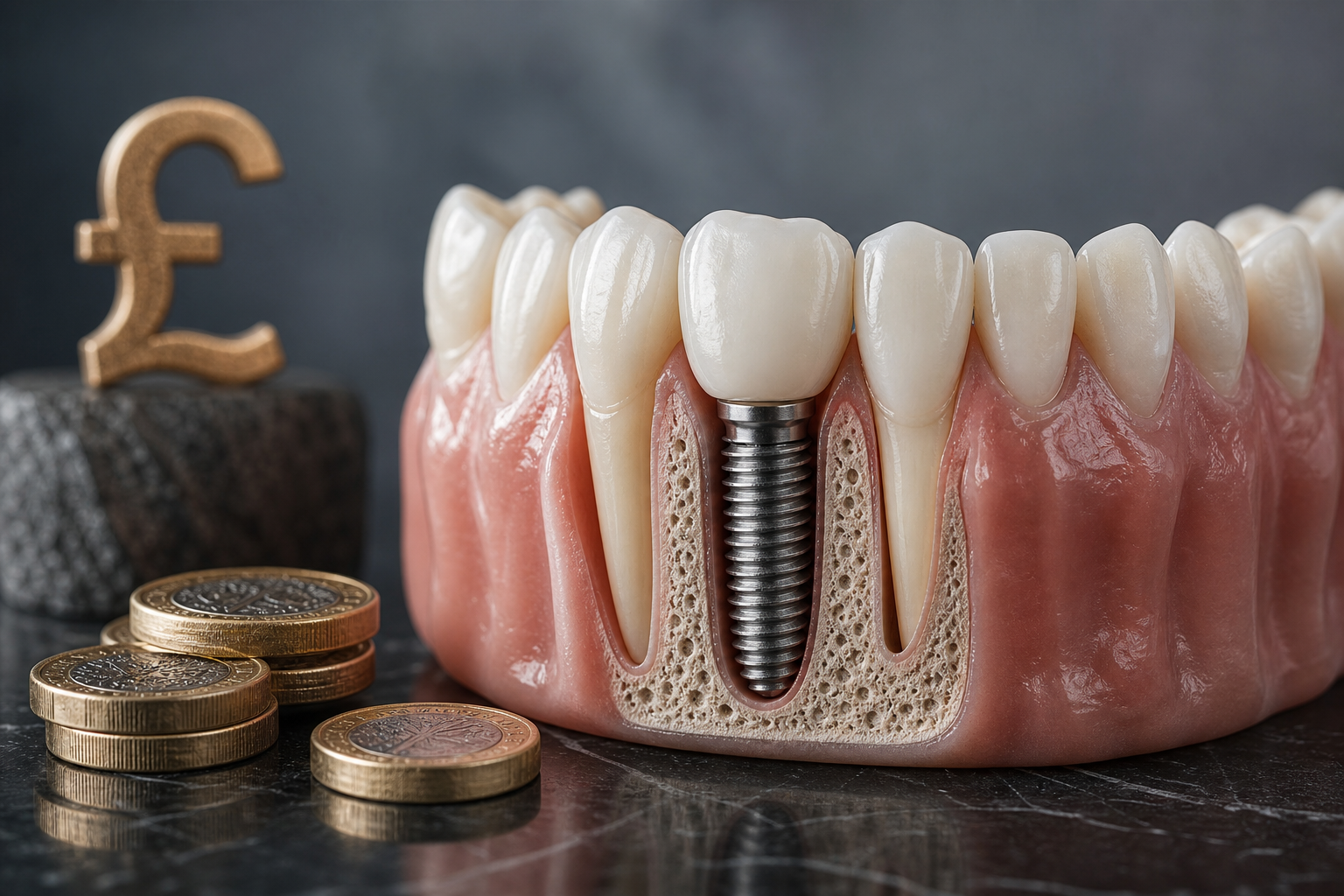
If you are searching for the cheapest dental implants in the UK, I would be careful not to compare headline prices alone. A low advertised figure may cover only the implant post placed in the jaw, rather than the complete replacement tooth.
What matters is the total cost of a clinically appropriate plan, including the assessment, scans, implant, connecting component, final crown, aftercare and any treatment needed first. A genuinely affordable implant can be a sensible choice in a straightforward case, but a cheap quote can become expensive if important stages, future repairs or local follow-up are excluded.
When I assess someone for dental implants in Birmingham, I look at whether an implant is the right option first, then explain the likely stages and costs clearly. In some cases, a bridge, denture or staged approach may offer better value than pursuing the lowest implant price.
What is the cheapest dental implant option in the UK?
There is no single reliable answer because implant treatment is not one standard product. The cheapest safe option depends on the condition of your mouth, the tooth being replaced, the amount of available bone and what is included in the quote.
One thing I usually explain to patients is that an implant is normally only one part of the final restoration. A complete single-tooth replacement often involves an implant fixture, an abutment that connects it to the tooth, and a crown made by a dental laboratory. Some quotes include all of these stages, while others begin with a lower “from” figure for the implant fixture alone.
A straightforward back-tooth case with healthy gums, sufficient bone and no need for preparatory treatment may be less costly than a visible front-tooth replacement or a case requiring bone grafting. The lowest useful price is therefore the lowest complete, transparent treatment plan that is suitable for your individual mouth.
Why the lowest dental implant price can become expensive
I would always ask for an itemised plan before deciding whether a quote is genuinely low cost. It is reasonable for an estimate to change if an examination or appropriate imaging identifies additional treatment needs, but you should understand the likely extras and when they could apply.
| Part of treatment | What to check |
|---|---|
| Consultation and planning | Ask whether the initial examination, X-rays and any three-dimensional CBCT scan are included where needed. |
| Preparatory treatment | Check whether extraction, gum treatment, infection control, bone grafting or sinus augmentation could add to the plan. |
| Implant placement | Confirm whether the fixture, surgery, healing appointments and any temporary tooth are included. |
| Final tooth | Ask specifically about the abutment, crown, laboratory work and the material proposed. |
| Aftercare | Clarify review appointments, hygiene maintenance, radiographs, emergency care and future repair arrangements. |
| Future components | Ask who would replace a crown, screw, attachment or other part if it wears, loosens or fractures later. |
Bone grafting is a common example of why comparison can be difficult. It is not needed in every case, but where there is insufficient bone for a stable implant position, it may be clinically important. A quote that excludes it is not necessarily misleading, provided that the possible need and cost implications have been explained.
For a fuller explanation of the elements that can affect a plan, you may find my guide to what changes the final dental implant cost in the UK useful.
What I would assess before recommending the cheapest option
I would not recommend an implant simply because it appears to be the cheapest way to fill a gap. Before discussing the type of restoration, I would assess the missing tooth or teeth, the gums, remaining teeth, bite and the available bone.
Healthy gums matter because inflammation around teeth and implants can affect long-term stability. If there is active gum disease, I would usually advise stabilising it first and making sure there is a realistic plan for home cleaning and professional maintenance. A history of gum disease does not automatically rule out implants, but it can mean closer monitoring is needed.
I would also consider smoking, relevant medical history, any medicines that may affect healing, tooth grinding, the position of the gap and how visible the final tooth will be. A front tooth can need more detailed planning because the appearance of the gum and crown is often more noticeable.
Finally, I would ask whether you can attend review appointments and keep the implant area clean over the long term. Implant treatment is not maintenance-free. The implant itself may remain stable while the crown, screw or other restorative components need repair or replacement in future.
How to compare dental implant quotes properly
The best comparison is not “Which clinic has the lowest implant price?” It is “What is the expected total cost of a complete treatment plan for my situation, and what would make it change?” I would encourage you to obtain written plans from more than one appropriately registered UK provider if the treatment is complex or the costs are unclear.
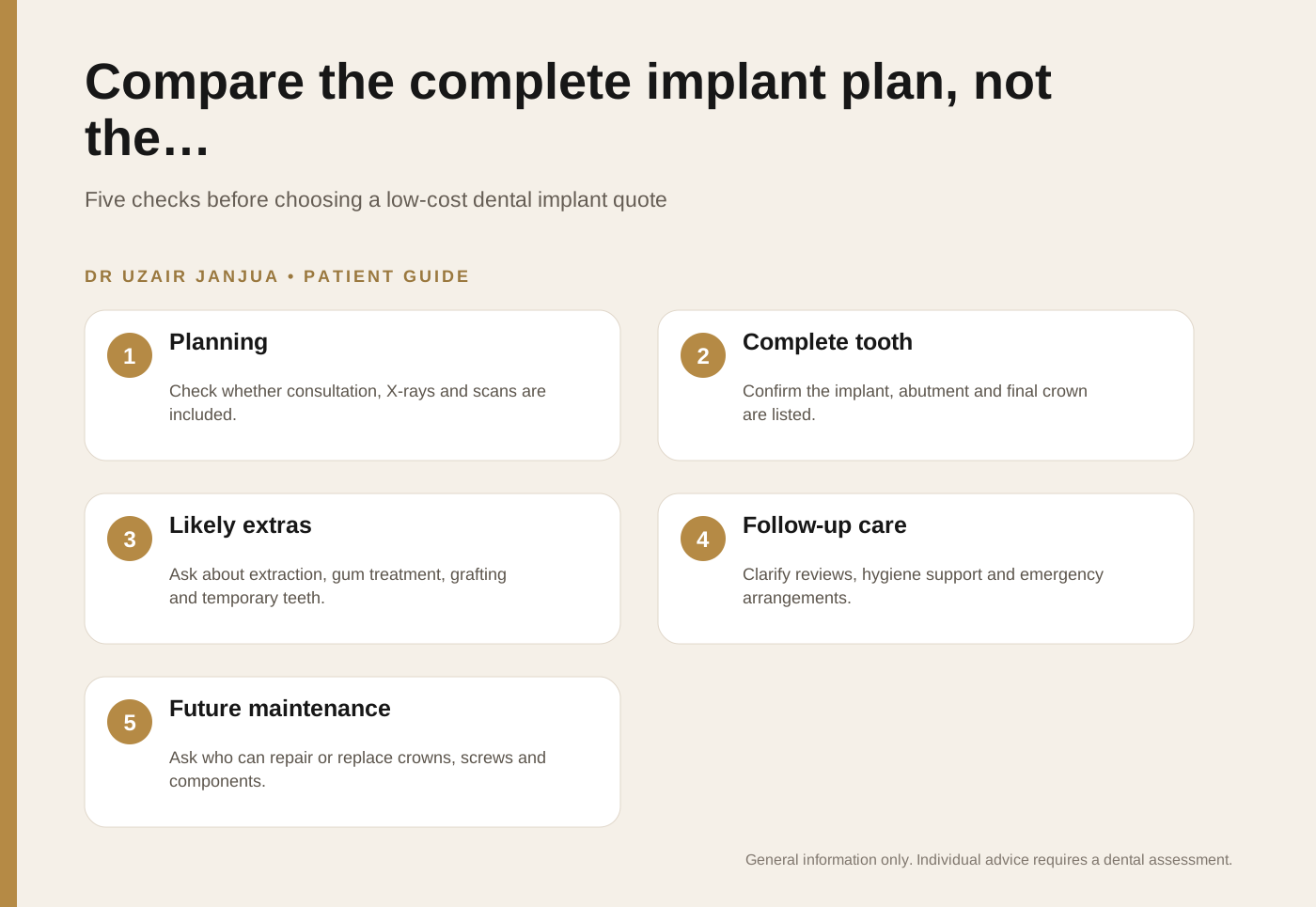
- Does the quote include the consultation, scan, surgery, abutment and final crown?
- Is a temporary tooth included if you need one during healing?
- What implant system is being used, and can its components be identified and maintained in future?
- Who will carry out the surgical and restorative stages, and what relevant training and experience do they have?
- What happens if bone grafting, gum treatment or extraction is needed?
- How many review appointments and hygiene visits are included?
- What does any guarantee cover, and what exclusions or patient responsibilities apply?
- Who provides urgent care if you have pain, swelling, looseness or a problem after treatment?
- If finance is available, what is the total amount repayable, including any deposit, interest and charges?
As part of a proper consultation, I should explain the available options, important risks, likely costs, alternatives and what may happen if treatment is delayed. I would expect an implant consultation to give you space to consider those choices rather than pressure you to commit on the day.
If you are comparing affordable dental implants in Birmingham or the West Midlands, an examination can help separate a simple case from one that needs more planning. I can assess your gums, bone, bite and replacement options, then explain which costs are likely to be essential and which may be avoidable. Your final treatment plan and estimate can only be confirmed after the relevant clinical examination and imaging.
Are cheap dental implants safe?
Price alone does not tell me whether implant treatment is safe or appropriate. A lower fee can be reasonable where treatment is straightforward, the clinician is clear about the plan, the implant system is identifiable and follow-up care is available.
I would assess safety more broadly than price. It depends on whether the treatment plan suits your mouth and health, whether the clinicians responsible for the surgical and restorative stages have relevant training and experience, whether the implant system can be identified and supported, and whether there is a realistic plan for healing, maintenance and future care.
I would be more cautious if the quote is vague, the clinician performing treatment is unclear, there is no discussion of your gums or medical history, or you are encouraged to proceed without appropriate planning. I would also question a package that promises a fixed result or unusually rapid treatment without explaining how healing and implant stability will be assessed.
Ask who is responsible for your care at every stage, check that the clinicians involved are registered with the General Dental Council, and ask about their relevant implant training and experience. It is also sensible to ask whether the practice can provide ongoing implant hygiene care and manage repairs, rather than simply placing the implant and leaving future problems elsewhere.
Is it cheaper to get dental implants abroad or far from home?
Travelling can reduce the headline treatment fee, but it does not automatically reduce the true cost. I would include flights or rail travel, accommodation, time away from work, repeat visits, maintenance and the practical cost of dealing with a complication once you are back in the UK.
Implant treatment often takes place in stages, with healing and review periods between them. If treatment is provided abroad or far from Birmingham, ask who will see you urgently if you develop swelling, pain, bleeding or a loose restoration after returning home. You should also confirm whether the original provider will share records, X-rays and details of the implant system with another clinician.
For patients in Birmingham, Solihull, Sutton Coldfield, Coventry, Wolverhampton and the wider West Midlands, a local provider may be better value if it makes review appointments, hygiene visits and urgent assessment more practical. Staying nearby is not always essential, but it is part of the overall decision.
Could a bridge or denture be better value?
Sometimes the most affordable answer is not an implant. I would discuss a bridge, removable denture or no replacement where appropriate, because each option has different compromises around cost, surgery, appearance, cleaning and long-term maintenance.
| Option | Potential advantage | Trade-off to consider |
|---|---|---|
| Dental implant | Can replace a tooth without preparing neighbouring teeth. | Requires surgery, healing and ongoing maintenance. It may need preparatory treatment. |
| Conventional bridge | Often avoids implant surgery and may have a lower initial cost. | May involve preparing neighbouring teeth and is not suitable for every gap. |
| Removable partial denture | Usually offers the lowest initial-cost replacement for one or more teeth. | It is removable and may feel or function differently from a fixed tooth. |
| Implant-retained denture | Can improve retention without placing an implant for every missing tooth. | Still involves surgery, maintenance and suitability assessment. |
A staged plan can also be sensible. I may advise treating gum disease, stabilising other teeth or replacing only the most important missing tooth first, depending on your priorities and what is clinically appropriate. My guide to implant, bridge and denture options for a missing tooth explains these choices in more detail.
How to reduce implant costs without cutting corners
I would focus on reducing unnecessary expense, not essential planning or aftercare. A straightforward treatment plan, standard restorative materials where suitable and a staged approach can all help control the initial spend without compromising the basics of safe care.
- Ask whether your case could be treated in stages, after gums and remaining teeth are stabilised.
- Discuss whether a standard crown is appropriate rather than a highly customised cosmetic restoration.
- Seek two written, itemised opinions for a complex or high-cost plan.
- Ask whether a dental teaching hospital may be relevant, recognising that availability and suitability can be limited.
- Check NHS eligibility if you have a qualifying clinical circumstance, rather than assuming implants are routinely available on the NHS.
- Compare finance by total repayable amount, not the monthly figure alone.
- Keep up with gum care and review appointments, which may reduce the risk of avoidable complications.
Deferring treatment can be reasonable if you need time to save, but I would still want to monitor the gap and surrounding teeth. The position of nearby teeth or the way your teeth meet may change in some cases, and untreated gum problems do not usually improve simply by waiting.
What happens after an implant is placed?
After placement, I would arrange reviews based on the treatment stage and your individual needs. Healing time varies, particularly where a tooth has been removed recently, bone grafting has been needed or the implant is being used to support a more complex restoration.
Once the final crown, bridge or denture is fitted, ongoing home cleaning and professional maintenance remain important. I would show you how to clean around the restoration and advise when hygiene appointments or reviews are appropriate for you.
Bleeding, swelling, an unpleasant taste or odour, pus, persistent discomfort or a loose implant restoration should be assessed promptly. These symptoms can have different causes, and trying to manage them yourself can delay appropriate care. You can also read my guidance on how I approach dental implant treatment and planning before arranging a consultation.
The practical answer if you are seeking the cheapest dental implants in the UK
I would not choose an implant provider solely because they advertise the lowest starting price. The better question is whether the clinic offers the lowest complete, clearly explained and maintainable plan for a treatment that is actually right for you.
A lower-cost implant can be entirely reasonable in the right circumstances. However, I would want you to know what is included, what may be added later, who will provide aftercare and what alternatives could meet your needs at a lower initial cost.
If you are in Birmingham or the West Midlands and want to compare your options properly, arrange an implant consultation. I can assess whether an implant, bridge, denture or staged plan makes the most clinical and financial sense for your situation, then provide a written explanation of the likely treatment stages and estimated costs following examination and any appropriate imaging.