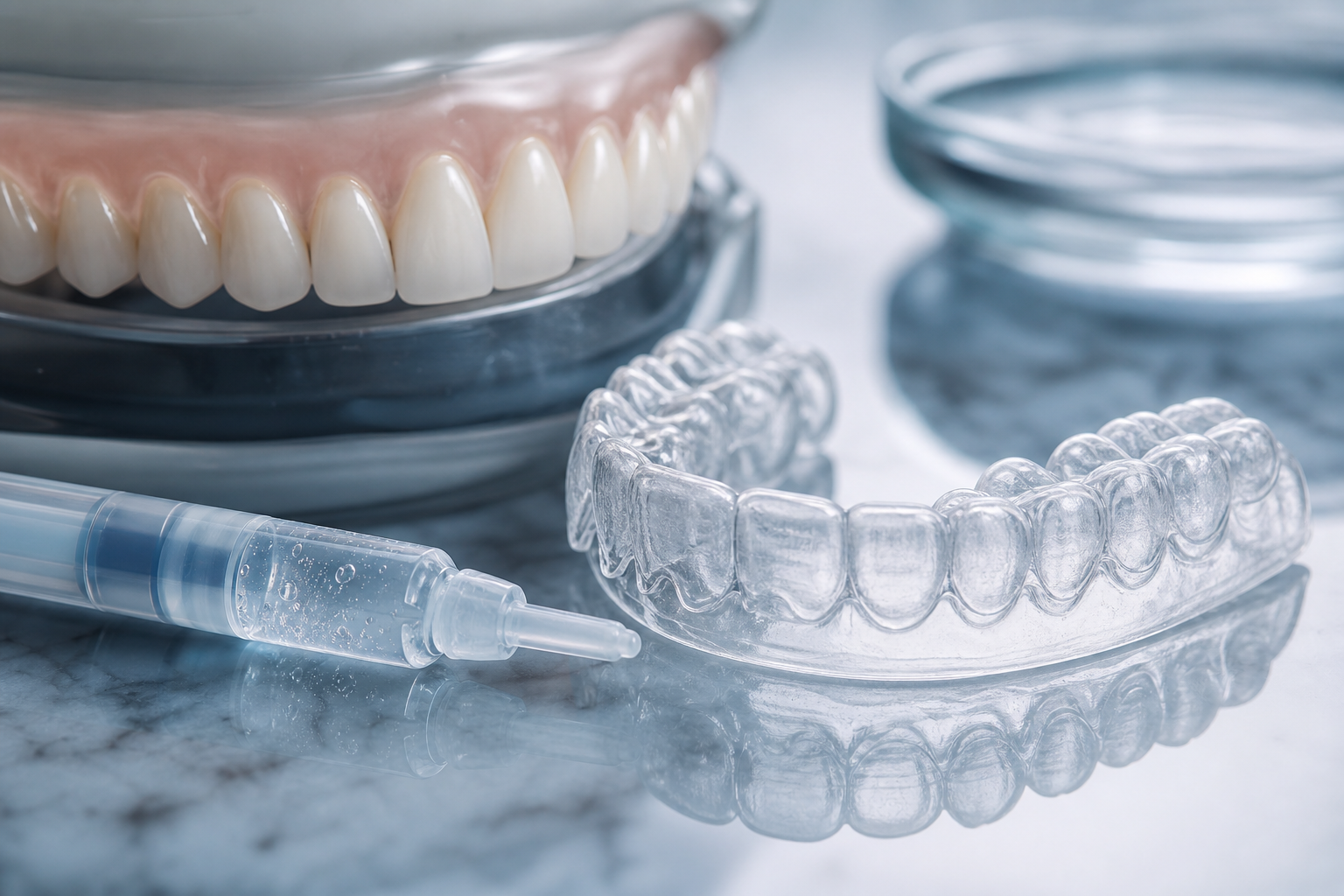
Teeth whitening gel usually contains hydrogen peroxide or carbamide peroxide, two related ingredients that can lighten the natural colour of teeth. I would not choose a gel based on the largest percentage printed on the syringe alone. The right option depends on its concentration, how long it is worn, how accurately the tray fits, your history of sensitivity and whether your teeth and gums are healthy enough for whitening.
In the UK, cosmetic tooth-whitening products containing or releasing more than 0.1% and up to 6% hydrogen peroxide must be supplied through a registered dental professional after an examination. For patients in Birmingham and the West Midlands, that assessment is a sensible starting point, particularly if you have crowns, fillings, gum recession, a single dark tooth or sensitive teeth.
What is teeth whitening gel and how does it work?
Whitening gel works by releasing an oxygen-based bleaching ingredient that breaks down coloured compounds within the natural tooth. This differs from a scale and polish or stain removal, which mainly removes surface deposits from tea, coffee, red wine, smoking and similar causes.
When I assess someone for whitening, I first distinguish between surface staining and a deeper change in tooth colour. Professional cleaning may make a noticeable difference where stain is the main issue, but it does not lighten the underlying shade in the same way that whitening gel can.
Whitening gel can improve the colour of natural enamel and dentine, which is the layer beneath enamel. It cannot change tooth shape, close gaps, correct significant crowding or repair chips. It also does not reliably whiten crowns, veneers, fillings, dentures or implant restorations.
What teeth whitening gel do dentists use?
Dentists commonly use gels based on hydrogen peroxide or carbamide peroxide. Neither ingredient is automatically better. Carbamide peroxide releases hydrogen peroxide more gradually, while hydrogen peroxide acts more directly, but the result also depends on the formulation, the prescribed wear time and how the gel is delivered.
One thing I usually explain to patients is that percentages cannot be compared as though every gel behaves identically. Carbamide peroxide and hydrogen peroxide are related, but a percentage of one is not a simple like-for-like comparison with the other in every product or treatment plan.
| Type of gel | How it works | What I would consider |
|---|---|---|
| Hydrogen peroxide | The bleaching ingredient is present directly and acts relatively promptly. | Concentration, contact time, existing sensitivity and whether the treatment schedule suits you. |
| Carbamide peroxide | Breaks down gradually and releases hydrogen peroxide over time. | Tray wear schedule, comfort, storage guidance and how your teeth respond. |
Dentist-prescribed home whitening usually involves custom-made trays and gel provided with specific instructions. The trays matter because a close fit helps place the gel over the visible tooth surfaces while reducing unnecessary leakage onto the gums.
Why does teeth whitening gel strength matter?
Strength matters because a higher concentration may create a faster visible change, but it can also increase the likelihood or intensity of sensitivity for some people. Stronger is not automatically better, quicker or better value if it makes treatment difficult to tolerate.
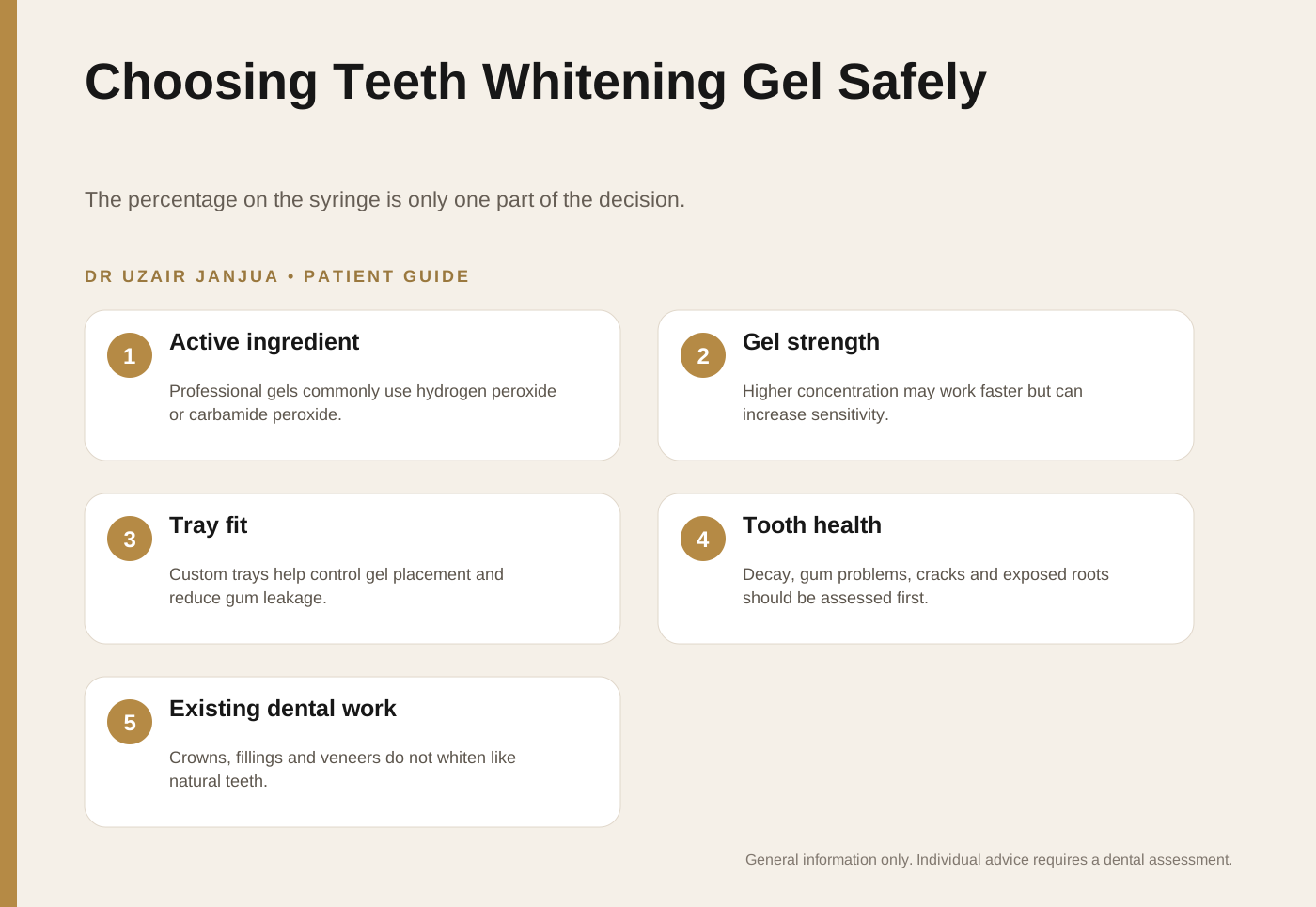
What I would look at first is the whole whitening protocol, not one number. This includes the active ingredient, concentration, tray design, amount of gel used, wear time, previous sensitivity, exposed root surfaces and the type of discolouration we are trying to improve.
A lower-strength gel may be more comfortable for somebody with recession, enamel wear or a history of sensitive teeth, although it may need a more gradual schedule. A higher-strength option may be appropriate in selected circumstances, but only after I have examined the teeth and gums and discussed the trade-offs.
Evidence from studies of at-home whitening suggests that higher concentrations may increase the risk or intensity of sensitivity. It does not establish one universally best concentration, which is why I would tailor the approach rather than simply recommend the strongest available gel.
What are the UK rules for teeth whitening gel?
For cosmetic tooth whitening in the UK, products containing or releasing more than 0.1% and up to 6% hydrogen peroxide can only be supplied through a registered dental professional. This includes hydrogen peroxide released from related compounds such as carbamide peroxide.
Before a product in this regulated supply range is provided, I would need to carry out a clinical examination. The patient must be over 18, and the first use in each whitening cycle must be carried out by, or under the direct supervision of, a dental professional.
Products sold directly to consumers are limited to a maximum of 0.1% hydrogen peroxide, including peroxide released by other ingredients. This is a regulatory limit, not a guarantee that every online product is accurately labelled, compliant or suitable for your mouth. Imported products and marketplace listings can be particularly difficult to assess properly.
If you are comparing dentist-supplied treatment with online kits, it is worth reading my guide on why whitening should start with a dentist rather than a kit. The meaningful comparison is supervision, examination, tray quality and aftercare, not just the advertised strength.
What would I assess before recommending a whitening gel?
I would examine your teeth and gums before advising on whitening gel. Whitening is cosmetic treatment, not a substitute for managing decay, gum disease, infection, a cracked tooth or a dark tooth caused by trauma or previous root canal treatment.
I would also ask about sensitivity and look for likely reasons a gel might be uncomfortable or unsuitable. These can include recession, exposed dentine, worn enamel, cracks, leaking fillings and inflamed gums.
Key things I would check
- The health of your teeth and gums, including untreated decay or gum disease.
- Existing sensitivity, gum recession, exposed roots, cracks and enamel wear.
- Fillings, crowns, veneers, bonding and implant restorations in the visible smile area.
- Whether the discolouration is general or mainly affects one tooth.
- Whether cleaning and stain removal may be the more appropriate first step.
- Your expectations, including the fact that teeth do not all whiten to the same shade.
This is where restoration colour matters. If natural teeth become lighter, an older crown or filling can appear darker by comparison. In some cases, I would advise whitening the natural teeth first, allowing the colour to settle, then considering whether visible restorations need changing.
A suddenly darkened tooth, or one dark tooth that has had root canal treatment, needs assessment rather than a general whitening tray. The underlying cause may need treatment, and an alternative such as internal whitening may be more appropriate.
Is stronger whitening gel better for sensitive teeth?
No. Stronger whitening gel is not usually the best starting point for sensitive teeth, and it may make sensitivity more likely or more intense. I would consider the cause of your sensitivity before deciding whether whitening is appropriate and, if it is, which protocol offers the most sensible balance of comfort and visible improvement.
Sensitivity is thought to occur when peroxide reaches the dentine and temporarily affects the tooth's nerve response. It can also be made worse by recession, exposed dentine, cracks, worn enamel, existing decay or gel being used for longer or more often than instructed.
Depending on the examination and the product, I may consider a lower concentration, shorter exposure, a less frequent schedule or other measures to improve comfort. These are individual decisions, not universal instructions. Do not simply halve, extend or repeat treatment based on advice from social media or an online seller.
If you develop significant pain, persistent sensitivity or sore gums, stop using the gel and contact the dental professional who supplied it. Whitening should not be pushed through if something feels wrong.
What can go wrong with the wrong gel or tray?
The problems patients most often need to discuss are sensitivity and gum irritation. Whitening gel leaking from a poorly fitting tray, or using too much gel, can irritate the gums and may cause a chemical burn. Filling a tray completely does not improve the result. I would show you how to use only the amount specified for your prescribed system.
Generic trays may fit less predictably than custom trays, which can increase the risk of leakage or uneven gel contact. Old retainers or aligners may not be suitable either, particularly if they no longer fit accurately after tooth movement, bonding, a crown or other dental work.
Another common disappointment is uneven colour. Natural teeth can respond differently, and restorations do not whiten with gel. Teeth can also look temporarily brighter immediately after treatment because they are dehydrated, so I would avoid judging the settled shade too quickly.
Repeated unsupervised use, high-strength imported products and wearing gel beyond the instructions can increase the risk of discomfort and soft-tissue irritation. I would not recommend trying to compensate for slow results by using more gel or extending the wear time without advice.
What affects the cost of teeth whitening gel treatment in Birmingham?
The cost of professionally supervised whitening is not just the gel itself. I would encourage Birmingham and West Midlands patients to ask what is included before comparing a local assessment with a low-priced online offer.
| What may affect the fee | Why it matters |
|---|---|
| Clinical examination | Checks that whitening is appropriate and identifies issues that need treatment first. |
| Custom-made trays | Help control gel placement and can be retained for carefully planned future top-ups. |
| Type and quantity of gel | Different systems, concentrations and desensitising features may be used. |
| Follow-up and aftercare | Matters if sensitivity, gum irritation or uneven colour develops. |
| Existing dental work | Visible crowns, fillings or veneers may need separate consideration after whitening. |
| Future maintenance | Replacement gel and replacement trays may be charged separately. |
For someone travelling into Birmingham, practical details also matter. Ask whether tray fitting, review appointments and support if sensitivity develops are included, and what happens if the trays stop fitting after orthodontic treatment or restorative work.
If you want an individual recommendation rather than choosing a product online, I can assess your teeth, gums and existing dental work through a teeth whitening consultation in Birmingham. I would explain who is prescribing the gel, how treatment is supervised and what support is available if you experience sensitivity.
Which whitening option may suit you?
The right option depends on what you want to change and what I find during the examination. Whitening gel is useful for improving the colour of healthy natural teeth, but it is not the answer to every cosmetic concern.
| Main concern | Option I may discuss |
|---|---|
| Gradual whitening with controlled home use | Dentist-prescribed home whitening with custom trays and a planned top-up option where appropriate. |
| A faster visible change, where appropriate | In-practice whitening or a combined in-practice and home plan. |
| Mostly surface stain | Professional cleaning and stain removal before deciding whether whitening is needed. |
| Chips, small gaps or uneven tooth shape | composite bonding treatment, sometimes after whitening has established the preferred natural tooth shade. |
| Multiple concerns about colour, shape and tooth appearance | Veneers may be discussed, subject to tooth structure, bite and expectations. |
| One dark root-filled tooth | Assessment for the cause and whether internal whitening or another approach is suitable. |
Professional cleaning is mainly about removing surface stain. Dentist-prescribed home whitening is often a more gradual way to change the natural tooth shade and can make planned future top-ups more straightforward. In-practice whitening may suit somebody prioritising speed, but it still requires an assessment and does not remove the need for sensible aftercare.
I usually advise patients not to rush into bonding or replacement restorations before deciding whether whitening could improve the natural background shade first. Equally, I would not recommend whitening if active dental problems need attention or the likely benefit does not justify the risks and maintenance.
What should you ask before buying teeth whitening gel?
Before you commit to whitening, I would ask for clear answers rather than relying on a product photograph or a claimed strength. Good questions help you compare treatment properly.
- Who will examine my teeth and gums before the gel is supplied, and are they GDC-registered?
- What is the active ingredient and concentration, and how is it intended to be worn?
- Are custom trays included, and will their fit be checked?
- What should I do if I get sensitivity or gel touches my gums?
- Will my crowns, fillings, veneers or bonding look darker once my natural teeth lighten?
- Is gel for future top-ups included, and what happens if my trays no longer fit?
- What is the total cost, including assessment, trays, gel and reviews?
The safest teeth whitening gel is not necessarily the lowest or highest strength. It is the gel, tray and treatment schedule selected for your own teeth, gums and goals after a proper examination. If you are considering professional whitening in Birmingham or the West Midlands, I can explain the likely options, limitations and aftercare before you decide whether to proceed.