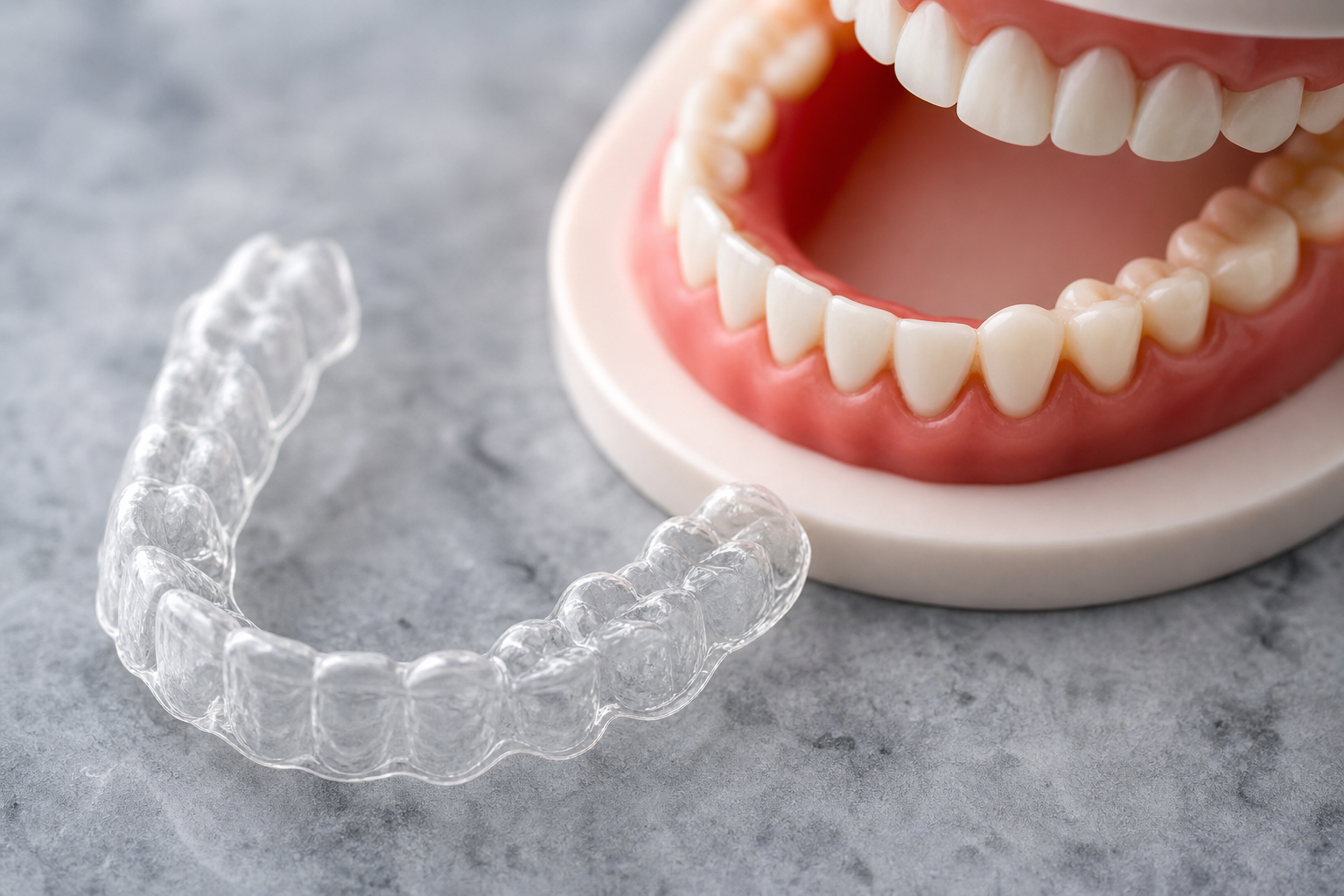
Yes, Invisalign for bottom teeth only can be possible, particularly where there is mild lower crowding, spacing or relapse after previous braces. However, I would not decide this simply by looking at the lower front teeth. Your upper and lower teeth meet as one working bite, so I would assess both arches before recommending a lower-only plan.
A focused treatment can be a sensible option when the upper teeth are already in a good position and the bite is stable. In other cases, moving only the bottom teeth could leave the bite less comfortable, less stable or more difficult to finish well. The important question is not just whether I can straighten the lower teeth, but whether I can do so without creating a problem elsewhere.
Can you get Invisalign on bottom teeth only?
You can sometimes have Invisalign on just your bottom teeth. This is often called single-arch treatment or lower-arch treatment. It may involve active aligners on the lower teeth only, although I may sometimes need to include the upper arch in the plan to monitor or protect the way the teeth meet.
This is where people sometimes get confused. Straight upper teeth do not necessarily mean the upper arch can be ignored. Even a small movement of a lower incisor can alter the overbite, overjet, centre lines or the contacts between the back teeth.
Before I recommend lower-only Invisalign, I would explain what the treatment is designed to achieve and what it is not designed to correct. A limited plan can be appropriate, but it should not be used as a shortcut around a bite issue that needs coordinated treatment.
When might lower-only Invisalign be a reasonable option?
I may consider Invisalign for lower teeth only where the concern is mild, clearly defined and the existing bite is already acceptable. The aim might be to relieve a small amount of crowding, close a minor space or correct limited movement that has happened after previous orthodontic treatment.
Lower-only treatment is more likely to be reasonable when:
- the upper teeth are well positioned and do not need active movement;
- the upper and lower teeth meet comfortably and consistently;
- there is mild lower-front crowding or spacing rather than a wider bite problem;
- there is enough space, or a safe way to create it, for the required movement;
- the treatment objective is modest and understood clearly from the start;
- gum health, oral hygiene and any decay or unstable dental work have been addressed; and
- there has been minor lower-arch relapse after braces or aligners, without a significant change in the bite.
Previous braces do not automatically make someone suitable for a short corrective plan. When I assess relapse, I would look at why the teeth moved, whether a fixed retainer is present or damaged, whether removable retainers have been worn, and whether tooth wear or changes in the bite now affect the plan.
When would I usually recommend treating both arches?
I would usually discuss treatment of both arches if moving the lower teeth alone is likely to disturb the bite or if the upper teeth are part of the reason the lower teeth are crowded or poorly positioned. Treating both arches gives more scope to coordinate how the teeth meet, rather than simply making one row look straighter.
Both arches may need active treatment where there is a deep bite, open bite, crossbite, a noticeable overjet, a centre-line discrepancy, crowding in both arches or a change in the way the back teeth contact. I would also be cautious where there is significant tooth wear, missing teeth, uneven tooth shapes or a more complex jaw relationship.
For example, lower teeth can sometimes look crowded because there is limited space between the upper and lower teeth when you bite together. Trying to move them into a more ideal-looking position without involving the upper teeth may not be possible, or may compromise the final contacts.
Clear aligners are not automatically the right answer for every complex movement either. In some cases, fixed braces, a more comprehensive aligner plan or a specialist orthodontic opinion may offer better control. I would rather explain that honestly than promise a limited option that does not properly address the problem.
What I would assess before recommending lower-only Invisalign
What I would look at first is not just the lower front teeth in a photograph or scan. I would assess your teeth directly, how your jaws close together and the health of your gums and supporting tissues, with further assessment where clinically indicated. A digital scan is useful for planning, but it does not replace a full clinical examination.
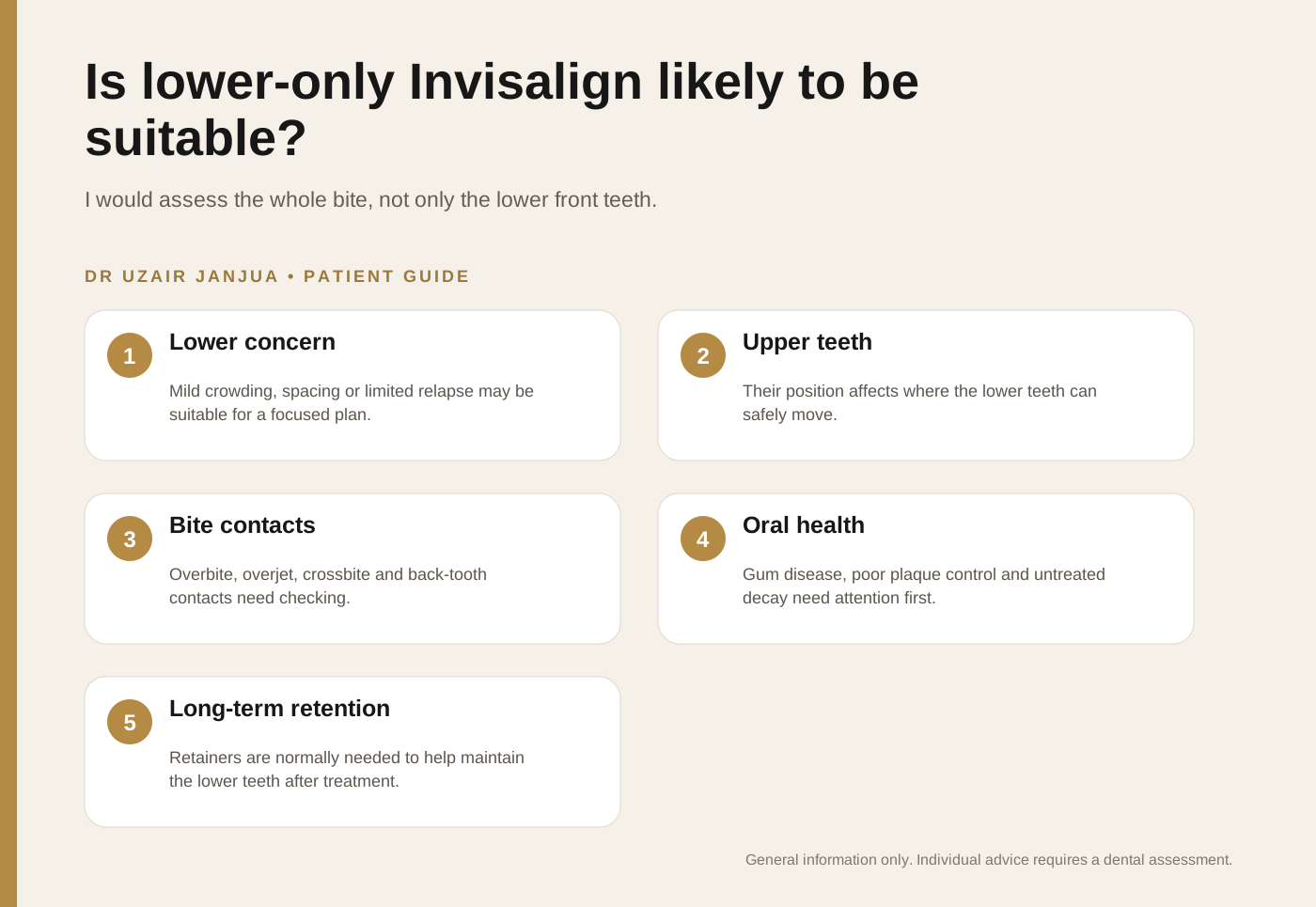
My assessment would normally include:
- Your bite at the front and back. I would check the overbite, overjet, crossbite risk and whether the back teeth meet evenly.
- Tooth positions and available space. I would consider rotations, overlapping, spacing, tooth angulation and whether movement can be planned safely.
- The relationship between both arches. I would assess centre lines and whether the upper teeth limit where the lower teeth can move.
- Gum health and oral hygiene. Active gum disease, poor plaque control or untreated decay should be stabilised before orthodontic movement is considered.
- Existing dental work. Fillings, crowns, veneers, implants, worn teeth and chipped edges can affect what movement is sensible and how aligners fit.
- Your previous dental and orthodontic history. Previous extractions, braces, retainers and the reason for relapse can all matter.
- Your expectations. I would make sure the goal is achievable and that you understand the limits of a one-arch plan.
If you are in Birmingham or the wider West Midlands and are weighing up a lower-only option, a consultation should give you a comparison between the limited plan and treating both arches. I can assess the lower teeth, upper teeth and bite together, then explain which approach is most likely to be appropriate for your individual situation. You can also read more about my approach to clear aligner treatment in Birmingham.
What are the disadvantages of treating only one arch?
The main disadvantage is that lower-only Invisalign has less freedom to improve the overall bite. It can be an excellent focused treatment in the right case, but it is not simply comprehensive Invisalign with half the teeth removed from the plan.
Moving the lower teeth may change how they touch the upper teeth. If the movement is not planned carefully, this can affect the front bite, create unwanted pressure on particular teeth or leave the back teeth meeting differently. A visually straighter lower arch is not enough if the bite is uncomfortable or unstable afterwards.
I also explain that a limited treatment objective may not correct every concern a person notices once treatment starts. For example, it may improve lower crowding but not address an upper centre line, tooth wear, a deep bite or the appearance of uneven tooth shapes.
Aligners are removable, which is convenient for eating and cleaning, but the result depends on wearing them exactly as instructed. If aligners are not worn consistently, teeth may not track as planned. This can mean a longer treatment process, additional aligners or a revised plan.
Finally, lower front teeth can be prone to relapse after orthodontic treatment, especially where there was crowding before treatment. Retention is normally needed after active treatment. I would discuss the long-term use, cleaning and replacement of retainers before treatment begins, rather than treating it as an afterthought.
Is Invisalign bottom teeth only cheaper or faster?
It may be less expensive or quicker than treating both arches, but I would not assume that one arch means half the cost or half the treatment time. Planning, clinical responsibility, reviews, retainers and the possibility of refinements remain important parts of the care, even for a limited plan.
The final fee and timeline depend on the movements needed and how the teeth respond. Mild cases often have a narrower objective, but rotations, space creation, bite control and poor aligner tracking can make a seemingly simple lower arch more involved.
| What can affect the quote? | Why it matters |
|---|---|
| Whether one arch is genuinely suitable | Both arches may need to be involved to maintain or improve the bite. |
| Complexity of movement | Rotated teeth, significant crowding, root movement and space creation need more planning and control. |
| Attachments and supporting procedures | Small tooth-coloured attachments, interproximal reduction or elastics may be needed in some plans. |
| Refinements | Additional aligners may be required if teeth do not reach the planned position. |
| Reviews and monitoring | You should know how often I would need to see you and what happens if an aligner is not fitting. |
| Retainers | Ask whether retainers and post-treatment reviews are included, and how replacements are handled. |
| Preparatory dental care | Decay, gum concerns, fractured teeth or unstable restorations may need attention first. |
For patients travelling into Birmingham from Solihull, Sutton Coldfield, Dudley, Wolverhampton, Coventry or elsewhere in the West Midlands, I would also consider how practical the review schedule is. Convenience matters, but it should not override proper monitoring when teeth are being moved.
What does lower-arch Invisalign treatment involve?
Once I have confirmed that treatment is appropriate, I would take records such as scans, photographs and any necessary clinical information to plan the movements. We would agree the treatment objective before aligners are made, including what would count as a successful finish and what limitations remain.
You may need small attachments on selected teeth. These are temporary tooth-coloured shapes that help aligners grip and guide particular movements. Some cases also need very small adjustments between teeth to create space. I would explain why either step is being considered before proceeding.
You would wear the aligners for the daily duration I prescribe, removing them for meals and cleaning. Review appointments allow me to check that the teeth are moving as intended, that the gums remain healthy and that the bite is developing appropriately. If a tooth is not tracking, I would assess the reason rather than simply asking you to continue with an ill-fitting aligner.
At the end of active treatment, retainers normally help to hold the teeth in their new positions. I usually explain to patients that teeth can continue to drift throughout life, particularly where there was previous lower crowding. Retainers are therefore a long-term responsibility, not a one-off appliance to use briefly and forget.
Lower-only Invisalign versus other options
I would compare treatment options according to what is actually causing the concern, rather than assuming aligners are always the best cosmetic choice. The right option depends on whether the issue is tooth position, tooth shape, the bite, gum health or a combination of these.
| Option | May suit | Important limitation |
|---|---|---|
| Lower-only clear aligners | Mild, defined lower-arch concerns with a stable bite. | May not be suitable if movement affects the upper-to-lower bite relationship. |
| Both-arch clear aligners | Cases needing coordinated movement of upper and lower teeth. | Usually involves a broader treatment objective and may take longer. |
| Fixed braces | More complex movements or situations needing greater control. | They are fixed in place and require careful cleaning around brackets and wires. |
| Composite bonding | Small shape concerns, minor edge irregularities or selected visual gaps. | It changes tooth shape, not tooth position or the bite. Read more about composite bonding in Birmingham. |
| Monitoring or retainer management | Very minor concerns where active movement may not be worthwhile. | It will not straighten a tooth that needs meaningful movement. |
If both tooth position and shape are concerns, I would usually consider alignment before cosmetic reshaping. Moving a tooth after bonding can complicate the result and may mean the bonding needs adjustment later. My guide to the order of Invisalign and composite bonding explains this in more detail.
Questions I would encourage you to ask before agreeing to one-arch treatment
A good consultation should leave you clear about the purpose of treatment, not simply pleased that a shorter option exists. I would encourage you to ask direct questions and expect clear answers.
- Is my bite stable enough for lower-only Invisalign?
- What changes could lower tooth movement make to my overbite, overjet and back-tooth contacts?
- Why is one-arch treatment preferable to treating both arches in my case?
- What would be left uncorrected if I choose the limited option?
- What happens if a tooth does not track or the bite changes unexpectedly?
- Does the fee include scans, attachments, refinements, retainers and review appointments?
- What retainer will I need, how often should I wear it, and what happens if it breaks or no longer fits?
Invisalign for bottom teeth only can be a thoughtful, conservative choice for the right mild case. It should not be selected just because the lower teeth are the most noticeable concern in the mirror. If you are considering one-arch Invisalign in Birmingham or the West Midlands, I can assess the full bite and give you a clear comparison between a focused lower-only plan and comprehensive treatment, so you can make the decision with realistic expectations.