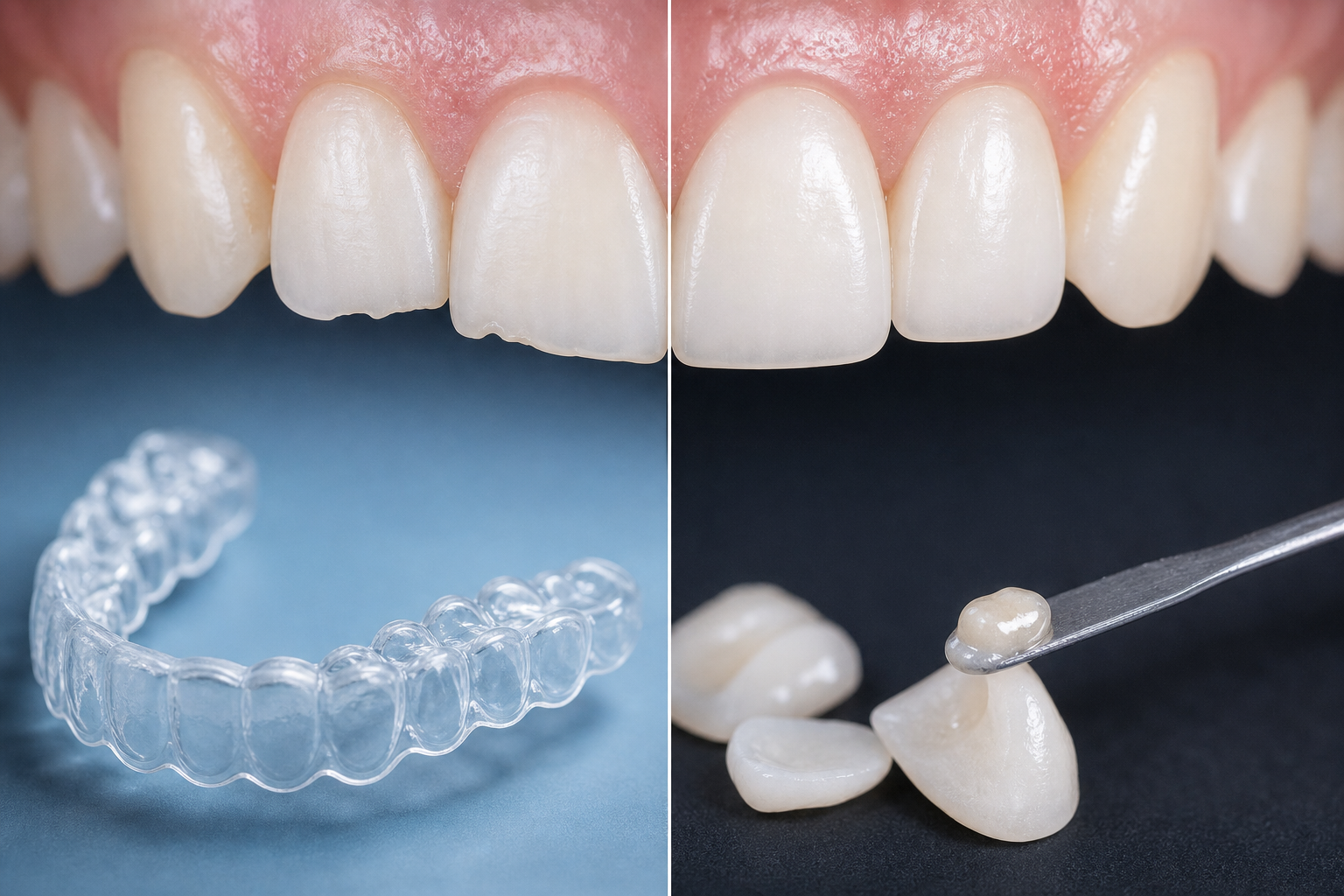
In most elective cases involving Invisalign and composite bonding, I would plan the clear aligner treatment first and any final bonding afterwards. Invisalign is one brand of clear aligner treatment, and the same sequencing principle often applies to other suitable aligner systems. Aligners move your natural teeth into a better position, while composite bonding changes the shape, length or appearance of the visible tooth surface.
Once the teeth are straightened, I can judge far more accurately whether bonding is needed, how much would be appropriate and where it should sit comfortably in your bite. A typical sequence is examination and any necessary dental care first, followed by aligners, whitening where suitable, final composite bonding and then retainers made for the finished tooth shape.
There are exceptions, particularly where a tooth is broken, worn or needs protection, so the order should always come from a proper clinical assessment rather than a standard smile package.
Invisalign and composite bonding, which should come first?
If the main issue is crooked, rotated, crowded, protruding or spaced teeth, I would usually start with Invisalign or another clear aligner system. Composite bonding comes afterwards if there are still small chips, uneven edges, narrow teeth, minor gaps or proportion issues once the teeth have reached their planned positions.
This is where people sometimes get confused. Bonding can make a tooth look straighter by adjusting its outline, but it does not physically straighten the tooth or correct the way the upper and lower teeth meet. Clear aligners and bonding can work very well together, but they do different jobs.
| Treatment | What it changes | When I would usually consider it |
|---|---|---|
| Clear aligners | Tooth position, spacing, rotations and some bite relationships | When teeth need to move rather than simply look more even |
| Composite bonding | Tooth shape, edge length, small chips, minor asymmetry and selected small spaces | When the position is already acceptable, or as finishing after alignment |
| Both treatments | Position first, then final shape and proportions | When tooth movement alone will not fully address the cosmetic concern |
Why I usually move teeth before placing final bonding
What I would look at first is whether the teeth need moving at all. If they do, placing substantial cosmetic bonding before orthodontic treatment can mean creating a shape that no longer makes sense once the teeth have moved.
Clear aligners are planned around the current shape of your teeth. Larger areas of composite can affect the available space, the fit of the aligner and the way the teeth contact each other. Bonding may also need adjustment, repair or replacement after movement, particularly if it is on edges that will meet differently at the end of treatment.
Finishing aligner treatment first gives me a clearer view of the final smile as a whole. I can assess the tooth positions, gum levels, visible spaces, tooth proportions and bite contacts before adding material. In some cases, alignment alone creates enough improvement that little or no bonding is needed.
If you are considering tooth movement as part of your plan, my clear aligner treatment in Birmingham page explains the type of assessment involved before deciding whether aligners are suitable.
When composite bonding before Invisalign may be sensible
Bonding before Invisalign is not automatically wrong. I may recommend a repair before or during aligner treatment if there is a chipped tooth, worn edge, fractured area, exposed tooth structure or an existing restoration that needs stabilising for comfort or function.
In those situations, I would plan the restoration around the orthodontic treatment rather than treating it as the final cosmetic finish. The scan, aligner design and expected tooth movements need to account for the bonded area. Sometimes a small repair is all that is needed. In other cases, a provisional approach may be appropriate until the teeth are in their final positions.
I would not assume that all existing composite needs to be removed before aligners. The right approach depends on where it is, how extensive it is, whether it is sound and what movement is planned. That decision needs an examination, photographs and a digital scan where appropriate.
What I would assess before recommending both treatments
A combined Invisalign and composite bonding plan should not begin with tooth colour or a single front-facing photograph. When I assess someone, I need to understand what is happening with the teeth, gums and bite as well as the appearance of the smile.
- Tooth position and bite: crowding, rotations, spacing, tooth angulation, protrusion and how the teeth meet when you bite and chew.
- Tooth proportions: whether a tooth is genuinely narrow, short, chipped or uneven, or simply appears that way because it is out of position.
- Gum health and cleaning: active gum problems, plaque build-up and untreated decay should be dealt with before elective orthodontic treatment.
- Existing dental work: fillings, crowns, veneers and previous bonding may influence both aligner planning and the final cosmetic result.
- Tooth wear and grinding: clenching, grinding, nail biting and chewing hard objects can affect the durability of composite and the design of retainers.
- Expectations: I would discuss what can realistically be changed without overbuilding teeth or compromising cleaning, function or long-term maintenance.
One thing I usually explain to patients is that the most attractive plan is not always the one that adds the most composite. Sometimes careful alignment and very light edge bonding is more conservative than trying to disguise overlapping teeth with wider-looking restorations.
If you are weighing up both options in Birmingham or the wider West Midlands, a consultation is the right point to ask for a written plan that separates the aligner, refinement, whitening, bonding and retainer stages. I can then explain what is essential, what is optional and what may be better left alone.
Could composite bonding alone be enough?
Composite bonding alone can be a sensible choice if your teeth are already reasonably well positioned and the concern is mainly shape. I may consider it for a small chip, a slightly uneven edge, a narrow tooth, mild asymmetry or a very small gap where the bite is stable and the surrounding teeth are in suitable positions.
I would be more cautious about using bonding alone where there is significant crowding, overlapping teeth, rotations, protrusion, larger spaces or a bite issue. Adding composite to make misaligned teeth appear straighter can make teeth look too broad, leave awkward cleaning areas or fail to address contacts that are causing wear or chipping.
For a small gap, the decision is especially individual. Closing it with bonding may be appropriate, but I would first consider the width of the teeth, the gum shape, the bite and whether moving the teeth would give a more balanced result. You can read more about the limits of composite bonding in Birmingham if the main concern is tooth shape rather than alignment.
A realistic order from consultation to final smile finishing
The exact timetable varies with the complexity of movement, your aligner wear, any refinements and the condition of your teeth and gums. There is no standard overall timeframe for Invisalign and composite bonding. The aligner phase is usually the main factor, and may include the initial plan and further aligners if refinement is needed, before shade planning, any final bonding and retention.
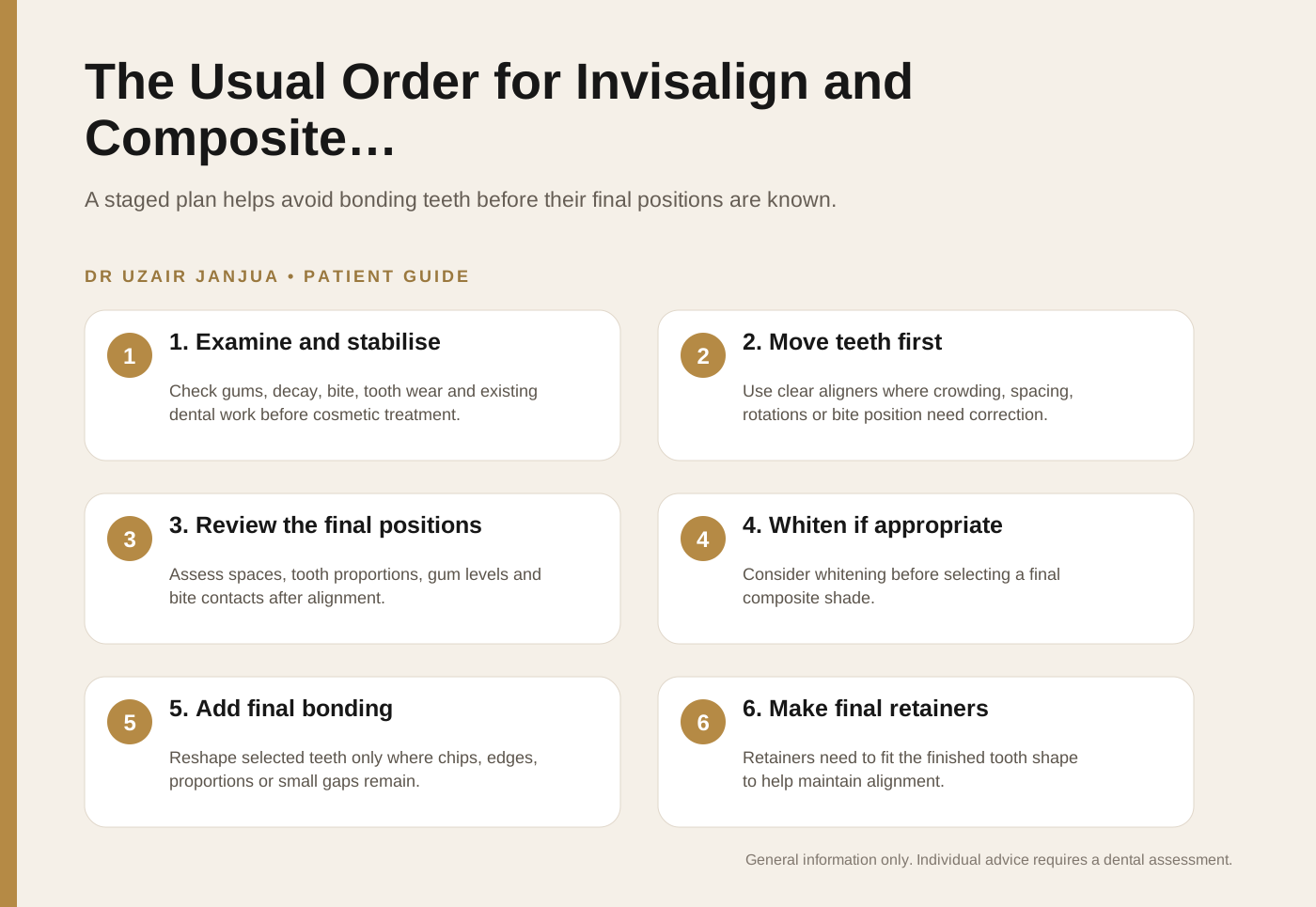
I would commonly structure a combined plan in the following order.
- Examination and planning. I assess teeth, gums, bite, existing restorations and your goals. This may include photographs, scans and X-rays where clinically needed.
- Stabilising dental health. Decay, gum problems, hygiene concerns, damaged fillings or active tooth wear may need attention before cosmetic treatment.
- Clear aligner treatment. Teeth are moved gradually according to the agreed plan. Consistent wear and attendance at planned reviews matter.
- Refinement where needed. If teeth do not reach the intended positions fully, further aligners may be required before cosmetic finishing.
- Whitening, if appropriate. I would usually discuss whitening before selecting the final composite shade because composite does not lighten in the same way as natural enamel.
- Final composite bonding. Once position, shade and proportions are settled, I can add only the material that is genuinely needed.
- Final retainers and maintenance. Retainers need to fit the final tooth shape, so they may need to be made or adjusted after bonding.
Whitening is not required for every plan, and it is not suitable for every person or tooth. However, choosing a shade before bonding matters. If you whiten after final bonding, your natural enamel may become lighter while the composite remains the same shade. My article on whitening composite bonding and shade planning explains this in more detail.
What can change the cost of Invisalign and composite bonding?
There is no reliable single price for Invisalign and composite bonding because the two treatments can vary considerably. I would advise against comparing plans only by a headline combined cost. A lower starting figure may not include refinements, retainers, hygiene care, replacement attachments or the amount of bonding required at the end.
| Cost factor | Why it matters |
|---|---|
| Complexity of tooth movement | Crowding, rotations, spaces and bite correction affect the planning and aligner stages required. |
| Number of arches treated | Some plans involve upper teeth only, while others need both upper and lower arches for a stable bite. |
| Refinements and retention | Further aligners and retainers should be discussed clearly before treatment begins. |
| Amount of bonding | A small edge repair is different from reshaping several front teeth. |
| Existing restorations or dental care | Old bonding, fillings, gum treatment, hygiene appointments or repairs may need to be addressed first. |
| Whitening and shade selection | Whitening may be an optional stage, but it can affect how final composite is planned. |
| Follow-up needs | Repairs, polishing, retainer replacement and review appointments are part of long-term ownership. |
For patients travelling from Solihull, Coventry, Wolverhampton, Walsall, Sutton Coldfield or elsewhere in the West Midlands, I would also factor in the practical commitment. Aligners are convenient for many adults, but scans, reviews, attachment repairs, refinements, bonding appointments and retainer checks still need to fit realistically around work and travel.
Maintenance and limitations after Invisalign and bonding
Clear aligners do not permanently lock teeth into position. Retainers are needed after active orthodontic treatment because teeth can continue to move over time. If bonding is added after an earlier retainer was made, I would check whether a new retainer or adjustment is needed so it fits the final tooth shape properly.
Composite bonding is additive and often conservative, but it is still a restoration. It can stain, lose polish, chip or wear over time, particularly where there is heavy biting pressure, grinding, nail biting or a habit of chewing pens, ice or hard foods. Repairs are often possible, but I would not describe composite as maintenance-free or permanent.
Good brushing, cleaning between the teeth, regular dental reviews and wearing retainers as advised all help protect the investment in treatment. If you grind your teeth, I would discuss whether additional protective measures are appropriate once the orthodontic and restorative stages are complete.
Alternatives if you do not need both treatments
I would not recommend Invisalign and composite bonding simply because they are often discussed together online. The right treatment may be simpler.
- Clear aligners alone: appropriate where tooth position is the main issue and the natural tooth shapes look balanced once aligned.
- Composite bonding alone: potentially suitable for minor chips, slight asymmetry, small edge irregularities or selected small gaps without a significant alignment concern.
- Fixed braces: may be a better orthodontic option for some more complex movements or where clear aligners are not suitable.
- Professional whitening: may be enough where colour is the only real concern.
- Porcelain veneers: can be considered for some larger aesthetic changes, but they involve different long-term implications and are not simply an upgraded form of bonding.
- Gum treatment or contouring: may help where uneven gum levels, rather than tooth position, are creating an imbalance in the smile.
- No cosmetic treatment: sometimes the most sensible choice where the issue is minor and the likely benefit does not justify more extensive treatment.
The practical answer is straightforward. If your teeth need moving, I would start with an orthodontic assessment and usually complete aligner treatment before final bonding. If the concern is only a small issue of shape, bonding may be enough on its own. If both position and tooth shape are involved, I can assess the whole picture and create a staged plan that avoids unnecessary restorative work.
If you are considering Invisalign and composite bonding in Birmingham, arrange a consultation so I can assess your bite, tooth health, existing restorations and goals in person. That is the safest way to decide whether you need one treatment, both treatments, or a more conservative alternative.