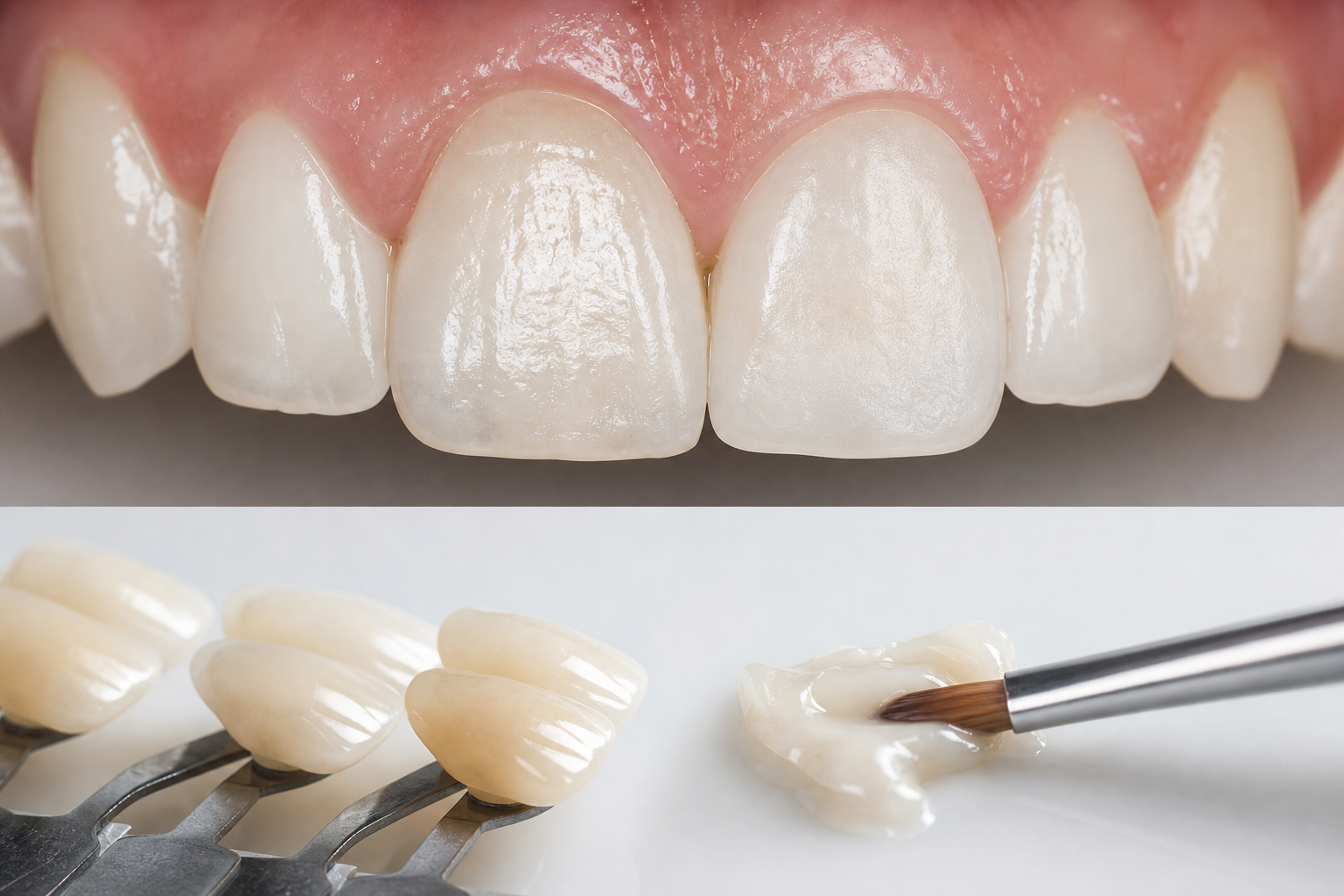
You cannot reliably whiten composite bonding in the same way that you whiten natural teeth. Whitening treatments are designed to lighten enamel and dentine, the natural tooth structure underneath. Established composite bonding usually stays close to its original shade, although professional polishing may remove some surface staining and restore its shine.
When I assess someone who wants whiter teeth after composite bonding, the important question is whether the concern is staining, dullness, damage or a genuine shade mismatch. Whitening the surrounding teeth can make existing bonding look darker by contrast, particularly on front teeth. If you want a lighter overall smile, I would usually plan whitening first, then assess whether the composite needs polishing, repair or replacement to match.
Can you whiten composite bonding?
Composite bonding cannot be predictably bleached to a lighter underlying shade. Peroxide-based whitening works mainly on natural tooth structure, not on composite resin, which is the tooth-coloured material used for bonding, white fillings and some composite veneers.
This is where people sometimes get confused. A bonded tooth may look cleaner after a professional polish because external staining has been removed, but that is not the same as changing the colour of the composite itself. If the composite is genuinely too yellow, grey or dark for your preferred tooth shade, polishing alone will not make it substantially lighter.
I would also avoid trying to solve this with stronger whitening products, whitening strips or repeated applications at home. These can lighten the natural enamel around the bonding while leaving the composite largely unchanged, making the difference more obvious. In the UK, tooth whitening is regulated dentistry, and peroxide whitening products must be supplied through the appropriate dental-professional route.
Why whitening can make composite bonding look darker
Whitening can make bonding appear darker even when nothing has happened to the bonding itself. As the natural enamel becomes lighter, the original composite shade may stand out beside it. This is partly a material issue and partly a contrast effect.
It tends to be most noticeable where bonding is visible in the smile, such as edge bonding on front teeth, composite veneers, larger repairs or bonding that covers a substantial part of the tooth. Bright daylight, close-up photographs and some indoor lighting may make a slight mismatch easier to see.
For example, if only the natural parts of two front teeth lighten, an older bonded edge may start to look comparatively yellow or grey. That does not necessarily mean the bonding has suddenly stained or failed. It may simply no longer match the newly whitened tooth colour.
Before any whitening, I would look at how much composite is visible, where it sits on each tooth and whether the shade difference is likely to matter to you. A small repair near the gumline is very different from bonding across the front surfaces of several teeth.
A common shade-planning mistake
A common and avoidable mistake is having composite bonding placed before deciding whether you want to whiten your natural teeth. Once composite has been selected to match your existing enamel, it will not automatically follow if you later choose a brighter tooth shade.
I usually explain that composite is chosen and layered to work with the colour, translucency and character of the surrounding teeth at that point in time. If your preferred final shade is lighter than your current teeth, whitening first usually gives us better control. I can then assess the settled tooth colour and plan composite that blends with it as naturally as possible.
That does not mean everyone needs whitening before bonding. If you are happy with your natural shade, or the bonding will be very limited and not highly visible, it may not be necessary. The right sequence depends on your priorities, the amount of bonding planned and how much change you want.
It is also worth remembering that whitening is not a permanent change. Natural teeth can gradually pick up colour again, while composite may age differently. Good shade planning is about making an informed choice at the start, not promising that every tooth will remain identical indefinitely.
Should you whiten before or after composite bonding?
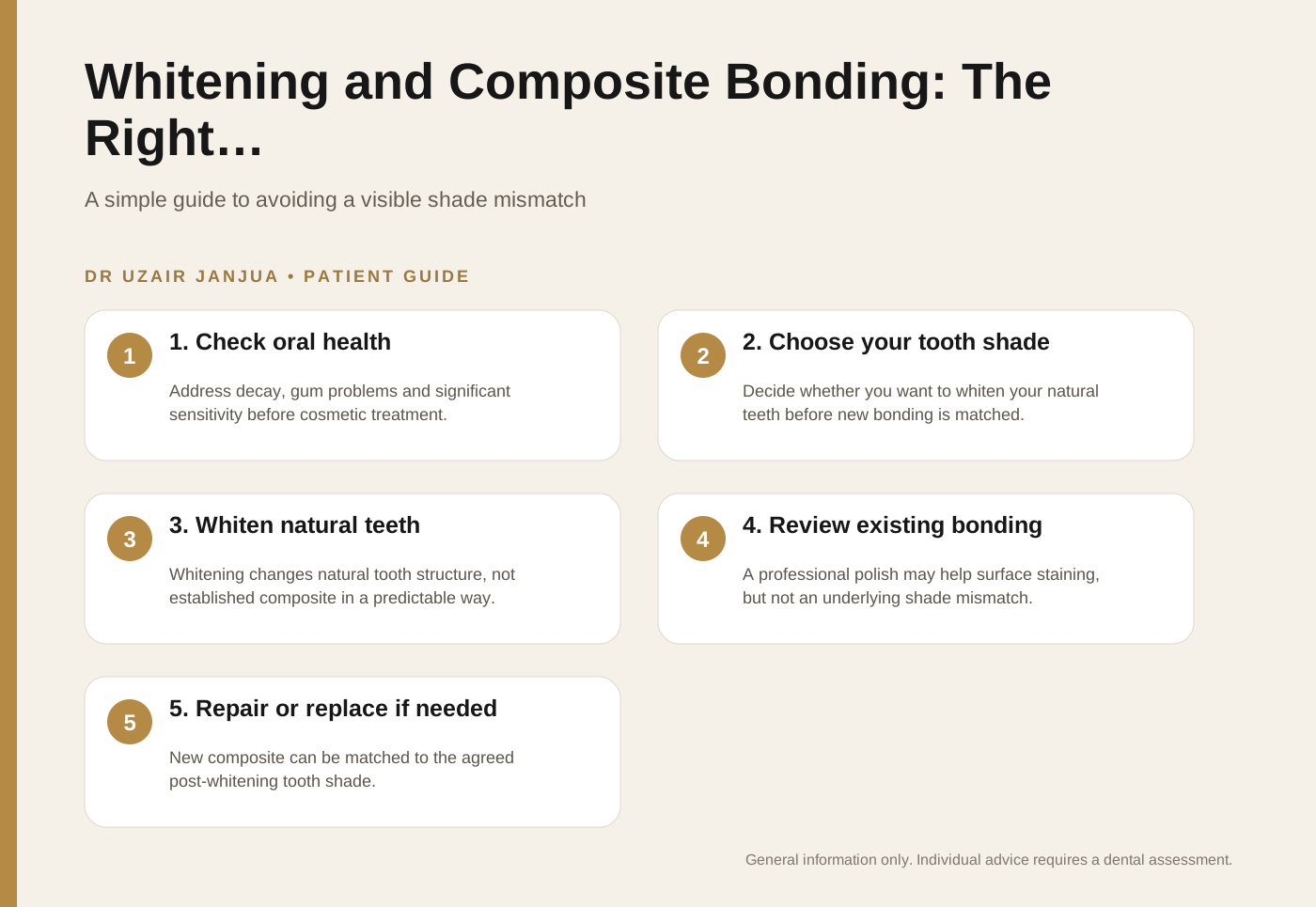
If you are planning both treatments, I would usually assess your oral health first, whiten the natural teeth if appropriate, review the final shade, then place new composite bonding to match. This sequence reduces the risk of placing bonding that looks acceptable initially but becomes mismatched after whitening.
I would not give every patient the same timetable. The appropriate interval between whitening and final shade selection depends on the whitening approach, your sensitivity, the tooth response and the clinical plan. The key point is to avoid choosing the definitive composite shade while the tooth colour is still changing.
- Check the teeth and gums first. Decay, gum inflammation, exposed dentine, leaking fillings and significant sensitivity may need attention before cosmetic treatment.
- Decide whether whitening is actually wanted. I would discuss a realistic level of brightness rather than assume that the whitest possible shade will look right for every smile.
- Whiten natural teeth where suitable. This should be planned through an appropriately registered dental professional, with instructions tailored to the teeth being treated.
- Review the shade and visible restorations. I would check whether existing bonding can be polished or whether selected areas need repair or replacement.
- Match new composite to the agreed tooth colour. Shape, surface texture and translucency matter as well as the basic shade.
For more detail on the checks involved before whitening, you can read how professional teeth whitening is planned. If you already have bonding, I would assess the whole smile before assuming whitening is the next step.
What I would assess before recommending a solution
I would not recommend replacing composite simply because it looks slightly different in one photograph. First, I would establish why it looks different and whether a conservative option can achieve what you want.
- The condition of the bonding. I would check for roughness, loss of gloss, chips, wear, staining, gaps at the edges and signs that a repair may be more suitable than complete replacement.
- The source of the colour change. Surface stain, natural tooth darkening and a composite shade mismatch need different solutions.
- Your tooth and gum health. Whitening is cosmetic treatment. Decay, gum problems, sensitivity or a suspected issue beneath an old restoration should be addressed rather than masked.
- The bite and tooth position. If a bonded edge repeatedly chips because of the way the teeth meet, simply making it whiter will not address the cause. Where crowding or position is the main issue, tooth straightening may deserve discussion first.
- The number of teeth involved. Refreshing one small area is very different from remaking bonding across several front teeth.
- Your desired final look. I would discuss whether you want a subtle refresh, a visibly lighter smile or a larger change in shape and colour, as these choices affect the most sensible treatment path.
For patients in Birmingham and the West Midlands, a consultation is particularly useful if whitening and bonding have been suggested separately. I can assess them together, explain what is likely to match and provide a written plan that separates whitening, polishing, repair, replacement and future maintenance.
What can improve the appearance of existing bonding?
The best option depends on whether the issue is on the surface of the composite or built into its shade and condition. I would aim for the least invasive option that can realistically meet your expectations, rather than replacing healthy bonding automatically.
| Option | When I may consider it | What it can and cannot do |
|---|---|---|
| Professional polishing | Bonding is sound but looks dull or has mild external staining. | Can improve gloss and remove some surface stain. It cannot reliably create a much lighter composite shade. |
| Small repair | There is a local chip, worn corner or small defect. | Preserves more of the existing bonding. Matching newer composite to older material may still be challenging. |
| Selected replacement | Only one or a few visible bonded areas no longer match after whitening. | Allows a new shade to be matched to the whitened teeth, but involves further treatment and maintenance. |
| Larger replacement plan | Several bonded teeth are stained, worn, poorly matched or no longer work together aesthetically. | Can create a more consistent plan, but needs careful consideration of cost, future repairs and long-term upkeep. |
| No treatment | The difference is minor and the teeth and bonding are healthy. | A sensible choice where the likely improvement does not justify intervention. |
Professional polishing needs a careful approach. Over-polishing can alter surface texture, anatomy or the edges where composite meets tooth, so I would only recommend it when the bonding is suitable and the likely benefit is worthwhile.
When whitening is not the right answer
Whitening is not the answer to every dark tooth or every disappointing bonded result. What I would look at first is whether the colour change is general across the teeth, limited to one tooth, or caused by a problem that needs investigation.
A single tooth that has become noticeably darker may have a different cause from ordinary surface staining and may need a specific assessment. Likewise, whitening will not correct a chip, lifting composite, decay, gum inflammation, poor margins or bite-related damage. It also will not straighten crowded teeth, close every type of gap or change tooth shape.
If alignment is the main concern, I may discuss whether moving the teeth first would reduce the amount of bonding needed. If the bonding is already extensively damaged or the underlying tooth is unhealthy, I would deal with that before considering cosmetic shade changes.
Very bright whitening goals need honest discussion too. A lighter shade can make old fillings, crowns, bonding and natural differences between teeth more visible. I would rather plan a shade that works across the smile than pursue a colour that creates several new mismatches.
Composite bonding or porcelain veneers if shade is the main concern?
Composite bonding and porcelain veneers can both change the visible colour and shape of teeth, but they involve different trade-offs. I would not say that one is automatically better. The appropriate option depends on the amount of change needed, the condition of the teeth, your bite, how much natural tooth structure should be preserved and your expectations about maintenance.
Composite bonding is generally an additive, conservative treatment. It can often be repaired or adjusted, but it may stain, wear or chip over time and can need maintenance. Porcelain has different optical and stain-resistance characteristics, but veneers usually involve a different level of preparation, cost and long-term commitment.
Where the only problem is that healthy existing bonding no longer matches whitened teeth, replacing selected composite may be more proportionate than moving to veneers. Where more extensive colour, shape or coverage changes are being considered, I would explain the differences carefully, including the practical implications of porcelain veneers as an alternative.
Maintaining the shade after whitening and bonding
After whitening and bonding, I would encourage you to think about maintenance as part of the treatment rather than an afterthought. Teeth and restorations do not necessarily change in the same way over time, so occasional review is useful if colour matching matters to you.
- Brush thoroughly with fluoride toothpaste and keep the gumline clean, as plaque can make both teeth and bonding appear duller.
- Be aware that smoking and strongly coloured food and drink can contribute to surface staining. The extent varies, but habits do affect appearance.
- Avoid abrasive whitening pastes or unregulated products as a way to alter composite. They are not a substitute for a proper shade assessment.
- Keep any whitening trays and follow the plan provided to you, rather than restarting whitening repeatedly without review.
- Arrange a review if bonding feels rough, chips, catches floss, changes noticeably in colour or no longer blends with the adjacent teeth.
If you are considering teeth whitening and composite bonding in Birmingham, I can assess the visible restorations, the health of your teeth and gums, and the final shade you are aiming for before you commit to either treatment. That can help reduce unnecessary whitening, avoidable replacement work and disappointing shade differences.
The simple answer is that whitening can lighten your natural teeth, but it does not reliably lighten existing composite bonding. If your bonding is stained, a polish may help. If it no longer matches your preferred tooth colour, repair or replacement after sensible shade planning may be the better route. A consultation allows me to advise on the most conservative option for your own teeth, rather than relying on a one-size-fits-all answer.