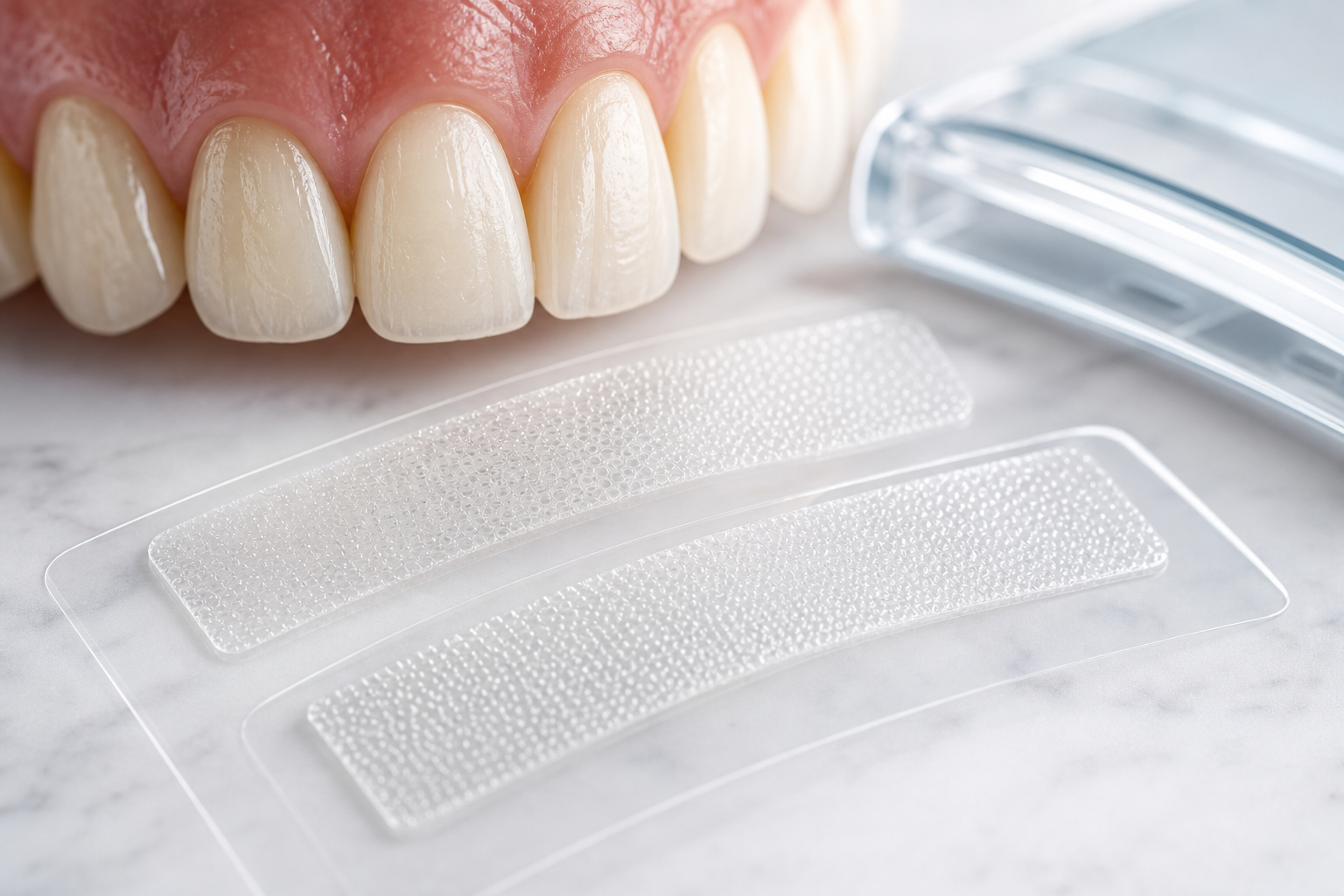
Yes, teeth whitening strips can work on natural teeth, particularly where there is mild general yellowing or staining. I would usually set realistic expectations first, though. A strip may produce a modest lightening effect, but it cannot change the colour of crowns, fillings, veneers, implants or composite bonding. It also cannot correct uneven tooth shape, crowding, chips or gum problems.
The result depends on what is causing the colour change, the ingredients in the product, how closely the strip contacts your teeth and whether your teeth and gums are healthy enough for whitening. If you have sensitivity, visible dental work, a single dark tooth or uneven colour, I would recommend an examination before starting rather than repeatedly trying different strips.
Do teeth whitening strips work?
Whitening strips can lighten the colour of natural tooth enamel because some contain bleaching ingredients that work within the tooth, rather than simply polishing surface stains away. They are most likely to help with a mild, overall shade change. They are less predictable than dentist-supervised whitening because the strip may not fit evenly and the product may not contact every visible tooth surface consistently.
This is where people sometimes get confused. A whitening toothpaste or a cleaning appointment may remove some surface staining from tea, coffee, red wine or smoking. Peroxide-based whitening aims to alter the colour of the natural tooth itself. Both can make teeth look brighter, but they are not the same process.
What whitening strips can realistically change
When I assess someone for whitening, I look at whether the concern is a general yellow tone across several teeth or a more specific colour issue. Whitening strips may help if your natural teeth have become gradually darker or have mild surface and internal staining.
They may be a reasonable lower-cost option for someone with healthy teeth, healthy gums and modest expectations. A visible change is possible, but it is not sensible to expect an instant, perfectly even or permanently white result.
- General yellowing of natural teeth: this may respond to whitening.
- Mild tea, coffee, red wine or smoking-related staining: strips may help, although cleaning may be more appropriate where staining is mostly on the surface.
- Teeth with a naturally darker baseline shade: these may lighten, but the degree of change is individual.
- Front teeth with good alignment: strips are more likely to make even contact than on crowded or overlapping teeth.
Results can fade over time. Tea, coffee, tobacco, red wine and other strongly coloured foods and drinks can gradually affect the shade again. I would not advise repeatedly using strips simply to chase a brighter result without checking why the colour is not changing as expected.
What whitening strips cannot change
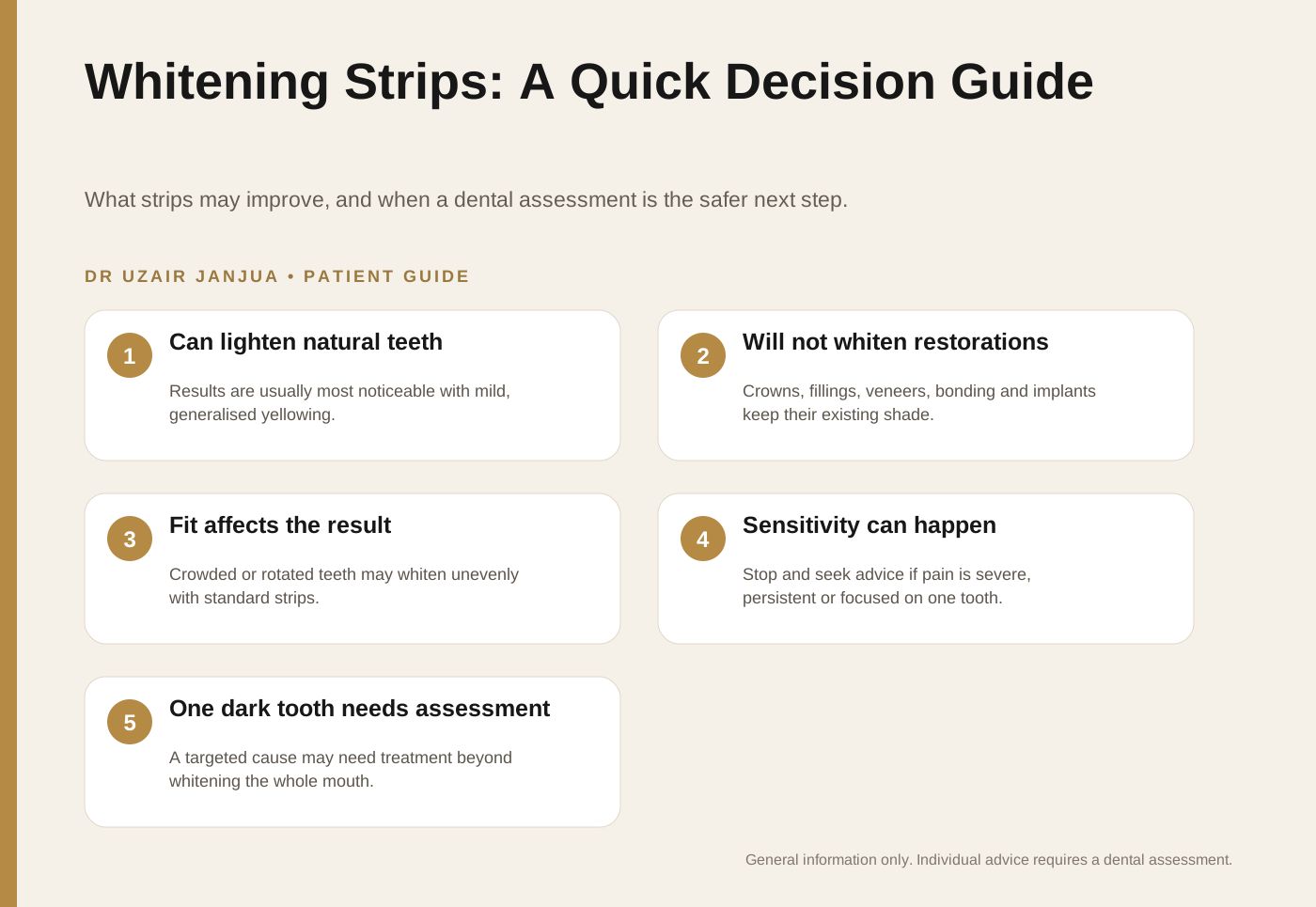
Whitening only affects natural tooth structure. It does not bleach materials used to repair or replace teeth. This matters because whitening natural teeth can make existing dental work look darker by comparison.
| Concern | Can strips change it? | What I would consider instead |
|---|---|---|
| Composite bonding, white fillings or crowns | No, these materials keep their existing shade. | Shade planning before any future replacement work. |
| Veneers, bridges, implants or dentures | No, whitening strips do not alter these materials. | An assessment of whether whitening surrounding natural teeth is worthwhile. |
| Chips, worn edges, small gaps or uneven shape | No, whitening does not change tooth shape. | An assessment of whether composite bonding or another restorative option is appropriate. |
| Crowding, rotation or overlapping teeth | No, strips do not move teeth. | Clear aligner treatment if alignment is the main concern. |
| Decay, gum disease, cracks or tooth pain | No, and whitening may be unsuitable until the cause is assessed. | Dental examination and any necessary treatment first. |
One thing I usually explain to patients is that whitening should come before planned composite bonding, veneers or other visible cosmetic work where possible. That gives us a chance to decide on the shade of the restoration after your natural teeth have reached a stable colour.
That does not mean an existing filling, crown or bonded tooth automatically needs replacing after whitening. I would only discuss replacement if there is a genuine concern about appearance, function or the condition of that restoration. If you already have bonding, it is worth reading about whitening and existing composite bonding before buying a kit.
Why whitening strips work for some people but not others
The answer depends on much more than whether a product is advertised as strong. A higher concentration or longer wear time is not automatically better. It may increase the chance of sensitivity or gum irritation without addressing the reason your teeth look darker.
What I would look at first is the type of discolouration. Surface staining can sometimes be improved through professional cleaning and stain removal. General yellowing may respond to bleaching. However, a single grey, brown or very dark tooth can have a different cause, such as previous trauma or root canal treatment, and needs a targeted assessment rather than whitening the whole mouth with strips.
The physical fit matters too. Strips may not sit evenly on teeth that are rotated, crowded, recessed or unevenly shaped. Where contact is patchy, whitening can look patchy. Deep grooves, overlapping teeth and gum recession can all make a one-size-fits-all strip less predictable.
Are teeth whitening strips safe?
Whitening strips may be tolerated by many people when they are suitable for them and used exactly as directed, but they are not risk-free. Temporary tooth sensitivity and gum irritation are the most common practical problems. Sensitivity can make teeth more responsive to cold, air or sweet foods, while gum irritation is more likely if a strip overlaps onto the gums, is worn for longer than instructed or does not fit properly.
I would take persistent, severe, localised or spontaneous tooth pain seriously. It may not simply be a whitening side effect. Decay, a crack, worn enamel, gum recession or a leaking restoration can cause similar symptoms and should be checked.
In the UK, whitening products and the provision of tooth whitening are subject to professional and product-safety requirements. I would be cautious about online products with unclear ingredients, vague instructions, no named responsible company or no meaningful route for advice if you develop a problem.
If you are in Birmingham or the West Midlands and are unsure whether a product is appropriate, an examination before whitening is usually more useful than relying on a product review or a before-and-after image online. It allows me to check the teeth, gums, restorations and likely limitations properly.
When I would advise against starting with whitening strips
I would not recommend starting with strips until you have had an assessment if any of the following apply. This does not necessarily mean whitening will never be possible, but the timing or approach may need to change.
- You have toothache, a cracked tooth, decay, loose fillings or a broken restoration.
- Your gums bleed, are sore or have receded.
- You already experience regular sensitivity to cold, sweet foods or brushing.
- You have significant enamel wear or exposed root surfaces.
- One tooth is much darker than the others.
- You have visible crowns, veneers, composite bonding, bridges, implants or dentures.
- You are hoping to improve tooth position, gaps, chips or uneven edges as well as colour.
- You have used strips before and developed marked sensitivity or gum irritation.
I would also advise discussing whitening with a dental professional during pregnancy or breastfeeding, and before using whitening products for younger patients. It is not sensible to assume that an online product is appropriate simply because it is available to buy.
A consultation is particularly worthwhile if you are planning cosmetic treatment afterwards. I can assess whether cleaning, dentist-supervised whitening, alignment treatment or restorative work would give a more coherent result than trying to make one product solve several different concerns.
Whitening strips versus professional teeth whitening
Whitening strips are convenient and may have a lower upfront purchase cost. Dentist-supervised whitening may have a higher initial cost because it can include an assessment, professionally supplied products and follow-up advice. It is not about making every person choose the most intensive option. It is about choosing a method that makes sense for your mouth and your goals.
| Consideration | Whitening strips | Dentist-supervised whitening |
|---|---|---|
| Initial assessment | Usually limited or absent. | I assess teeth, gums, sensitivity and existing dental work first. |
| Fit and coverage | Standard shape, which may not sit evenly on every tooth. | More tailored planning, often with custom trays where appropriate. |
| Support with sensitivity | Depends on the seller and product instructions. | I can advise on adjusting use if sensitivity develops. |
| Restoration shade planning | Not usually included. | Can be considered before future bonding, crowns or veneers. |
| Cost considerations | May have a lower initial purchase price. | May include assessment, professional supply and follow-up. |
For a clearer picture of the options, you can explore dentist-supervised teeth whitening in Birmingham. I would still need to examine you before confirming whether it is suitable or advising which approach is likely to be most appropriate.
What I would assess before recommending whitening in Birmingham
Before I recommend whitening, I would check that your teeth and gums are healthy enough to proceed. That includes looking for decay, cracks, gum inflammation, recession, enamel wear, leaking restorations and areas that may be prone to sensitivity.
I would also assess the current shade and where the colour difference is most noticeable. A single dark tooth, patchy colour or prominent crown may need a different conversation from general yellowing across the front teeth.
Your intended outcome matters as well. If you are considering bonding, veneers or aligners later, I would explain the order of treatment and the trade-offs. For patients travelling into Birmingham, it is sensible to factor in the assessment and possible follow-up appointments, not just the advertised price of a whitening kit.
What to do if strips are not the right answer
If staining is mostly on the surface, a professional clean and stain removal may be the sensible first step. If the concern is the overall shade of healthy natural teeth, professional home whitening with dentist-provided trays may offer more controlled coverage and clearer advice than standard strips.
If the issue is a chipped edge, small tooth, uneven shape or slight gap, whitening alone will not change it. Composite bonding may be considered in selected cases. Veneers can be relevant for some more complex colour and shape concerns, but they are a more involved treatment and need careful planning.
If crowding or overlap is making teeth look darker or uneven, alignment may be more relevant than bleaching. For one dark tooth, I would assess why it has changed colour before discussing a targeted option. The important point is not to use strips as a substitute for identifying the actual cause.
Practical questions to ask before buying whitening strips
Before choosing a whitening product, I would encourage you to look beyond claims such as “instant”, “permanent” or “enamel safe”. Clear information and appropriate support matter, especially when you are applying a bleaching product close to the gums.
- What is the active ingredient, and is the concentration clearly stated?
- Are the instructions clear about wear time, frequency and what to do if sensitivity occurs?
- Is there a named responsible company and reliable contact information?
- Does the product explain who should not use it?
- Will it fit your teeth without sitting extensively on the gums?
- Do you have fillings, crowns, bonding or veneers that may look different afterwards?
- Would cleaning or a dental examination answer the problem more directly?
Teeth whitening strips can be a reasonable choice for a mild shade improvement in healthy natural teeth, but they are not a universal cosmetic fix. If you have sensitivity, restorations, uneven colour or uncertainty about why your teeth look darker, I can assess the situation and discuss whether whitening is worthwhile before you spend money on products that may not address the issue.