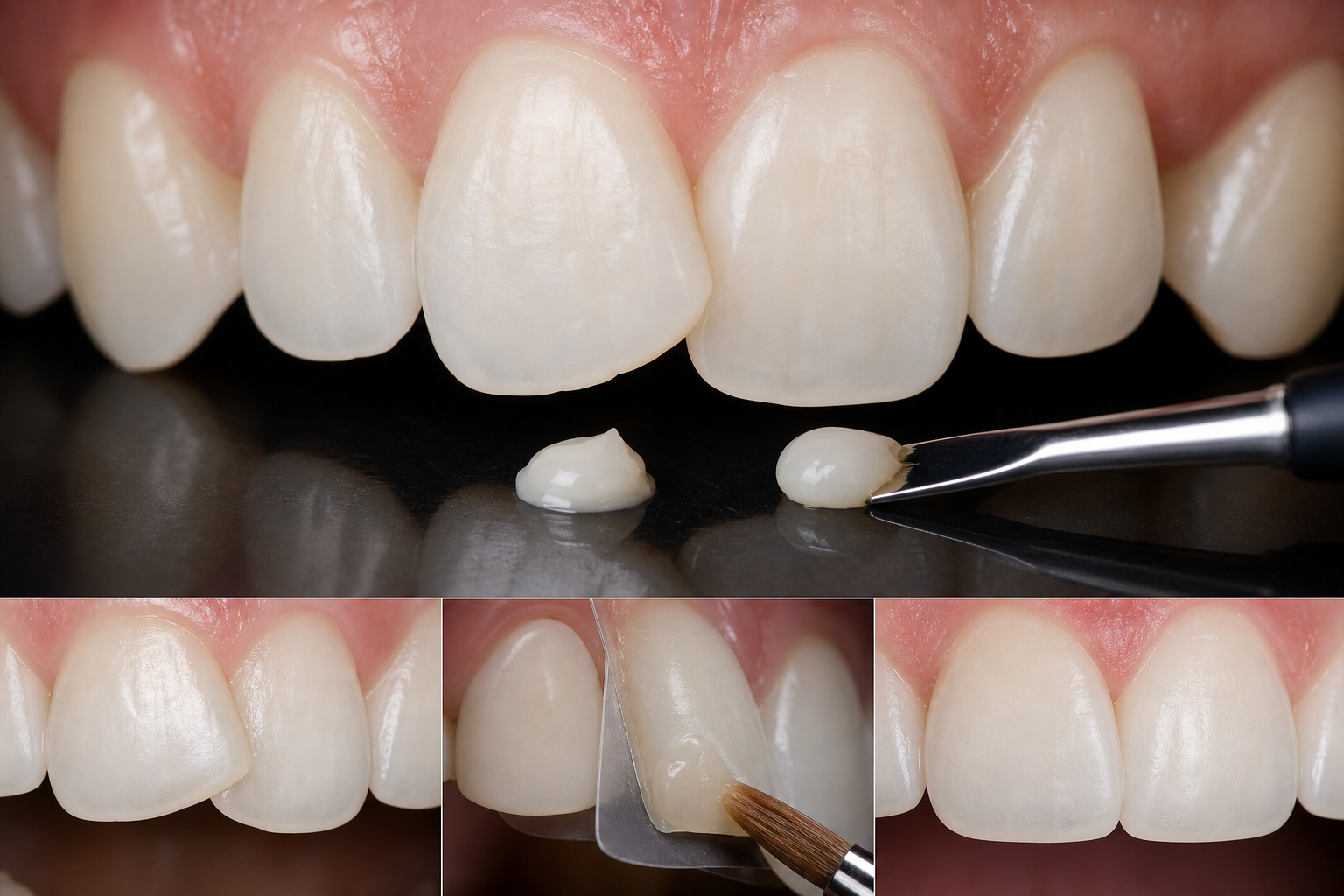
Composite bonding on overlapping teeth can sometimes make a smile look straighter, particularly where one or two front teeth are only slightly rotated, sit a little behind another tooth or have uneven edges. I would use tooth-coloured composite to refine the visible shape of the teeth, not to physically move them.
If the overlap is more pronounced, the tooth sits prominently forward or the bite is involved, bonding alone can create a thicker-looking result without solving the underlying position. When I assess someone in Birmingham or the West Midlands, I look at whether the concern is mainly tooth shape or whether the teeth genuinely need to be moved first.
Can composite bonding help overlapping teeth?
Yes, in selected mild cases, composite bonding can camouflage overlap and make the front teeth appear more balanced. It works by adding a carefully shaped layer of resin to alter a tooth's contour, width, edge or visible symmetry. It does not straighten teeth in the orthodontic sense.
This is where people sometimes get confused. A tooth may look less crooked after bonding because I have adjusted the shapes around the overlap, but its root and position in the jaw have not changed. Bonding cannot create meaningful space in a crowded arch, widen the arch or correct a bite problem.
For a small visual irregularity, that distinction may not matter. For more noticeable crowding, it matters a great deal. My aim would be to avoid a result that looks acceptable in one photograph but feels bulky, is difficult to clean or receives too much pressure when you bite.
When bonding may be a sensible option
I may consider composite bonding for overlapping front teeth where the overlap is limited and there is enough room to create a natural final contour. The bite, gum health and tooth surfaces need to support that plan.
- One front tooth is slightly rotated or marginally behind its neighbour.
- Uneven edges make a small overlap appear more obvious than it is.
- Teeth have different widths, lengths or shapes that can be balanced conservatively.
- A small overlap is visible from the front, but the teeth can still be cleaned properly.
- The bite is stable and the proposed composite will not sit in heavy contact.
For example, if a tooth sits just behind the one next to it, I may be able to make the visible outline more harmonious by refining selected surfaces. However, I would only do this if it does not make the recessed tooth too wide or create an awkward contact area between the teeth.
Composite is an additive treatment, which is one reason it can be a conservative option. There may be little or no need to alter the natural tooth, although any reshaping should be minimal and clinically justified. You can read more about how I plan composite bonding treatment in Birmingham before deciding whether it is the right route for you.
When composite bonding is unlikely to be the best choice
I would not recommend bonding alone simply because it is quicker than moving teeth. If the position of the teeth is the real issue, adding material can compromise the appearance, bite or cleanability.
Bonding may be a poor fit where there is significant crowding, a severely twisted tooth, a tooth that sticks out noticeably or a lack of space in the dental arch. A tooth that already sits forward is particularly important to assess carefully, because adding composite to its front surface can make it appear even more prominent.
I would also pause before cosmetic treatment if there is a deep bite, crossbite, heavy tooth contact, active decay, gum disease, untreated tooth wear or a clenching or grinding habit. These do not automatically rule out bonding forever, but they may need addressing first or may change the treatment plan.
If your expectation is to have teeth that are genuinely aligned rather than cosmetically disguised, orthodontic treatment is usually the more direct answer. Clear aligners or braces move teeth through the supporting bone, whereas bonding changes the visible tooth shape.
What I would assess before recommending bonding
Before I suggest any cosmetic change, I would assess the whole situation rather than just the tooth that catches your eye in the mirror. A small overlap can be straightforward visually but more complicated once I examine the bite and the spaces between the teeth.
- Tooth position and available space: whether composite can be added without creating excessive width or bulk.
- Your bite: how the upper and lower teeth meet, including contacts when you bite, chew and move your jaw.
- Gum health and cleanability: whether the proposed shape can be cleaned properly and does not trap plaque.
- Enamel, decay and existing fillings: whether the tooth structure is healthy enough for a cosmetic restoration.
- Grinding or clenching: habits that can increase the chance of chipping or wear.
- Your goal: whether you want a small improvement, a straighter appearance or a more comprehensive smile change.
I would also assess the teeth beside and opposite the overlapping tooth. Treating one tooth in isolation is not always the most natural-looking option. Equally, there is no benefit in adding composite to several healthy teeth if one small adjustment is enough.
If you are unsure whether your overlap needs camouflage, alignment or both, a consultation is the useful next step. I can assess the space, bite and tooth proportions before you commit to a treatment that may not match your long-term aim.
Composite bonding or clear aligners for overlapping teeth?
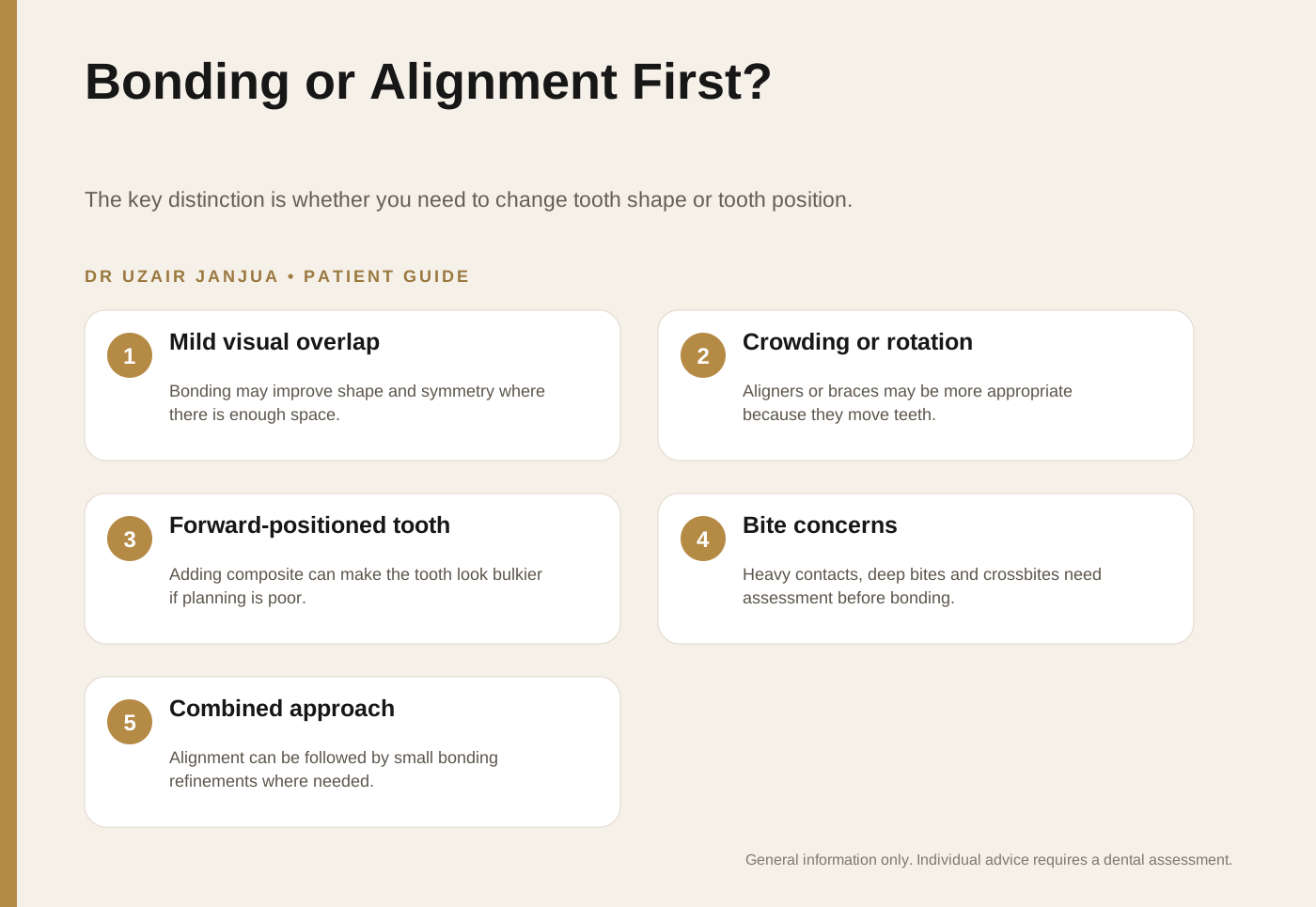
The main question is whether you need to change tooth shape or tooth position. I usually explain that bonding may be appropriate for mild visual irregularity, while aligners are designed to move teeth where crowding, rotation or spacing is the underlying concern.
| Consideration | Composite bonding | Clear aligners |
|---|---|---|
| What it changes | The visible shape, edge, width or contour of a tooth. | The position of teeth over time. |
| Often considered for | Mild overlap, uneven edges, shape differences and small cosmetic refinements. | Selected crowding, rotations, spacing and alignment concerns. |
| Main limitation | Does not move teeth or correct the cause of crowding. | Requires commitment to wear, reviews and long-term retention. |
| Time commitment | May be completed more quickly where the case is simple. | Usually involves a longer treatment period and staged movement. |
| Aftercare | Polishing, repairs or replacement may be needed over time. | Retainers are needed to help maintain the new tooth positions. |
Clear aligners are not automatically suitable for every overlapping smile either. More complex crowding, difficult movements, jaw discrepancies or certain bite problems may require fixed braces or another orthodontic approach. If tooth movement is likely to improve the result, I would discuss whether clear aligner treatment is appropriate before considering finishing bonding.
Why overlapping teeth can look bulky after bonding
Bulky bonding usually happens when there is not enough space to add material while keeping the tooth proportions natural. This is a particular risk when a tooth is already forward, heavily rotated or sitting over another tooth.
What I would look at first is the final outline from several angles, not just the view directly from the front. A tooth can appear straighter in a selfie but look too thick from the side, affect the way the teeth meet or create a difficult area to floss.
The contact point between neighbouring teeth also matters. If the shape is overbuilt, food and plaque can collect more easily. The final restoration needs to be smooth, polished, functional and practical to clean, not merely whiter or larger.
In some cases, very minor contouring may be appropriate as part of careful planning. I would not assume that filing teeth is needed, and I would not remove healthy enamel simply to force a bonding-only solution where alignment would be more predictable.
When aligners and bonding are combined
A combined plan can make sense when the teeth need to be moved first, but small refinements in shape are still wanted afterwards. I may discuss this where aligners can reduce the overlap and bonding can then improve edge wear, tooth proportions or a small remaining gap.
The usual sequence is assessment, orthodontic alignment where appropriate, retention to maintain the new positions, then a review of whether any composite would genuinely add value. Some people find that alignment alone gives them the change they wanted. Others prefer a small amount of finishing bonding once the teeth are in a better position.
This route takes longer and may involve more appointments than bonding alone. However, it can avoid the compromise of building outward on teeth that are already crowded. For someone travelling from Solihull, Coventry, Wolverhampton or elsewhere in the West Midlands, I would also discuss whether the review appointments, possible repairs and retainer checks are practical for them.
Could porcelain veneers be an alternative?
Porcelain veneers may be considered where the main concern is tooth shape, colour or surface appearance, rather than significant crowding or tooth position. They have different aesthetic and wear characteristics from direct composite, but they generally involve greater cost and more irreversible tooth preparation.
I would not treat veneers as a substitute for orthodontic movement where the main issue is overlap, lack of space or the bite. If you are comparing restorative options, my guide to composite bonding versus veneers explains why the amount of tooth alteration and future maintenance both matter.
What changes the cost of bonding for overlapping teeth?
The final cost depends on the treatment pathway, not just the number of teeth visible when you smile. A simple edge adjustment on one tooth is different from carefully reshaping several front teeth around an overlap.
- The number of teeth receiving composite.
- Whether treatment involves a small edge repair or a larger change to the front surface.
- The degree of overlap and the planning needed to avoid bulk.
- Whether photographs, scans, a wax-up or a mock-up are useful before treatment.
- Whether gum treatment, decay management or replacement of old restorations is needed first.
- Whether orthodontic alignment is recommended before bonding.
- The complexity of matching shade, texture, symmetry and tooth anatomy.
- Likely future polishing, repairs or replacement.
When comparing options in Birmingham, I would look beyond a headline per-tooth figure. Ask whether the quote reflects a proper bite assessment, planning and review, and whether the proposal is designed to camouflage overlap or to correct it with tooth movement.
If you are travelling to the practice from elsewhere in the West Midlands, I would also encourage you to confirm how many assessment, orthodontic review, retainer and potential repair visits are included in the proposed pathway. This is particularly important if treatment is staged rather than limited to a straightforward bonding appointment.
Longevity, repairs and maintenance
Composite bonding can chip, stain, wear or lose some surface polish over time, especially where it is placed under heavier bite forces. How long it lasts varies between individuals because the size and position of the restoration, bite, oral hygiene, diet and habits such as clenching all matter.
One advantage of composite is that I can often polish, adjust or repair a local defect rather than replace every bonded surface. That does not make it maintenance-free, and it does not mean every repair will be identical to the original result.
I would advise avoiding biting hard objects with the bonded edges, maintaining regular dental reviews and keeping the spaces between teeth clean. If you clench or grind, I may discuss whether a protective night guard is appropriate after treatment.
Questions I would encourage you to ask before treatment
A good cosmetic plan should be easy to explain. Before agreeing to composite bonding on overlapping teeth, I would encourage you to ask:
- Is this plan designed to move my teeth or to camouflage their appearance?
- Will adding composite make any tooth look thicker or more prominent?
- How will my bite and tooth contacts be checked?
- Will I still be able to clean and floss around the treated teeth properly?
- Would aligners or braces give a more predictable result first?
- What happens if the composite chips, stains or wears?
- Are there any gum, decay, bite or grinding issues to manage before cosmetic treatment?
The decision rule is simple, although applying it properly needs an examination. Composite bonding changes the visible shape of a tooth, while clear aligners or braces change tooth position. Bonding is most useful where the overlap is mild and the final shape can remain natural, cleanable and comfortable.
If the real issue is crowding, rotation, lack of space or the bite, orthodontic treatment is usually the better foundation. I can assess your overlapping teeth and explain whether a conservative bonding plan, alignment first, a combined approach or no cosmetic treatment yet is the most sensible option.