As a broad indicative guide, dentist-provided home whitening commonly costs around £250 to £500, in-surgery whitening commonly falls between £300 and £700, and combination treatment, using in-surgery whitening plus custom home trays, often runs from £600 to £750 or more. These are general market ranges rather than a fixed national price list, because every private practice sets its own fees. It's also worth knowing upfront that these ranges usually assume no additional dental work is needed. If you're attending as a new patient and need an examination, or if any preparatory treatment is required before whitening, that can add to the final figure.
How much does teeth whitening cost in the UK?
The price depends on the treatment method and on what the practice includes in its fee. Whitening is classed as a cosmetic treatment, so it isn't provided on the NHS. Every practice, including mine, prices it independently based on clinical time, materials and the level of aftercare involved.
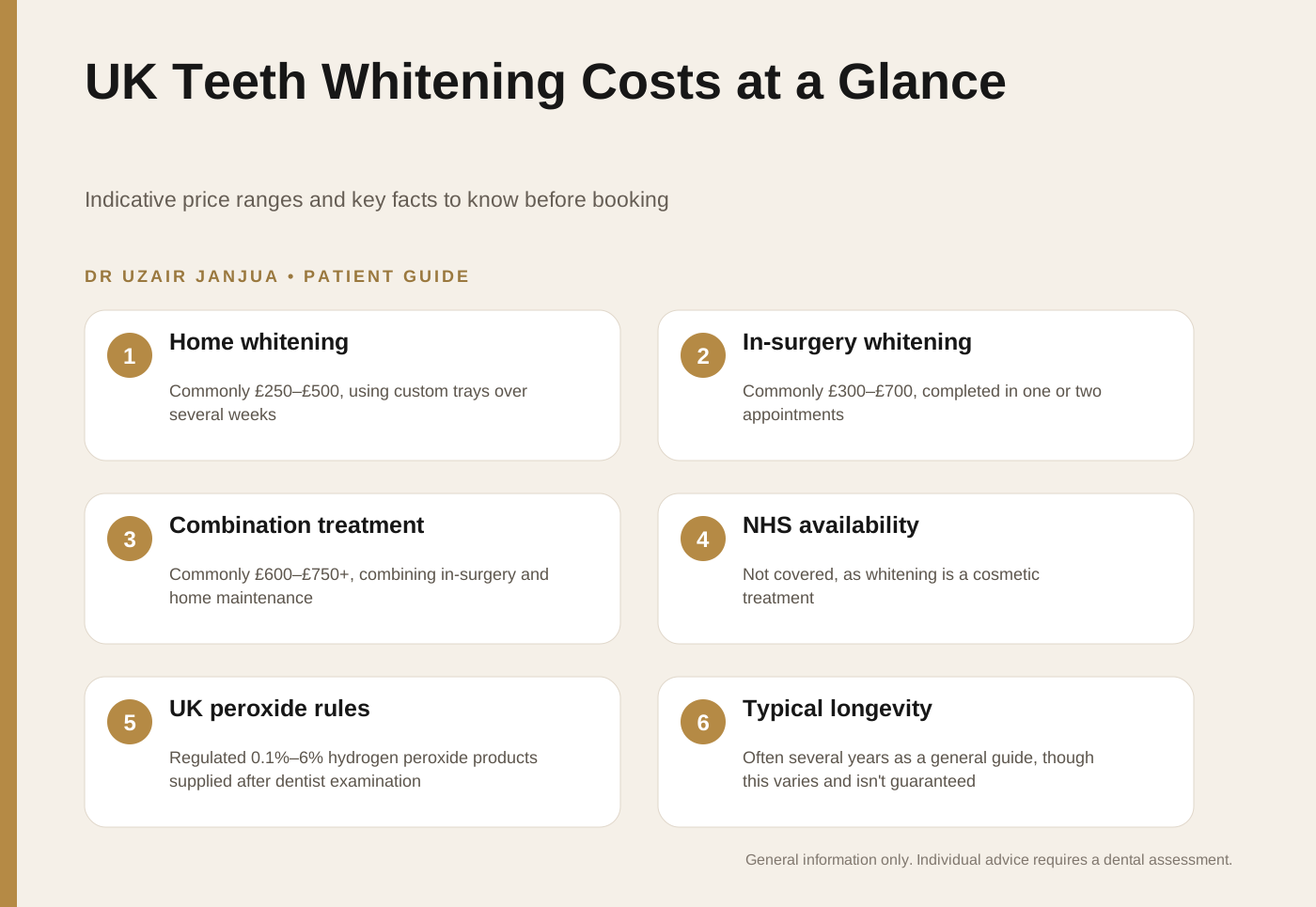
To give you a starting point, here's how the three common approaches generally compare in terms of price and what they involve.
| Option | Typical price range | Speed | Main trade-off |
|---|---|---|---|
| Dentist-provided home whitening | £250–£500 | Gradual, usually 2–4 weeks | Cheaper but needs consistent daily wear |
| In-surgery whitening | £300–£700 | Completed in one or two visits | Faster but higher cost, sensitivity can still occur |
| Combination (in-surgery plus home trays) | £600–£750+ | Immediate boost plus ongoing maintenance | Most comprehensive but not always necessary |
These ranges generally assume the examination, custom trays and an initial supply of gel are included, but this isn't universal. Always check exactly what a quote covers rather than assuming two practices are offering the same thing at different prices.
In Birmingham and the wider West Midlands, individual practices publish their own fees, and these can sit above or below the ranges above depending on the system used and what's bundled in. Treat any single practice's website price as an indicative example rather than a guaranteed quote for your own teeth, since your final figure depends on an examination.
What are you actually paying for?
One thing I usually explain to patients is that the fee isn't just for a tube of gel. A properly run whitening course generally includes an initial examination to check the treatment is appropriate, an assessment of your current shade and any staining pattern, and a treatment plan tailored to your teeth.
For home whitening, that typically covers custom-made trays fitted to your own teeth, a supply of professional-strength gel, instructions on wear time and application, and a review appointment to check progress and comfort. For in-surgery whitening, you're paying for appointment time, the whitening system itself, clinical supervision throughout, and often a take-home kit for maintenance afterwards.
Aftercare advice, guidance on managing sensitivity, and support if something doesn't go to plan should also be part of the package. If a quote doesn't mention any of this, it's worth asking what exactly the price covers before you commit.
Why do teeth whitening prices vary between Birmingham dentists?
The answer depends on several factors that don't always show up in a headline price. Different practices use different whitening systems, and some involve more clinical time per appointment than others. A longer in-surgery session with multiple gel applications naturally costs more than a shorter one.
Practice overheads play a part too. Premises, equipment and clinician time all differ between locations, which is one reason two practices a few miles apart in the West Midlands can quote noticeably different fees for what looks like the same treatment on paper.
What's included also varies. Some quotes cover only the initial gel supply, with any top-up syringes charged separately. Others fold in a review appointment or a set amount of maintenance gel. A promotional price sometimes excludes the examination or trays entirely, so the true comparison isn't always obvious from the advertised figure alone.
A higher price doesn't automatically mean a better result, and a lower one doesn't automatically mean worse value. What matters is comparing like for like.
Is cheap teeth whitening safe in the UK?
This is where people sometimes get confused. In the UK, whitening products that contain or release between 0.1% and 6% hydrogen peroxide (or the equivalent) can only be supplied to a patient after examination by a dentist. Once that assessment has taken place, the treatment itself must be carried out by a dentist, or by a dental hygienist or dental therapist working to a dentist's prescription. Products above 6% hydrogen peroxide are not permitted for cosmetic use.
This is why whitening kits sold in beauty salons, on market stalls or through unregistered online sellers raise concern. If a dentist hasn't examined you and directed the treatment, the product and the way it's being used may fall outside the rules designed to protect patients. There's also a related restriction on these regulated whitening products for anyone under 18, except where the treatment is being used to treat or prevent disease rather than for appearance.
A low price attached to an unregulated service isn't a bargain if it leaves you with an uneven result, unmanaged sensitivity, or no professional oversight if something feels wrong.
What I would assess before recommending whitening
What I would look at first is the general health of your teeth and gums. Decay, cracked teeth, leaking fillings, exposed root surfaces or active gum disease can all affect whether whitening is comfortable or appropriate, and some of these need attention before cosmetic treatment goes ahead.
I'd also want to understand your staining. Surface staining from tea, coffee, red wine or tobacco often responds differently to age-related darkening, or to discolouration linked to a specific tooth that's had trauma or root canal treatment. Not every dark tooth is a good candidate for standard whitening, and an individual tooth that's darkened on its own sometimes needs a different type of assessment altogether.
Existing sensitivity matters too, as does an honest conversation about what you're expecting from treatment. Whitening lifts the natural shade of your teeth. It doesn't reshape a tooth, close a gap, or fix a chipped edge, so if those are your main concerns, a different treatment such as composite bonding may be more relevant, either alongside whitening or instead of it.
Do crowns, veneers and fillings whiten?
No, not in the same way natural teeth do. Whitening gel works on your own tooth structure, but crowns, veneers, bridges, implant crowns and most tooth-coloured fillings are made from materials that don't respond to whitening gel in the same predictable way.
This matters more than people expect. If you whiten your natural teeth and you have a visible crown or filling in the smile line, that restoration can end up looking noticeably different from the teeth around it once treatment is finished, simply because everything else has lightened and it hasn't.
This doesn't automatically mean you need to replace anything. Sometimes the difference is minor and acceptable. Other times, particularly with front-tooth restorations, it's worth discussing timing carefully, since whitening first and then matching a new restoration to your settled shade can give a more predictable result than the other way round. If your main concern involves several visible restorations alongside tooth colour, it may be worth discussing options such as porcelain veneers at the same appointment, so the whole picture is considered together rather than piecemeal.
Home or in-surgery whitening, which is better value?
There isn't a universal winner here, it genuinely depends on what you're prioritising. Home whitening with custom trays is usually the more affordable route and gives you control over the pace, but it asks for consistency, since you're wearing trays for a set period most days over a few weeks.
In-surgery whitening suits someone working towards a specific date, such as a wedding or an event, because most of the visible change happens within one or two appointments. It costs more, largely because of the equipment, gel protocol and appointment time involved, and it can still cause some temporary sensitivity, so it isn't automatically the better clinical outcome, just often the faster one.
Combination treatment, where in-surgery whitening is followed by custom trays for home maintenance, tends to sit at the higher end of the price scale. It can be a sensible option if you want both a quick initial change and a way to top up later, but it isn't automatically the best choice for everyone, and it's worth asking whether you'd actually use the home component before paying for it.
If you're weighing this up for your own teeth, a consultation is really the only way to get a straight answer. I'd normally look at your current shade, your restorations, and your timeframe before suggesting which route makes sense, and if you're in Birmingham or the wider West Midlands, that assessment is the starting point for an accurate quote rather than a general price range.
Costs people forget to ask about
The initial fee is rarely the whole story. It's worth asking about the examination fee if you're a new patient, and whether any hygiene treatment or scale and polish is recommended beforehand. This wouldn't automatically make the whitening gel work more evenly, but removing surface deposits can give a clearer view of your true starting shade before treatment begins.
Ask what happens if a tray is lost, damaged or stops fitting well, since replacement isn't always included in the original price. Find out the cost of additional gel syringes as well, since some patients choose to do a top-up course later on, depending on how their shade settles, their habits, and how well the trays have held up.
If sensitivity products are recommended during treatment, check whether these are included or an added extra. None of this is unusual or a sign of a bad practice, it's just worth knowing upfront rather than discovering it partway through.
When teeth whitening may not be the best use of your money
Whitening is a good option when your natural teeth are healthy and the main concern is shade. It's a poor use of money in a few specific situations.
If your concern is really about tooth shape, chips, gaps or a worn edge, whitening won't touch that, and something like bonding is more directly relevant. If you have several visible crowns, veneers or large fillings at the front of your mouth, whitening alone may create shade differences that need addressing separately. A single dark tooth caused by old trauma or root canal treatment often needs its own assessment rather than a standard whitening course. Decay, gum disease, cracks or exposed dentine may need attention first, both for comfort and because they can make whitening uncomfortable or unsuitable.
In these situations, it's not that whitening never has a role, it's that it may need to be sequenced alongside other treatment, or it may not be the priority at all.
How long does whitening last, and what should you budget for maintenance?
Whitening results are not permanent. As a general guide, professional whitening effects are often described as lasting a few years, sometimes cited as around three years with reasonable care, though this varies a great deal between individuals and isn't guaranteed. Smoking, coffee, tea, red wine, and how well you keep up with oral hygiene all influence how quickly the shade begins to relapse.
Because of this, it's sensible to think about maintenance from the outset rather than treating the initial fee as a one-off. Some patients keep their custom trays long-term and buy a top-up syringe occasionally when their shade starts to fade, which is usually cheaper than repeating a full course, though this depends on how the trays have held up and what your dentist advises at review.
Questions worth asking before you agree to a price
Before booking, it helps to ask a few direct questions so you're comparing genuinely equivalent options rather than just headline figures.
- Does this price include the initial examination, or is that charged separately?
- Are custom trays for both upper and lower teeth included, or just one arch?
- How much gel is supplied, and what does a replacement syringe cost later?
- Is there a review appointment included to check progress and comfort?
- What happens if I experience sensitivity during treatment?
- Do I have any crowns, veneers or fillings in view that might need discussing first?
If you'd like these answered against your own teeth rather than in general terms, that's really what an in-person assessment is for. I'd rather talk you through a realistic, itemised quote once I've seen your teeth than guess at a figure that may not apply to your situation. If you're based in Birmingham or elsewhere in the West Midlands, an examination for teeth whitening is the straightforward next step for getting that clarity.
Deciding what's right for you
Cost is only one part of the decision. The more useful question is whether whitening addresses what's actually bothering you about your smile, whether your teeth and gums are in a suitable condition for it, and whether the price you're being quoted genuinely covers the full course of treatment rather than just the first step.
If you're weighing this up and want an honest view on whether whitening, a different treatment, or a staged combination makes more sense for your teeth, I'd suggest booking an examination so we can look at your specific situation and put together a proper, individual quote rather than working from a general price range.