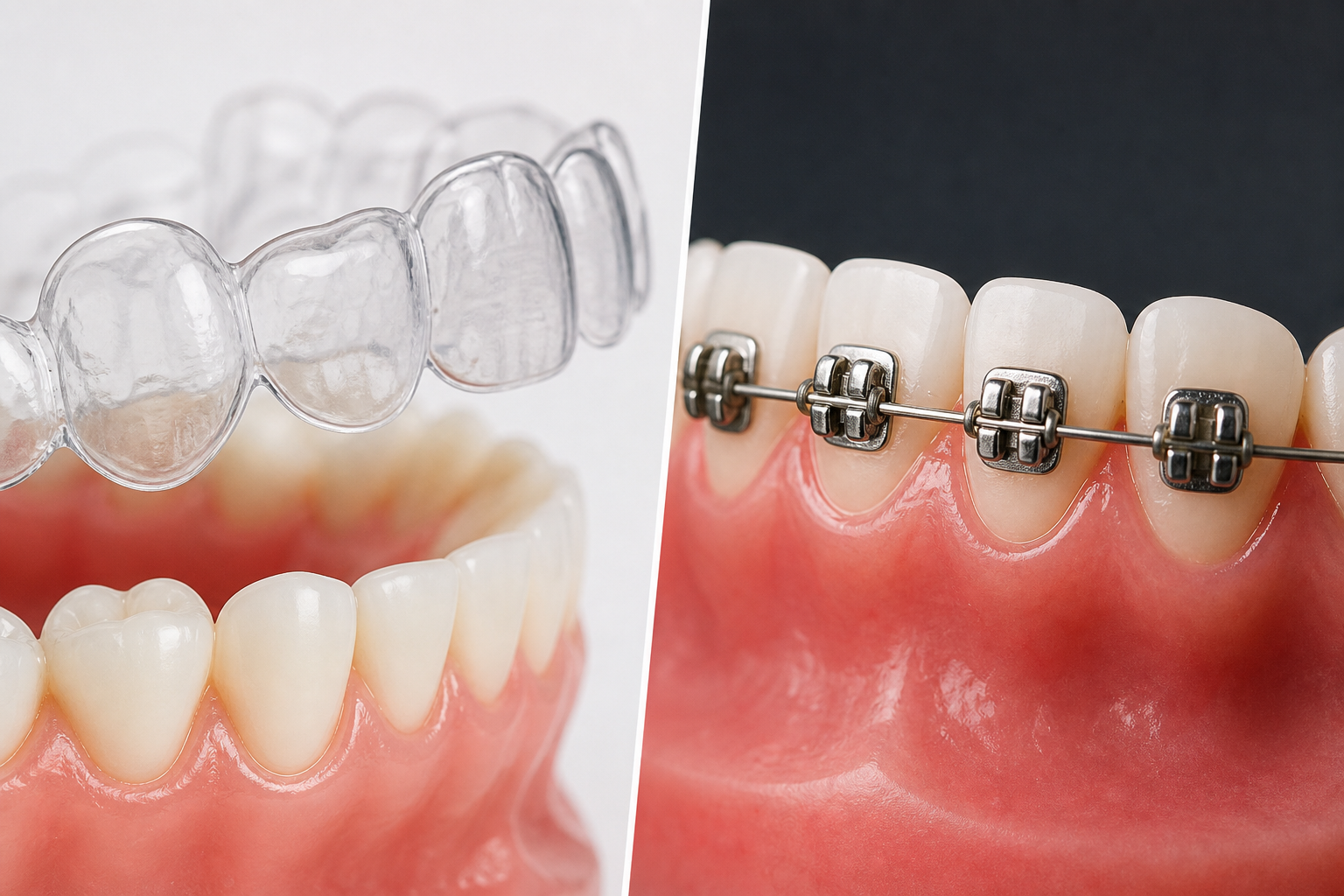
If you are deciding between Invisalign or braces as an adult, neither is automatically better. I often find that clear aligners suit adults with mild to moderate crowding, spacing or straightforward relapse who value a discreet, removable option. Fixed braces can be the more sensible choice where there is severe crowding, difficult rotations, tooth extractions or a more complex bite to correct.
What I would look at first is not which appliance looks best, but whether it can move your teeth and bite safely and predictably. Your gum health, existing dental work, daily routine and willingness to wear a removable appliance consistently all matter. An examination is needed before I can recommend one approach over another.
Invisalign or braces for adults, which is better?
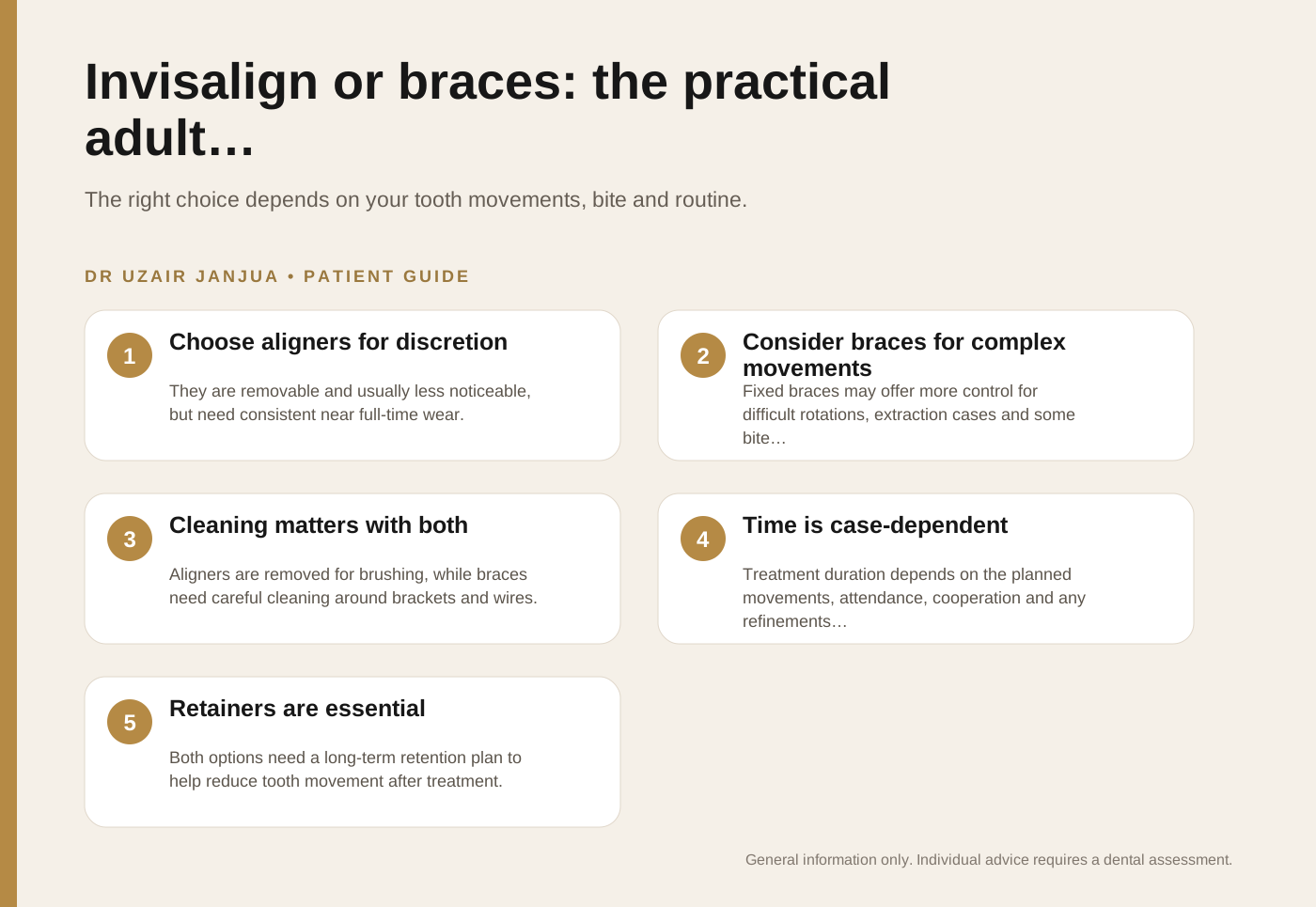
For adults with suitable tooth movements and a reliable routine, clear aligners can be an excellent option because they are discreet and removable. For more complex movements, or where remembering to wear aligners could be difficult, fixed braces may offer better control. I would not choose based on appearance alone.
| What matters | Clear aligners | Fixed braces |
|---|---|---|
| Appearance | Usually less noticeable, although attachments may show. | Metal brackets are visible. Ceramic braces can be less noticeable. |
| Removability | Removed for meals and brushing. | Fixed in place throughout active treatment. |
| Daily discipline | Needs near full-time wear and careful reinsertion after eating. | Does not rely on remembering to put an appliance back in. |
| Cleaning | Usually easier to brush and floss once aligners are removed. | Requires careful cleaning around brackets and wires. |
| Complexity | Often suitable for selected mild to moderate cases and some more involved cases. | May be preferable for substantial rotations, extraction cases and complex bite work, depending on the individual plan. |
| Eating | Aligners are normally removed before eating. | Hard, sticky and chewy foods may need to be avoided or adapted. |
| Cost | Depends on the scope of treatment, not simply the brand name. | Also varies according to complexity, appliance type and what is included. |
This is where people sometimes get confused. Invisalign is a type of clear aligner treatment, but clear aligners are not automatically a shortcut and braces are not automatically the more thorough option. The planned movements, the quality of monitoring and how well you can follow the plan are more important.
What I would assess before recommending either option
When I assess someone for adult teeth straightening, I start with the health of the teeth and gums. Active decay, untreated gum disease, significant plaque build-up or unstable gum problems may need treatment before orthodontics begins. Moving teeth without addressing those foundations can create avoidable risks.
I would then assess the crowding or spacing, the position of individual teeth, the bite, jaw relationship, available space and whether there are difficult rotations. I also consider previous orthodontic treatment, gum recession, bone support, grinding, missing teeth, fillings, crowns and veneers.
Existing restorations do not automatically rule out Invisalign or braces, but they can affect planning. If a gap is being kept for a future replacement tooth, for example, orthodontic movement may need coordinating with dental implant planning rather than treating the gap in isolation.
I would also ask practical questions. Can you attend review appointments from Birmingham, Solihull, Coventry, Wolverhampton or elsewhere in the West Midlands? Do you travel often? Are you likely to keep aligners in for the required time each day? The appliance has to work in real life, not just on a digital simulation.
When clear aligners may make more sense for an adult
Clear aligners may make particular sense if your main concern is mild to moderate crowding, spacing or teeth that have moved after previous braces. I often discuss them with adults in client-facing roles, people who speak publicly, and those who value being able to remove an appliance for meals and tooth cleaning.
The main advantage is flexibility, but that flexibility comes with responsibility. Aligners need to be worn for most of the day, removed for eating and then put back in promptly. If they are left out too often, teeth may not follow the planned movements, the next aligner may not fit properly and treatment may need additional refinement stages or take longer than expected.
One thing I usually explain to patients is that clear aligners are not always completely invisible. Small tooth-coloured attachments may be placed on selected teeth to help guide movement. Some plans may also involve elastic bands or carefully planned enamel reduction between particular teeth to create space, but these are not needed in every case.
If a discreet removable option appears appropriate after assessment, you can read more about clear aligner treatment in Birmingham. I would still need to assess your bite and supporting tissues before confirming whether it is the right route for you.
When fixed braces may be the more sensible choice
I would usually give fixed braces serious consideration where the teeth require more demanding movement. This can include severe crowding, teeth that need significant rotation, extraction-based treatment, certain root-position changes or a bite that needs more comprehensive correction.
Braces give me continuous control because brackets and wires remain attached to the teeth. That does not make them suitable for every adult, and they still depend on good attendance and cleaning, but they avoid the issue of a removable appliance being left in a bag or forgotten after lunch.
Fixed braces may also be more practical if you know that a near full-time aligner routine would not suit you. There is no benefit in choosing the less visible option if it is likely to be worn inconsistently. Ceramic braces can provide a middle ground for some adults who want fixed treatment with a less noticeable appearance.
A significant bite issue needs particularly careful assessment. Orthodontics moves teeth, but it does not necessarily change an adult jaw position. In more complex skeletal cases, I may need to discuss specialist orthodontic input and, in selected situations, whether other treatment approaches are relevant.
What are the practical differences day to day?
With aligners, I would expect you to remove them before meals and clean your teeth before replacing them. Follow the instructions for your specific aligner plan, but aligners are commonly removed for anything other than water. This can make brushing and flossing more straightforward, but it means managing the appliance carefully when eating out, commuting or travelling for work.
With braces, you can eat without removing anything, but some foods can damage brackets or bend wires. Hard crusty bread, nuts, sticky sweets and very chewy foods often need more care. Brushing takes longer because plaque can collect around brackets and near the gum line.
Both options can cause temporary pressure or tenderness as teeth move. Aligners may feel tight when a new stage begins, and some people notice a short period of altered speech. Braces can initially rub against the cheeks or lips, and wires or brackets can occasionally need repair. Severe, persistent or unusual pain should be checked rather than assumed to be normal.
Appointments vary with the plan. Clear aligner reviews can sometimes be arranged with more time between visits, while braces need regular monitoring and adjustments. I would encourage anyone travelling across the West Midlands to ask how lost aligners, broken brackets or urgent discomfort will be managed before starting.
If you have been offered a tray-based plan from photographs alone, or you are unsure whether your concern is a simple alignment issue or a bite problem, a proper consultation is the sensible next step. I can assess the teeth, gums and bite in person, then explain the realistic options rather than asking you to choose an appliance blindly.
Is Invisalign faster or more expensive than braces?
Invisalign is not reliably faster than braces, and braces are not automatically cheaper. I would estimate time and cost from the movements needed, the condition of the teeth and gums, and the amount of supervision required. Mild cosmetic alignment may be quite different from comprehensive treatment involving both arches and the bite.
It is not sensible to rely on a universal treatment-time claim for either appliance. In suitable mild to moderate cases, treatment times may be broadly comparable, but your own estimate can change if aligners do not track, brackets break, appointments are missed or extra stages are needed to finish the planned movements.
| What can change the final fee? | Why it matters |
|---|---|
| Complexity and treatment goals | Limited front-tooth alignment and full bite correction are not the same type of treatment. |
| One or both arches | Moving both upper and lower teeth usually requires broader planning. |
| Appliance and additional techniques | Metal, ceramic or clear appliances, attachments, elastics and other procedures can affect the plan. |
| Reviews, refinements and repairs | Ask whether these are included, and what happens if an appliance is lost or damaged. |
| Records and retainers | Scans, photographs, X-rays where indicated, retainers and follow-up care should be clear in writing. |
| Other dental treatment | Gum care, fillings, hygiene appointments or restorative work may be needed before or after alignment. |
Adult orthodontic treatment is commonly provided privately in the UK. NHS orthodontic treatment for adults is not routine cosmetic care and availability depends on clinical need, local commissioning and local provision. Before comparing quotes in Birmingham, I would make sure you are comparing like with like, including retainers, refinement stages and aftercare, not just the initial appliance.
Risks, limitations and realistic expectations
I would not present either Invisalign or braces as risk-free. Poor cleaning around braces can lead to plaque build-up, gum inflammation, decay and permanent white marks on enamel. Aligners make tooth surfaces easier to access, but they do not replace brushing, flossing and routine dental care.
Teeth do not always move exactly as predicted. Some aligner plans need refinements, and some movements may be better managed with a different technique. Braces can also require changes to wires, additional appliances or extra time. Biological variation, cooperation and the starting condition of the teeth all influence the final result.
There are situations where I would advise against immediate orthodontic treatment. These include untreated gum disease, poor plaque control or a concern where the likely benefit does not justify the time, cost and long-term maintenance. For a small chip or uneven edge after alignment, composite bonding may sometimes be considered, but it should not be used as a substitute for correcting a tooth position or bite problem that needs orthodontic assessment.
What happens after Invisalign or braces?
Retention is part of treatment, not an optional extra. Teeth can move throughout life, particularly after orthodontic treatment, so I would discuss retention before active treatment starts rather than leaving it until the braces come off or the final aligner is finished.
I may recommend removable retainers, bonded retainers fixed behind selected teeth, or a combination. The right choice depends on your bite, tooth positions and ability to maintain them. Removable retainers need to be worn as instructed and may eventually need replacement. Bonded retainers need careful cleaning and regular checks because they can partially detach without being immediately obvious.
You should continue routine dental examinations and hygiene care while teeth are being straightened and after treatment ends. Orthodontic reviews do not replace general dental care.
Questions I recommend asking before you start
I encourage adults to ask clear questions before committing to Invisalign or braces. A good treatment plan should explain what is being corrected, what will remain unchanged, and how the plan fits around your daily life.
- Who will examine, prescribe and monitor my treatment?
- Is my concern mainly tooth alignment, a bite issue, or both?
- Why is this appliance suitable for the movements I need?
- What is the estimated treatment duration, and what could change it?
- Will I need attachments, elastics, enamel reduction, extractions or other procedures?
- Are scans, reviews, repairs, refinements and retainers included in the quoted fee?
- What happens if an aligner does not fit, a bracket breaks or I cannot attend an appointment?
- What retainer plan will I need once active treatment is complete?
Invisalign or braces, the decision in plain English
If discretion and removability matter most, and your teeth and bite are suitable, clear aligners can be a very practical adult option. If the movements are complex, the bite needs more control, or you would rather not manage a removable appliance every day, fixed braces may be the better choice.
I would not recommend choosing based on a photograph, a generic online promise or a friend’s treatment timeline. If you are considering Invisalign or braces in Birmingham or the West Midlands, I can assess your teeth, gums and bite, talk through the realistic alternatives and provide a treatment recommendation based on your own starting point.