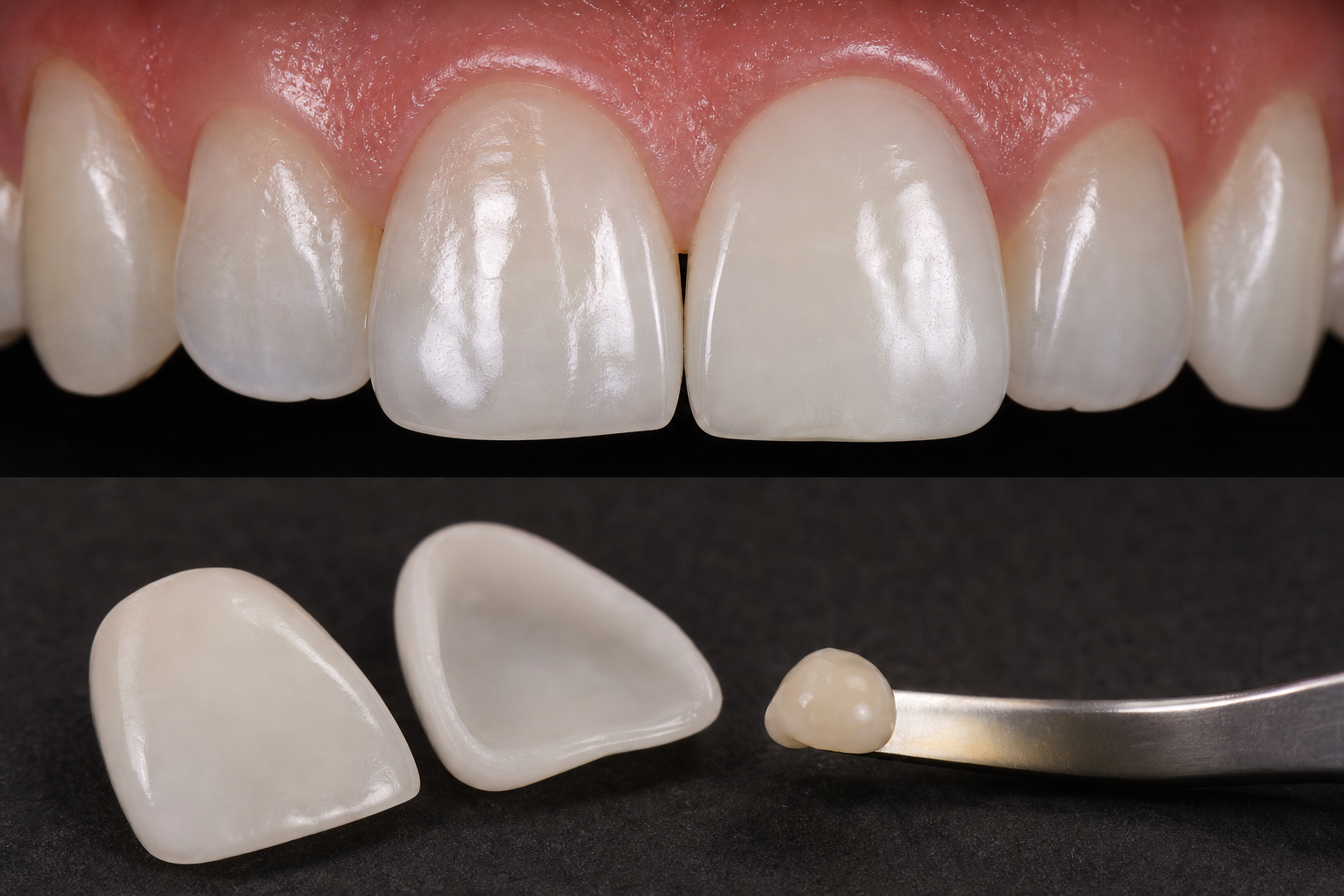
Composite edge bonding is usually the more conservative choice when the concern is limited to a chipped, worn, short or uneven biting edge. Composite veneers may be more appropriate when you want to change more of the visible front surface, including the tooth’s width, shape, surface texture or overall proportions. When I assess someone for composite edge bonding in Birmingham, I do not choose between the two from photographs alone. I first need to understand the health of the teeth and gums, the bite, tooth position, the tooth structure available for bonding and what you are hoping to change.
The best answer is often the smallest treatment that can produce a stable, natural-looking result. For some people that is a subtle edge build-up. For others, a fuller composite veneer, whitening, orthodontic alignment or even no cosmetic treatment may make more sense.
Composite edge bonding or composite veneers, what is the actual difference?
The main difference is how much of the tooth is being changed. Composite edge bonding usually means placing tooth-coloured composite mainly around the incisal edge, which is the biting edge of a front tooth. A composite veneer usually covers a larger area of the front-facing surface of the tooth.
Both treatments use composite resin, a material that I shape directly on the tooth before curing and polishing it. The terminology is not completely standardised, so the design matters more than the label. A small edge build-up may extend slightly onto the front surface, while a composite veneer can sometimes be largely additive with little or no tooth preparation.
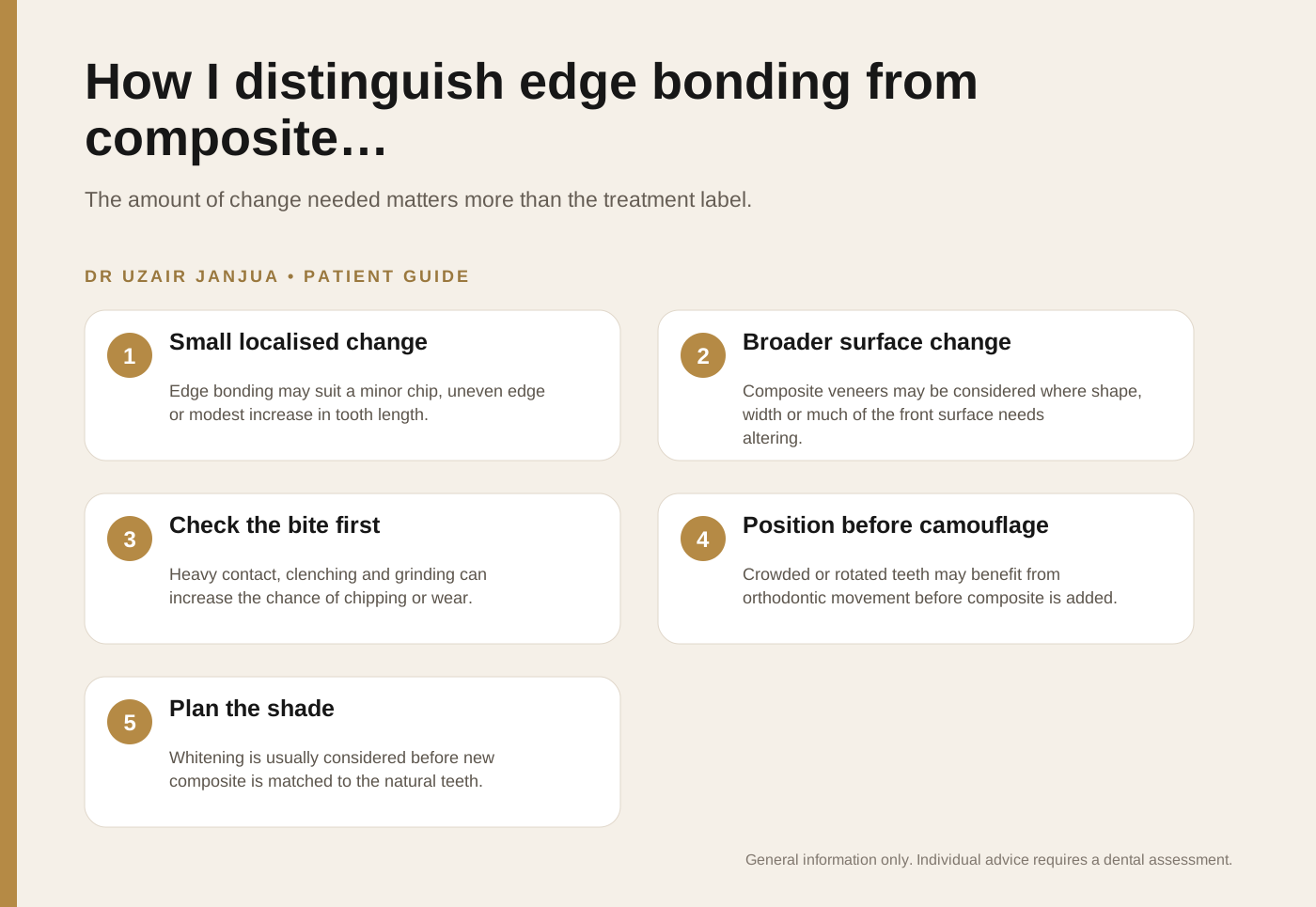
I usually explain that edge bonding is designed for localised changes. It may repair a small chip, even up one edge, add modest length or improve mild asymmetry. Composite veneers are generally considered where the concern is broader, such as tooth width, several surface defects, more substantial shape changes or a coordinated alteration across several front teeth.
When I would lean towards composite edge bonding
I would usually consider composite edge bonding first where the tooth is healthy and the requested change is small. It can be a sensible option for a chipped front tooth, a slightly shorter tooth, a mildly uneven edge or limited wear that has affected the appearance of the smile.
Because it involves less material, edge bonding can preserve the existing character of the tooth. It is also often easier to adjust, polish or repair if a small area chips later. That does not mean it is automatically suitable, particularly if the repaired edge would be placed into a heavy bite contact.
Situations where a small build-up may be enough
- A small chip where the rest of the tooth is healthy and stable.
- Minor differences in the length or contour of the front teeth.
- Slight shortening caused by wear, provided the reason for the wear is understood.
- A small gap or uneven edge where adding a limited amount of composite will not create bulk.
- An isolated old composite repair that needs refinement or replacement.
What I would look at first is whether there is enough space to add material without making the tooth look thick or changing the way the teeth meet. If a tooth has fractured repeatedly, I would also investigate why. Repeatedly repairing an edge without addressing clenching, grinding or an unfavourable bite may not be the right long-term plan.
When composite veneers may make more sense
Composite veneers may be the better option when changing only the edge would not address the real concern. If the visible front surface has defects, the tooth is narrow, the shape needs more comprehensive alteration or several teeth need coordinating, I may discuss a fuller composite approach.
This does not necessarily mean every tooth needs covering. I would assess which teeth are visible when you smile and speak, then consider whether treating selected teeth can create a balanced result. A natural-looking smile is not simply about making every tooth identical or choosing the brightest possible shade.
A composite veneer may help where there are broader surface irregularities, localised discolouration that cannot be managed by whitening alone, uneven tooth proportions or a wish for a more consistent shape across the front teeth. However, more composite means more attention is needed to contours, cleaning access, speech, lip support and the bite.
I would be cautious about using composite veneers to disguise significantly crowded, rotated or protruding teeth. Composite can camouflage some mild irregularity, but it cannot move teeth. If adding material makes the teeth appear bulky, clear aligner treatment may be the more conservative first step, followed by limited bonding only where it adds value.
What I assess before recommending either option
Before I recommend composite edge bonding or composite veneers, I need to establish whether cosmetic treatment is sensible and stable. A good result starts with healthy teeth and gums, not with a shade chart or a social-media image.
Teeth, gums and existing dental work
I would check for decay, gum inflammation, cracks, sensitivity, tooth wear, old fillings and previous bonding. Gum disease, poor plaque control or untreated decay should be stabilised before cosmetic work. Placing composite over an unresolved problem does not remove that problem and can make future treatment more complicated.
I also assess the quality and amount of enamel, alongside any exposed dentine, old restorations or fracture lines. In suitable bonding conditions, healthy enamel can provide a more predictable surface than compromised tooth structure, but this depends on the individual tooth, the restoration involved and the final design. A heavily weakened or extensively restored tooth may need a different restorative discussion altogether.
Your bite, clenching and grinding
The bite is central to this decision. If the lower teeth strike directly against the area where composite is planned, or you have an edge-to-edge bite, deep overbite, clenching habit or tooth grinding, there may be a greater risk of chipping, wear or debonding.
Grinding does not automatically rule out bonding. I would consider the design, the amount of composite needed, the condition of your teeth and whether a protective night guard may be appropriate. It is important to understand that a guard may reduce risk, but cannot make any restoration indestructible.
Position, colour and expectations
If tooth position is the main issue, I would discuss whether orthodontic treatment to improve tooth position should come before cosmetic bonding. If natural tooth shade is the main concern, whitening is often considered before new composite is colour-matched, because composite will not whiten in the same way as natural teeth.
I also need to understand how much change you want. A treatment that looks appealing in a close-up photograph may not suit every face, bite or tooth position. Sometimes a mock-up, photographs or a staged plan is helpful before committing to a multi-tooth change.
If you are unsure whether your concern is an edge issue, an overall shape issue, tooth position or shade, a consultation allows me to compare these options properly. You can also read more about the broader possibilities of composite bonding treatment in Birmingham before arranging an assessment.
Edge bonding versus composite veneers: the trade-offs
Neither treatment is universally better. I would weigh the amount of change needed against the amount of material being added, the bite and the maintenance you are comfortable with.
| Consideration | Composite edge bonding | Composite veneers |
|---|---|---|
| Typical coverage | Mainly the biting edge or a small localised area. | A larger part of the visible front surface. |
| Typical aim | Repair a chip, refine an edge or add slight length. | Alter broader shape, width, surface appearance or proportions. |
| Amount of composite | Usually less material. | Usually more material and more detailed shaping. |
| Tooth alteration | Often additive, although the exact design must be discussed. | May be additive or minimally prepared, depending on the case. |
| Repair and adjustment | Often straightforward for a small localised repair. | Often repairable, but matching contour and finish can be more involved. |
| Main limitation | Cannot create a major change in colour, width or whole-tooth form. | Can look bulky if tooth position, space and proportions are not respected. |
| Maintenance considerations | May chip or wear at the edge, especially in a heavy bite. | May stain, lose gloss, chip or require polishing across a larger area. |
One thing I usually explain to patients is that repairability is an advantage of composite, but it is not the same as permanence. Composite can often be polished, reshaped or repaired without replacing the whole restoration. Over time, however, repeated repairs can affect the surface, shape and future treatment plan.
When neither option is the best first step
I would not recommend edge bonding or composite veneers simply because they appear to be the quickest cosmetic answer. The right sequence matters, especially where tooth position, shade, gum health or structural weakness is the real issue.
Where crowding, rotation, spacing or protrusion is the main concern, orthodontic movement first may give a more conservative result than building around the existing tooth position. In those cases, I may discuss aligners followed by small amounts of bonding to refine edges or proportions.
Where the main concern is colour, whitening may be considered before composite is placed. This gives us a chance to match new bonding to the shade you actually want. Existing bonding, fillings and veneers will not lighten in the same way as natural enamel, so shade planning needs to be deliberate.
Where a tooth is heavily damaged, cracked, extensively filled or weakened, I may need to discuss a more protective restorative option rather than placing a cosmetic veneer over a compromised foundation. If you are considering ceramic as an alternative, my guide to porcelain veneers in Birmingham explains that this is a separate decision with different aesthetic, preparation and future replacement considerations.
Cost: what changes the fee in Birmingham?
A small single-tooth edge repair and a multi-tooth composite veneer plan are not comparable treatments, even though both use composite. I would base a fee on the actual scope of treatment rather than applying one broad label to every case.
The number of teeth, amount of composite, degree of symmetry required and complexity of the shade match all matter. A detailed multi-tooth case may need photographs, planning, a mock-up or additional appointments. The time needed for isolation, layering, shaping, bite checks and high-quality polishing also affects the treatment involved.
Costs can also change if hygiene treatment, fillings, gum care, whitening, orthodontics or replacement of old restorations is needed first. I would encourage anyone comparing Birmingham or West Midlands providers to ask exactly what the quoted plan includes, what follow-up is available and what happens if a restoration needs polishing, adjustment or repair.
Travelling elsewhere may appear attractive on the initial fee alone, but follow-up access matters. If something feels bulky, affects your bite or chips, it is useful to know who will review it and how ongoing maintenance will be managed.
What to expect from maintenance and longevity
Composite is not stain-proof or maintenance-free. Over time, it can pick up surface staining, lose some of its initial gloss, wear, chip or require repair. How it performs depends on the complexity of the case, the bite, oral hygiene, dietary habits, smoking, hard-object habits and how well the restoration can be maintained.
I would normally advise gentle but thorough cleaning around the bonded teeth, regular dental reviews and avoiding using front teeth to bite hard objects or open packaging. If you clench or grind, I may discuss a protective appliance where appropriate.
Small chips can often be repaired, but I would rather identify a bite or habit problem than simply keep patching the same area. Any restoration may eventually need polishing, repair, replacement or a change in treatment approach as your teeth, gums and bite change over time.
Questions I would encourage you to ask before treatment
A good consultation should make the trade-offs clear. I would encourage you to ask questions that help you understand both the immediate result and the longer-term commitment.
- Is my concern local enough for edge bonding, or do I need a broader change?
- Will any enamel be reshaped, and what does that mean if the composite is removed or replaced later?
- How will my bite be checked before and after treatment?
- Am I at higher risk of chipping because of grinding, wear or tooth position?
- Should I whiten my teeth or consider aligners before composite is colour-matched and placed?
- What happens if the bonding chips, stains, feels bulky or needs polishing?
- Would a mock-up help me judge the proposed length, shape or thickness before treatment begins?
Choosing the smallest treatment that genuinely works
For a small chip, slight shortening or uneven edge, composite edge bonding may be all that is needed. For a broader change to tooth shape or the visible front surface, composite veneers may offer a more comprehensive way to alter those areas. I would not assume that more coverage is better, or that a minimal repair can solve a concern that really relates to tooth position, colour or bite.
If you are considering composite edge bonding in Birmingham or travelling from elsewhere in the West Midlands, I can assess the condition of your teeth, your bite and the outcome you have in mind. That allows us to decide whether limited bonding, composite veneers, whitening, alignment or a staged approach is the most sensible route for you.