Yes, composite bonding can stain over time. Coffee, tea, curry, turmeric, red wine, dark sauces and tobacco can all contribute to discolouration, particularly where exposure is frequent or the composite surface has become rough. I would not describe composite bonding as permanently stain-proof, but staining does not automatically mean it needs replacing. Surface stain can often be improved with professional cleaning and polishing, while deeper colour change, rough edges or damaged margins may need repair or replacement.
If you drink coffee or eat curry regularly, composite bonding may still be a sensible option. What I would look at first is your oral hygiene, smoking or vaping habits, bite, gum health, the area being bonded and whether you are comfortable with realistic maintenance over time.
Does composite bonding stain?
Composite bonding can stain because it is a resin-based material rather than natural enamel or ceramic. A smooth, highly polished composite surface is less likely to hold plaque and pigments, but it can gradually lose some gloss and pick up colour over time. In general, composite is more vulnerable to staining than porcelain veneers.
This is where people sometimes get confused. A yellow or darker appearance may be a removable surface stain, but it may also be colour change within the composite itself. It can also come from the line where the composite meets the tooth, plaque or tartar build-up, gum recession, or darkening in the natural tooth underneath. I would examine the restoration before deciding whether it needs cleaning, polishing, repair or replacement.
What stains composite bonding most?
The biggest issue is usually repeated exposure rather than having one coffee or one curry. Dark pigments can settle on a composite surface over time, especially if the surface is not as smooth as it was when first finished and polished.
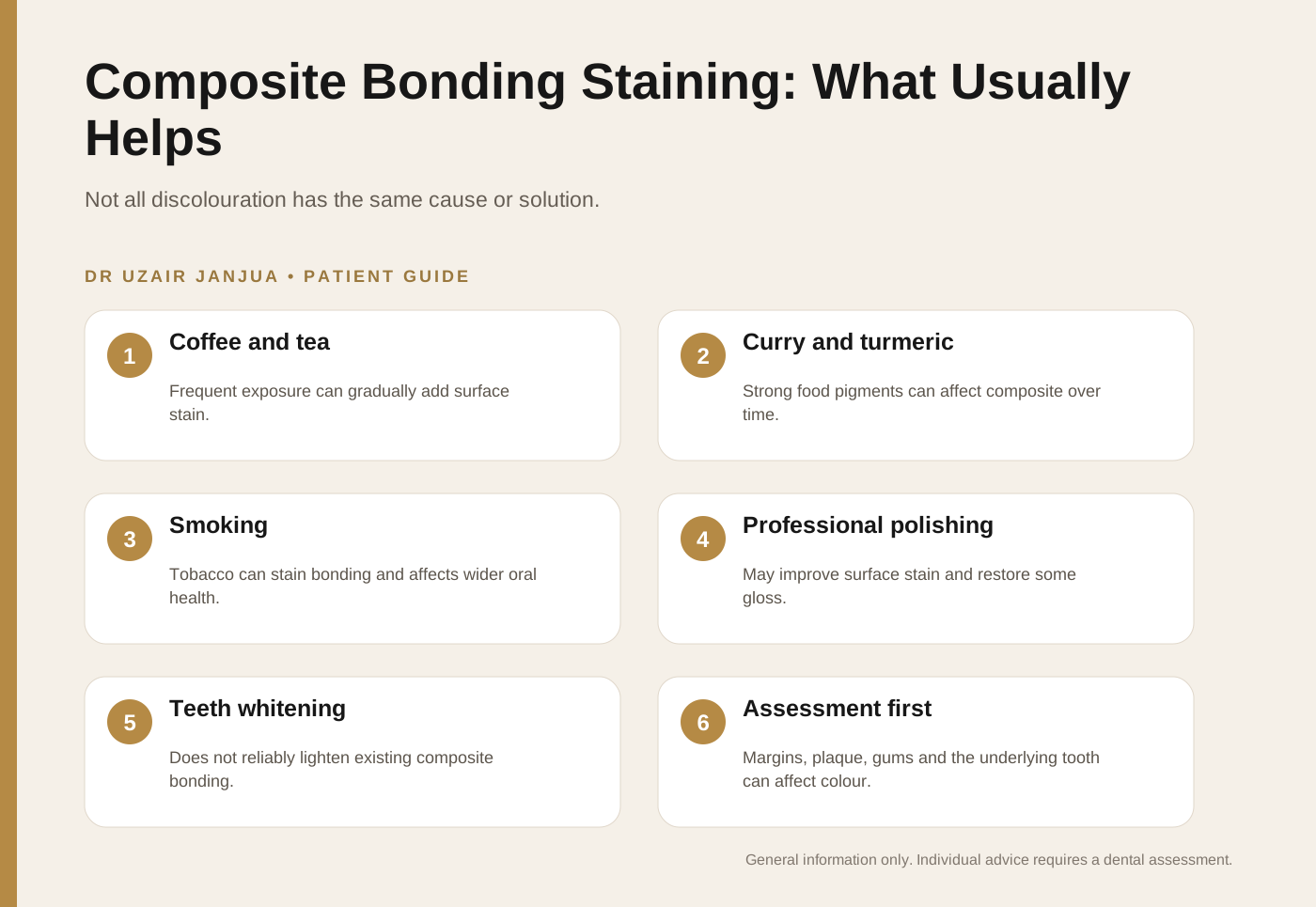
- Coffee and black tea: frequent sipping across the day gives pigments more contact with the teeth and bonding.
- Curry and turmeric: turmeric is strongly coloured and can contribute to staining, particularly with regular exposure.
- Red wine and dark sauces: tomato-based sauces, soy sauce and similar foods can add to external staining.
- Tobacco: cigarette smoke is a particularly significant source of staining for both natural teeth and tooth-coloured restorations.
- Plaque and tartar: these can make bonding appear dull, yellow or uneven, even where the composite itself has not deeply changed colour.
I do not usually tell patients that they need to avoid coffee, curry or all coloured foods completely. That is rarely practical or necessary. I would, however, explain that frequent staining exposures, prolonged sipping and poor cleaning can mean more maintenance is needed.
Does smoking stain composite bonding more quickly?
Smoking can cause noticeable staining of composite bonding and natural teeth, and it is an important factor in whether cosmetic treatment is likely to remain easy to maintain. Tobacco smoke can leave surface deposits and contribute to deeper discolouration that polishing may not fully remove.
When I assess someone who smokes, I also look beyond colour. Smoking is relevant to gum health, inflammation, plaque control and the general condition of the mouth. Active gum disease, inflammation or poor plaque control should be managed before cosmetic bonding is considered, because healthy gums and clean margins are central to a natural-looking result.
Vaping and nicotine products are also worth discussing during a consultation. Their effects are not identical to smoking, and the long-term picture varies between products, but I would not assume they are irrelevant to oral health or staining. If smoking or chewing tobacco is part of your routine, I would encourage you to discuss cessation support with an appropriate healthcare professional as well as considering the cosmetic implications.
What I would assess when composite bonding has stained
A photograph can suggest that bonding has changed colour, but it cannot reliably show why. Before recommending any treatment, I would assess the surface, edges, surrounding enamel, gums and bite.
| What I would check | Why it matters | Possible next step |
|---|---|---|
| Surface gloss and roughness | Rough composite can retain more plaque and stain. | Professional cleaning or careful repolishing may help. |
| Composite margins | A stained line at the join between tooth and composite may need more than a clean. | Localised repair, relayering or replacement may be considered. |
| Plaque, tartar and gum health | Build-up and inflammation can alter the appearance of the whole smile. | Hygiene care and gum treatment may be needed first. |
| Underlying tooth colour | The natural tooth can darken beneath or beside the composite. | Further assessment and shade planning are needed. |
| Chips, wear and bite forces | Damage can create rough areas and make staining more obvious. | Repair or a review of the bite may be appropriate. |
One thing I usually explain to patients is that the right answer depends on the cause. Replacing all the bonding because of a small amount of removable surface stain may be unnecessary. Equally, repeatedly polishing a damaged or deeply discoloured restoration is not always the most predictable long-term solution.
If existing bonding has become yellow, patchy or dull, I can assess whether the issue is mainly superficial or whether the material, margins, gums or underlying teeth need a more detailed plan. For patients in Birmingham and the West Midlands, this is particularly useful before committing to several replacement appointments or changing the colour of the surrounding teeth.
Can stained composite bonding be cleaned, polished or whitened?
Professional cleaning and polishing can often improve superficial staining and restore some of the original shine. The clinician or hygienist needs to use techniques and polishing systems suitable for the particular composite restoration, because overly abrasive or inappropriate treatment can affect its contour, surface texture or gloss.
Polishing cannot reliably remove deep colour change within the resin, staining associated with a damaged margin, or a mismatch caused by the natural teeth changing colour. It also cannot restore composite that is structurally damaged. In those situations, I may discuss a repair, adding a new composite layer in a limited area, or replacing the restoration where that is the most sensible option.
Whitening does not reliably whiten existing composite
Teeth whitening works on natural tooth structure, but it does not reliably lighten composite bonding in the same way. If you whiten natural teeth after bonding has been placed, the teeth may become lighter while the composite remains similar to its original shade, creating a mismatch.
Where shade is important, I often discuss whitening before new bonding is selected. If you already have bonding, it is worth understanding why composite responds differently to whitening before starting whitening treatment. A review can help determine whether a colour difference is likely to be acceptable or whether bonding may later need adjustment.
How I would help reduce staining after composite bonding
Good maintenance is not complicated, but it needs to be consistent. I would tailor advice to the area treated, your bite and your habits, particularly if several front teeth have been bonded.
- Brush twice daily with fluoride toothpaste, using a soft toothbrush and a controlled technique.
- Clean between the teeth daily with the method that suits the spaces and gums, such as interdental brushes or floss.
- After coffee, tea, wine or strongly coloured food, drinking water can help reduce how long pigments sit on the teeth. It cannot guarantee that staining will not occur.
- Try not to sip staining drinks continuously over several hours.
- Arrange regular examinations and hygiene visits, so any roughness, plaque retention or early staining can be addressed promptly.
- Avoid tobacco where possible for both oral-health and cosmetic reasons.
- Do not try to polish bonding at home with abrasive powders, harsh scrubs or improvised tools.
I would also be cautious about relying on whitening toothpastes to restore bonding. Some can be abrasive, and they do not reliably return composite to its original colour. If you notice a sudden dark edge, a chip, pain, bleeding gums or a marked change in one tooth, it is better to arrange an examination than repeatedly scrub the area.
Is composite bonding suitable for coffee drinkers or smokers?
Drinking coffee or eating curry does not automatically make composite bonding unsuitable. The decision is about balance. Composite can be a conservative way to improve shape, small gaps, chips or localised colour concerns, but it is not a maintenance-free material.
What I would consider before recommending it includes:
- the amount of composite needed and where it will sit on each tooth
- your current tooth shade and whether whitening should happen first
- smoking, vaping, tea, coffee and dietary habits
- gum health, plaque control and any gum recession
- clenching, grinding or a bite that places heavy forces on the front teeth
- whether tooth position, spacing or wear is the main concern rather than shape alone
- your willingness to attend for reviews, polishing, repairs or eventual replacement if needed
I would be more cautious where someone smokes heavily, has untreated gum disease, poor oral hygiene, significant grinding, limited space or expects a very bright shade to stay unchanged indefinitely. Those are not automatic exclusions, but they can make the result less predictable. In some cases, hygiene treatment, whitening, alignment or no cosmetic treatment for the moment may be the better first step.
Composite bonding or porcelain veneers if staining is a major concern?
If maximum stain resistance is your main priority, porcelain veneers may be worth discussing. Ceramic generally resists surface staining better than composite, but it is a different treatment with different preparation, laboratory work, cost and future replacement considerations.
| Question | Composite bonding | Porcelain veneers |
|---|---|---|
| Resistance to surface staining | Can stain and lose gloss over time. | Usually more resistant to surface staining. |
| Tooth preparation | Often more conservative, depending on the case. | May require tooth preparation, depending on the design. |
| Repair | Can often be repaired more readily. | Repair can be more complex and replacement may be needed. |
| Maintenance | May need polishing, repair or replacement over time. | Still needs excellent hygiene and review, despite greater stain resistance. |
| Cost planning | May be lower initially, depending on the case and practice, but future maintenance matters. | Usually involves different and often higher laboratory-led costs. |
Neither option is automatically better. I would discuss composite bonding versus veneers in the context of your tooth condition, smile goals, bite and willingness to maintain the work. For some people, limited edge bonding is enough. For others, whitening or tooth alignment may address the underlying concern more appropriately.
What can change the long-term cost of stained composite bonding?
The important distinction is between a surface stain that can be managed conservatively and a restoration that requires repair or replacement. I would avoid giving a meaningful recommendation based on colour alone, because the amount of work involved can vary considerably.
Long-term costs can be affected by the number of teeth involved, whether the issue is localised or widespread, the condition of the margins, chips or wear, the need for hygiene or gum treatment first, and whether whitening is part of a new shade plan. Replacing bonding also involves more than changing colour. The tooth shape, bite, contact points and finish all need careful consideration.
If you are travelling from Solihull, Coventry, Wolverhampton, Sutton Coldfield or elsewhere in the West Midlands, I would encourage you to factor in review and maintenance visits as well as the initial treatment. Continuity of care can be valuable for cosmetic composite, because the same practice can monitor gloss, margins, bite and any changes over time.
For a fuller explanation of the treatment and the decisions behind it, you can read about composite bonding in Birmingham. An examination is the right next step if you are deciding between bonding, whitening, alignment or veneers, or if existing bonding has become noticeably discoloured.
A realistic way to think about composite bonding and staining
Composite bonding can stain, but coffee or curry do not automatically rule it out. I would see it as a maintainable cosmetic restoration rather than a permanent, unchanged finish. A well-planned, smooth and carefully polished result, combined with good cleaning and sensible reviews, is less likely to become problematic than bonding placed without attention to the gums, bite or long-term care.
If smoking, frequent dark drinks or a very bright desired shade are part of the picture, I will explain the trade-offs honestly. If you are in Birmingham or the West Midlands and your bonding has become stained, I can assess whether a clean and polish is enough or whether repair, replacement or another treatment would make more sense.