Based on advertised UK private fees reviewed for this guide, composite bonding in 2026 commonly falls somewhere between £200 and £400 per tooth, though listed prices range from around £120 for a very small edge repair up to £500 or more per tooth for complex or full-coverage work. These are broad, illustrative figures drawn from published practice pricing rather than a fixed national tariff, and advertised fees can change over time. I can't tell you your own fee from a search term alone. The right number for your teeth depends on how many teeth are involved, how much composite is needed, and what your teeth, gums and bite look like on examination.
What I can do here is set out the ranges commonly advertised, explain why quotes vary so much between practices, and help you judge whether a price you've been given in Birmingham or elsewhere in the West Midlands seems proportionate to the work being described. None of this replaces an in-person assessment.
How much is composite bonding in the UK in 2026?
Composite bonding isn't a single fixed procedure, and there's no standardised UK price list for it. It ranges from adding a small amount of resin to a chipped edge, through to reshaping most of the visible surface of several front teeth. That range is a large part of why quotes vary so widely between practices.
| Type of bonding | Commonly advertised UK price per tooth (2026) | What it usually involves |
|---|---|---|
| Simple edge or chip repair | £120–£200 | Small addition to a worn or chipped edge, minimal reshaping |
| Standard direct bonding | £200–£400 | Reshaping a tooth, closing a small gap, improving symmetry, the most common form of cosmetic bonding |
| Extensive or full-coverage composite work | £400–£500+ | Covering most of the visible surface, more detailed shade layering, often part of a multi-tooth smile plan |
It's worth being aware that practices don't always use these terms in the same way. What one practice calls "composite bonding" might mean a simple chip repair, and what another describes with the same words might mean full-coverage composite veneers across six teeth. The label alone doesn't tell you enough. Always check what the fee is actually for.
Using these broad ranges, a case involving six front teeth might illustrate as roughly £1,200 to £2,400 at commonly advertised price levels, with more complex smile redesigns costing more. This is only an illustration to help you judge scale. It is not a quotation, and your own fee can only be confirmed after an examination.
What might composite bonding cost in Birmingham?
Prices advertised by Birmingham-area practices at the time of researching this guide include figures around £250 per tooth, £295 as a starting ("from") price, and £350 per tooth, with some comparison listings showing fees closer to £495 per tooth. These are examples of the spread found during research rather than a verified local average, and advertised fees can change without notice.
A common comparison problem is treating every listing as the same service. A £250 quote for a minor chip repair and a £450 quote for full-coverage composite veneers on six teeth aren't comparable, even though both might be labelled "composite bonding" on a website.
Before assuming one practice is cheaper than another, check exactly what work the price refers to, whether it's a genuine fee for your case or a "from" price advertised for the smallest possible job, and whether the consultation and any clinically indicated X-rays are included.
What changes the final composite bonding price?
A quote should reflect more than just the number of teeth. The things that most often move the price up or down include:
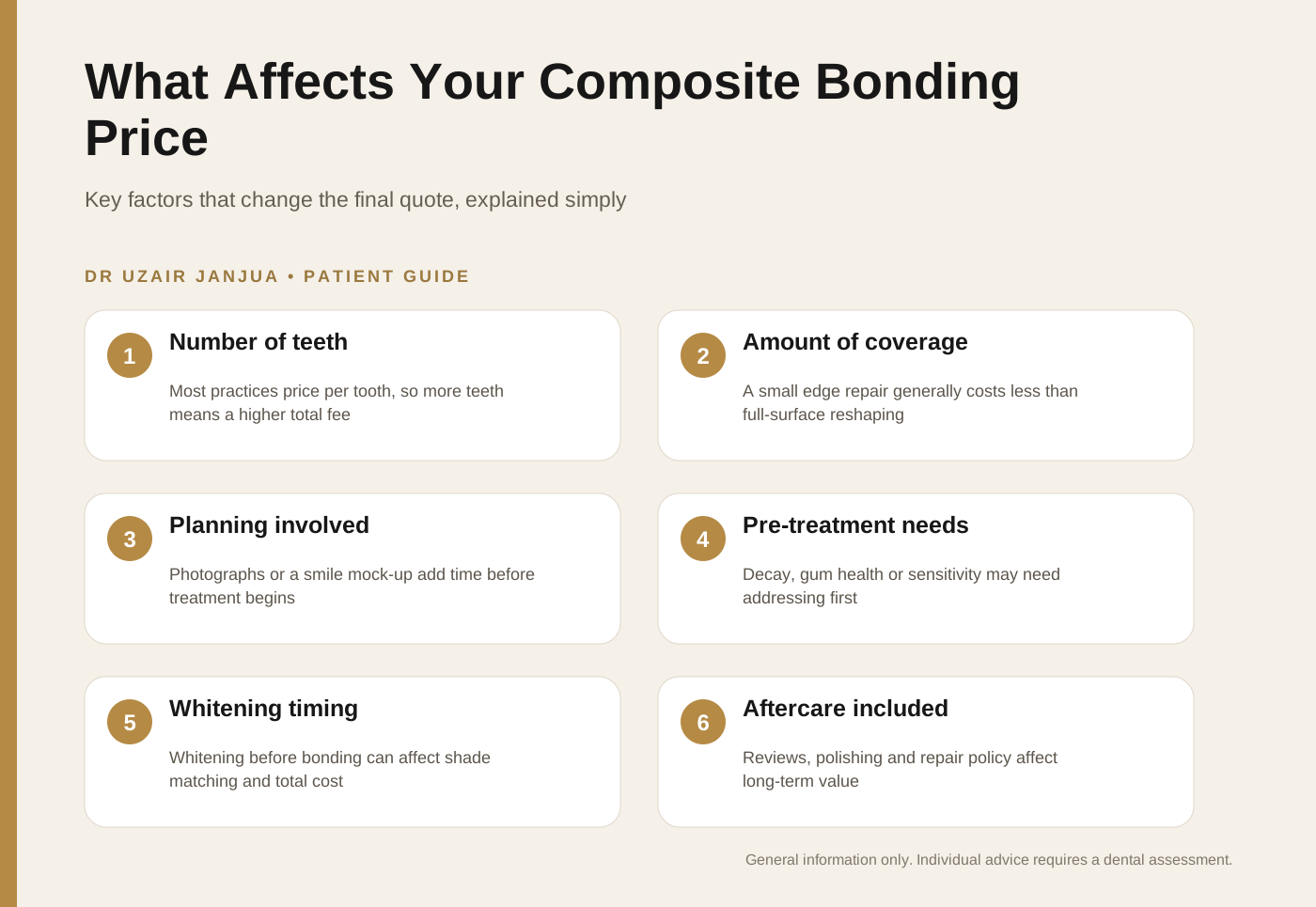
- Number of teeth being treated, since most practices price per tooth
- How much of the tooth surface needs covering, not just how many teeth are involved
- The complexity of the smile design, including symmetry, edge position and how the teeth meet when you bite together
- Whether detailed shade matching and layered composite is needed, which takes longer than a single-shade repair
- Whether photographs, a smile mock-up or additional planning time are required beforehand
- Pre-treatment needs such as a hygiene visit, managing decay, or addressing sensitivity before cosmetic work begins
- Whether whitening is recommended first, which adds a separate cost and a delay before shade selection
- What's included afterwards, such as a review appointment, polishing, or a repair policy
Two practices can look very different in price and both be reasonable once you account for what's actually included. A quotation is really only meaningful once your own teeth have been examined.
What I assess before giving a price
I wouldn't confirm a fee without seeing the teeth involved first. What I would look at first is whether the tooth or teeth are healthy enough to bond onto, meaning no active decay, stable gums and reasonable plaque control. Where any of these aren't in place, I'd usually want to address them before cosmetic treatment goes ahead.
I'd also check the bite, because heavy grinding or an uneven bite can put extra load on composite edges and may affect how well the result holds up over time. This varies between individuals, and it's something I'd assess rather than assume from the outset.
Tooth position matters too. Where teeth are noticeably rotated or crowded, adding composite alone can sometimes create a bulkier or less natural result than addressing position first. Depending on the case, this is where clear aligners sometimes come into the conversation before any bonding is planned, though this approach isn't right for everyone.
Shade is another factor worth discussing early, particularly if whitening is something you're considering, since composite doesn't change colour once it's placed. Finally, I'd want to understand what you're hoping to change, because that shapes whether bonding on its own can realistically achieve it or whether a combination approach makes more sense for your case.
Is composite bonding available on the NHS?
Composite bonding done purely to improve the appearance of otherwise healthy teeth is normally private treatment. NHS dental care is provided where there is an assessed clinical need, such as decay, infection, pain or a broken tooth, rather than for elective, appearance-based work.
This is where people sometimes get confused. A tooth-coloured filling used to repair a decayed or fractured tooth may be treated differently to cosmetic bonding, because the purpose of the treatment affects NHS eligibility rather than the material used. Whether a particular repair falls under NHS arrangements depends on clinical assessment and the applicable NHS rules and charge bands at the time, and this isn't something that can be decided in advance from a general article. If you're unsure whether your own situation is cosmetic or clinically necessary, that's worth raising directly at an examination.
Is cheaper composite bonding necessarily better value?
Not automatically, and not always. A lower per-tooth price can genuinely reflect a smaller amount of work, which is fair. It can also mean fewer included appointments, no planning time, or a "from" price that doesn't match the treatment you actually need once assessed.
A higher fee doesn't guarantee a better result either. It often reflects additional appointment time spent on planning, layering and finishing, and these steps can influence how the bonding looks and how it holds up, though fee alone isn't a reliable measure of quality in either direction.
A more useful question is what's included for the price quoted, whether that covers a review visit, and what happens if a small chip needs attention later. That tends to tell you more than the headline number by itself.
If you're trying to work out whether composite bonding is a realistic option for your own teeth, an examination is really the only way to move from these general ranges to a plan and fee specific to you.
Composite bonding versus the alternatives
Bonding solves certain problems well and isn't the right tool for every concern. It helps to think about what each option is actually designed to address.
| Option | Best suited to | General cost position | Key trade-off |
|---|---|---|---|
| Composite bonding | Small chips, minor shape changes, small gaps | Lower initial cost | More prone to staining, wear and chipping over time |
| Teeth whitening | Colour concerns where shape is already acceptable | Generally lower cost | Doesn't change tooth shape or lighten existing composite |
| Clear aligners | Crowding, spacing, tooth position problems | Higher cost, longer treatment time | Addresses position rather than shape or colour directly |
| Porcelain veneers | Broader coverage, greater stain resistance sought | Higher cost per tooth | Preparation varies by case, but veneers are generally a more committed treatment |
These options are sometimes used together rather than as strict alternatives, such as whitening followed by limited bonding, or aligners used first so that only minor bonding is needed afterwards. If durability and stain resistance matter more to you than initial cost, it's worth discussing porcelain veneers as a comparison point before committing either way.
Costs after treatment: maintenance, repairs and replacement
The price on the day isn't the full financial picture. Composite can pick up staining from tea, coffee, red wine or smoking, and its surface polish can dull over time depending on diet and oral hygiene, though this varies between individuals. Chipping is also possible, particularly with habits such as biting hard objects, nail biting, or grinding at night.
Where grinding is a factor, a night guard is often discussed as a protective option, though whether one is needed and how it should be designed depends on individual assessment rather than being a routine addition for everyone.
Minor chips can sometimes be repaired rather than remade completely, depending on the size and cause of the damage, though repeated repairs on the same tooth can eventually affect how uniform it looks, at which point replacement may be the more practical option. Polishing can often improve surface staining, but it doesn't reverse every colour change or repair structural damage.
It's worth building routine maintenance or review visits into your overall budget from the outset, rather than treating the initial fee as the only cost of owning composite bonding over time. Regular dental check-ups also give an opportunity to pick up wear or staining early, before it becomes more noticeable.
What to ask before accepting a quote
Before booking anywhere in Birmingham or further afield in the West Midlands, a short list of questions can save confusion later:
- Exactly which teeth does this price cover, and is it per tooth or for the whole case?
- Is this simple edge bonding, standard direct bonding, or more extensive full-coverage work?
- Does the fee include the consultation, photographs and a review appointment, or are these charged separately?
- Are any X-rays clinically indicated, and if so, are they included in the quoted price?
- Is a deposit required, and are there finance terms I should check before agreeing?
- What's the policy if a tooth chips or needs polishing within the first year?
- Is whitening or any orthodontic work recommended first, and is that priced separately?
- Who will actually be carrying out the bonding, and can I see examples of their previous composite work?
If you're weighing up a quote from a practice outside Birmingham, or treatment abroad, it's worth adding travel time, accommodation and the practicality of getting a chip repaired quickly into your comparison, rather than looking at the headline price alone.
To find out what treatment would actually be needed for your teeth, and to get a written plan rather than a general estimate, the next practical step is an examination where your teeth, gums and bite can be properly assessed before any figure is confirmed. You can find more detail on the treatment itself, including how it's carried out and its limitations, on the composite bonding page.